
What Assam’s govt school-only board exams signal about trust & control
Record student numbers and past concerns push Assam to centralise exams, accountability and invigilation under government control
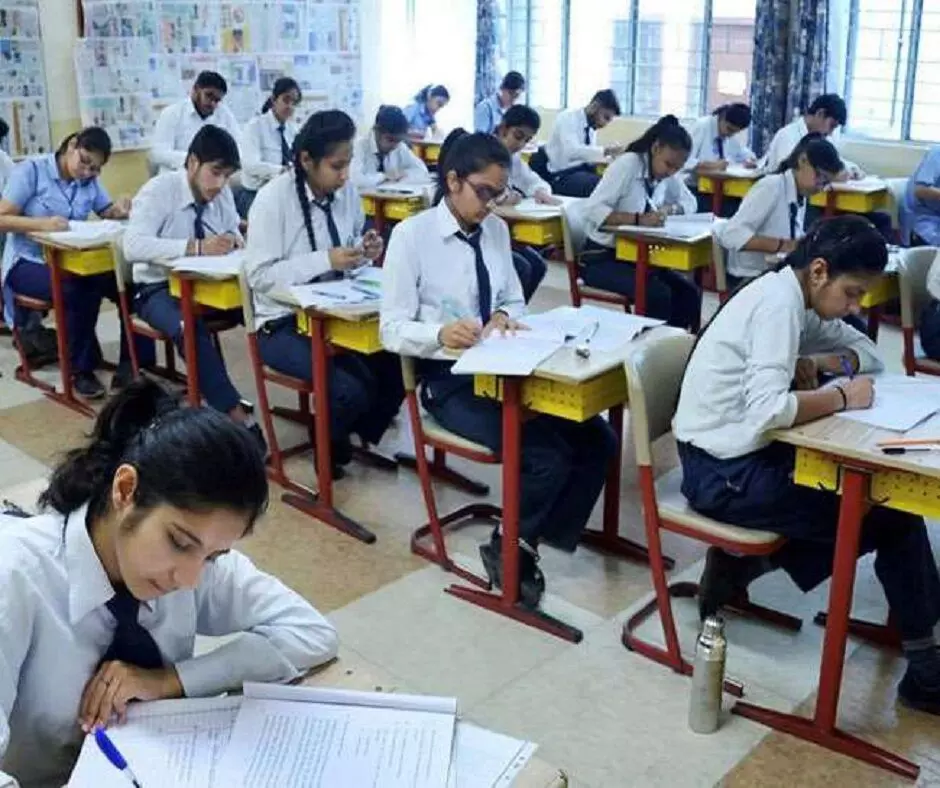
Representational image
On February 10, as thousands of students will clutch their admit cards and walk into examination halls across Assam, a quiet but significant shift in the state’s education system will come into view.
For the first time, the High School Leaving Certificate (HSLC) and Higher Secondary (HS) final examinations are being conducted exclusively in government schools, with invigilation entrusted only to government and provincialised school teachers.
Announced in January by Chief Minister Himanta Biswa Sarma, the move has placed government schools and their teachers squarely at the centre of Assam’s examination machinery.
“If anything goes wrong in a private institution, the government has limited authority over private teachers. That is why we have decided to rely entirely on government teachers so as to ensure fairness, accountability and direct administrative control,” Sarma said while explaining the rationale.
An examination hall in Assam (Photo - @SSG_Assam / X)
A massive exercise, unprecedented numbers
The scale of the 2026 examinations underscores why the state is unwilling to leave anything to chance. According to the Assam State School Education Board (ASSEB), this year has recorded the highest-ever candidate count.
A total of 4,38,565 students will appear for the HSLC examinations, while 3,30,744 candidates are set to take the Higher Secondary finals. Examination infrastructure has expanded accordingly. The HSLC examination will be held across 1,046 centres, which is the highest in the Board’s history, while the HS exams will take place in 821 centres with 48 evaluation zones.
Barpeta district (including Bajali) has the highest number of HSLC centres, while Lakhimpur leads in the HS category. In terms of candidates, Kamrup Rural tops the HS list with 18,885 students, while Barpeta has the highest HSLC count at 28,920.
“This year, the numbers are unprecedented, and preparation has been done accordingly. Security has been tightened, district administrations are overseeing arrangements, and everything from centre allocation to surveillance is in place,” a senior ASSEB official told The Assam Tribune.
Trust as policy, not symbolism
At the heart of the decision lies clear policy intent of neutrality. By excluding private schools from hosting examinations and invigilation duties, the government aims to eliminate conflicts of interest and close gaps where malpractice might creep in.
A file image of invigilator in an examination hall
“Government teachers are directly accountable to the state. Under the new education rules, district-level committees have been formed in every district to allot centres. These committees also ensure students are assigned centres close to their residences so they don’t have to travel long distances,” the ASSEB official explained.
The reliance on government teachers is backed by recent recruitment drives. With nearly 10,000 teachers appointed in recent weeks and another 5,000 expected shortly, the government has insisted there will be no manpower shortage. In fact, officials say some districts may even have surplus staff for invigilation duties.
Multi-layered security, zero tolerance
The trust placed in government schools is reinforced by a tightly woven security framework. District- and State-level examination supervision committees are monitoring every stage of the process.
Flying squads are conducting surprise inspections, while frisking of both candidates and invigilators has been made mandatory.
Mobile phones are strictly prohibited inside examination halls. Even invigilators must deposit their devices with the centre in-charge, barring a few authorised officials for emergency communication. Subject teachers are barred from invigilating papers they teach, eliminating any scope for conflict of interest.
“Out of the total HSLC centres, 194 have been identified as sensitive or most sensitive. Enhanced surveillance and stricter monitoring have been put in place at these locations,” said Nayanjyoti Sarma, Controller of Examinations.
Dedicated control rooms at district and state levels are operating round-the-clock, coordinating with police for the secure transportation and storage of question papers and OMR sheets.
In districts like Kokrajhar, prohibitory orders under the BharatiyaNagarik Suraksha Sanhita have been imposed to prevent gatherings, noise pollution, and any attempt at unfair practices around exam centres.
The weight of responsibility on teachers
For government school teachers, the decision is both an endorsement and a burden.
“There is pressure, no doubt. But there is also pride. The government is saying it trusts us to protect the future of lakhs of students. That trust makes us more careful, more disciplined,” said a senior government school teacher from Kamrup district, who will be on invigilation duty this month.
Teachers point out that they are not only invigilators but also mentors who understand the anxieties of first-time examinees. “When students see familiar faces from government schools, it sometimes calms them. At the same time, we know that even a small lapse can have serious consequences,” the teacher added, requesting anonymity.
A file image of an examination hall
Ground realities & bigger signals
People have occasionally questioned whether all government schools have the infrastructure required to host such high-stakes examinations smoothly. Officials counter that assessments were carried out before centres were finalised, and necessary upgrades made where required.
For now, as examination bells ring across Assam, the state has made its bet clear. By placing its faith in government schools and teachers, it is attempting to build an examination process that is transparent, tightly controlled, and credible and one where trust is not assumed, but enforced through accountability.