
ACS officer Nupur Borah gets bail; Gauhati HC cites lapses in night-time arrest
The CM's Vigilance Cell reportedly arrested Borah at 8 pm without magistrate approval, violating Sections 47 & 48 of BNSS
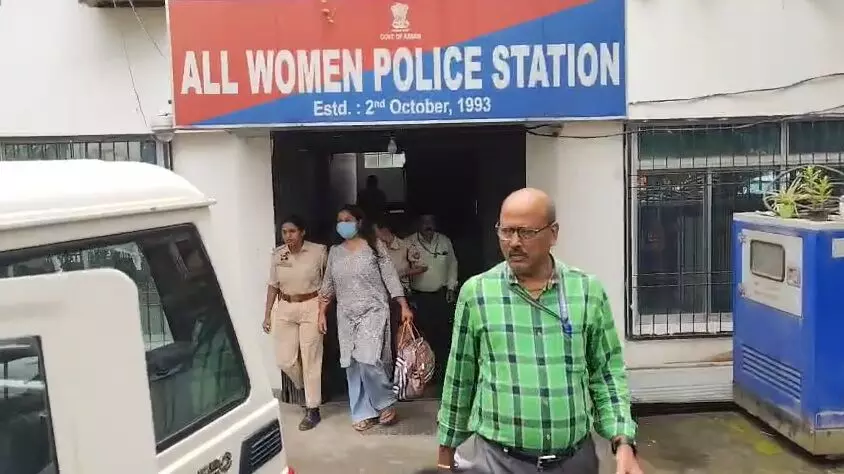
A file image of Nupur Borah in custody.
Guwahati, Nov 11: The Gauhati High Court has granted bail to Assam Civil Service (ACS) officer Nupur Borah after finding procedural lapses in her arrest by the Chief Minister’s Vigilance Cell.
According to reports, Borah was arrested late at night, a move the court deemed legally impermissible in the case of a woman without prior judicial approval.
Sources revealed that the Vigilance Cell took Borah into custody around 8 pm without obtaining the necessary permission from a First-Class Magistrate, as required under Sections 47 and 48 of the Bharatiya Nagarik Suraksha Sanhita (BNSS).
The case, registered under CM Vigilance Case No. 25/2025, accused Borah of misconduct and corruption. However, during the bail hearing, the court noted that the government counsel failed to counter the defence’s argument regarding procedural violations in the arrest.
Advocate Bijan Mahajan, commenting on the development, said, “Due to a mistake by the police, the controversial ACS officer Nupur Borah was granted bail. In court, the government lawyer was unable to counter the arguments presented by Borah’s advocate. She had been arrested at night, which is legally unacceptable in the case of a woman.”
Borah was arrested on September 15 by the Chief Minister’s Special Vigilance Cell in connection with a disproportionate assets case.
During the investigation, authorities seized cash amounting to Rs 92.50 lakhs, along with a large quantity of gold and diamond jewellery, from her Gotanagar residence in Guwahati.
Borah, who was serving as Circle Officer of Goroimari Revenue Circle in Kamrup district at the time of arrest, had previously held the same post in Barpeta district.
She is alleged to have engaged in corrupt practices involving land transfers during her tenure in Barpeta.
With the High Court’s intervention highlighting police procedural errors, the case has raised questions about arrest protocols and due process in high-profile vigilance operations across the state.