
Northeast’s first highway emergency landing strip to open in Feb: Assam CM
High-profile launch planned; PM or Defence Minister may inaugurate Northeast’s first highway airstrip, says Sarma
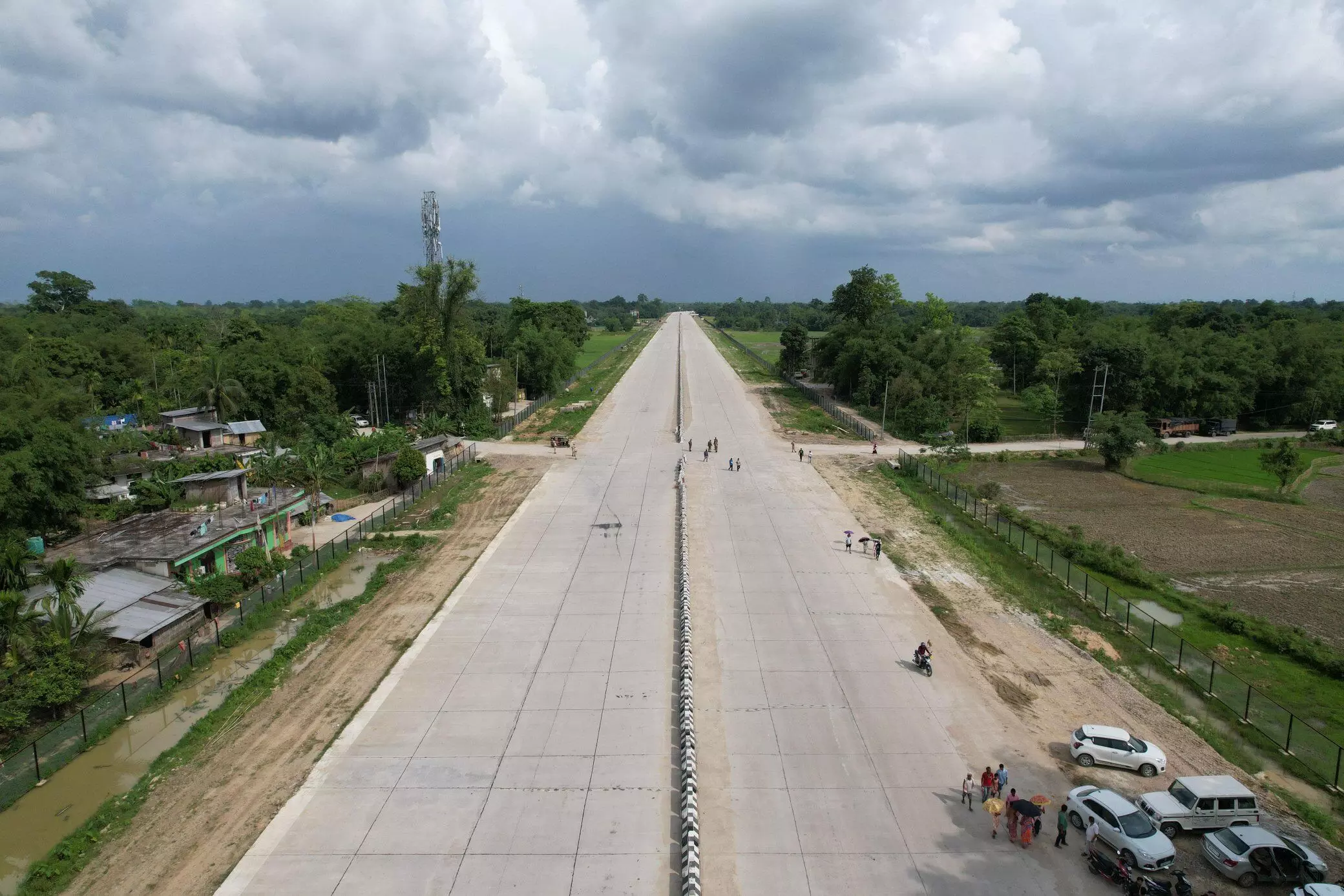
The emergency landing facility in Moran (Photo: @himantabiswa / X)
Jorhat, Jan 8: The Northeast is set to get its first highway-based emergency landing strip, with Chief Minister Himanta Biswa Sarma, on Thursday, announcing that the facility on the Dibrugarh–Moran stretch of the National Highway will be inaugurated in February.
Speaking to the press on the sidelines of a welfare scheme seed-capital distribution programme at Khowang in Dibrugarh, Sarma said the Centre is likely to give the project a high-profile launch.
“There is a possibility of the Prime Minister coming here for the advanced landing facility in his aircraft. If not, we will try to get the Defence Minister,” he said.
The advanced landing facility, being developed on a 4.2-km stretch in Moran, is designed to handle both civilian aircraft and Indian Air Force fighter jets, including Sukhoi and Rafale platforms.
“If an aircraft cannot land at Dibrugarh airport for some reason, this highway strip will act as an alternative,” the Chief Minister had said during an earlier visit to the district in June 2025.
The project is being executed by the National Highways and Infrastructure Development Corporation Ltd (NHIDCL) and will be the first such facility in the Northeast.
Sarma had earlier noted that the Centre has already approved two more highway-based emergency landing strips in Assam - one on the Boroma–Tihu stretch in lower Assam and another between Nagaon and Lumding at Sankardevnagar.
Once operational, the landing strip is expected to significantly enhance strategic flexibility for the Armed Forces in the sensitive Northeast frontier, while also strengthening civil aviation preparedness during emergencies.
The Chief Minister had also said that helipads are being planned at regular intervals along major highways, particularly in highland areas prone to flooding.
He had previously said that its aim is to create helipads every 50 to 100 km and transform the Numaligarh–Dibrugarh–Tinsukia corridor into a modern, resilient transport and emergency-response stretch.