
After 17 years, India hosts BWF World Junior Championships in Guwahati from Oct 6
The Yonex-Sunrise junior championships return to India, with Guwahati hosting players from 12 nations and India entering as second seed
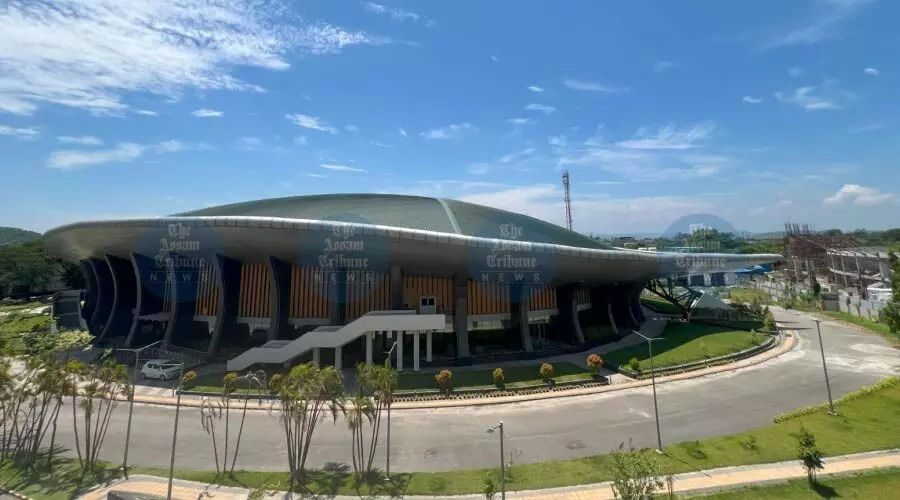
National Centre of Excellence in Amingaon, Guwahati (Photo: AT)
Guwahati, Oct 5: The Yonex-Sunrise BWF World Junior Championships 2025 returns to India after 17 years, with Guwahati’s National Centre of Excellence, Amingaon hosting the two-week event from October 6–19.
Players from some of the front-ranking countries, including China, Japan, Singapore, Philippines, Indonesia, Malaysia, France, Netherlands, Australia, Canada, Denmark have already reached Guwahati for the event.
The action begins with the Mixed Team Championships for the Suhandinata Cup (October 6–11), followed by the Individual Championships for the Eye Level Cup (October 13–19). As the countdown begins, here are five key takeaways from this prestigious tournament.
The host advantage:
India joins an elite group of nations – Malaysia, Indonesia, Canada, Spain, and China – to host the championships more than once. With this edition, India becomes the fourth Asian country to host the junior event twice. The timing is significant as the nation builds momentum to host the BWF World Championships in 2026. When India last hosted in 2008, the sport was still emerging nationally. Since then, badminton has become a mainstream sport, producing Olympic medalists and world champions. In 2025, juniors from 13 states will represent India, showcasing how widely the sport has spread. The exposure and spotlight of hosting are expected to inspire another generation of players.
India’s medal journey:
India’s medal run began in 1996 when Aparna Popat clinched a silver medal in the girl’s singles event. Since then, the country has won 11 medals at the Individual Championships (one gold, four silver, and six bronze). The golden moment came in 2008, when Saina Nehwal triumphed in girl’s singles on home soil, alongside RMV Gurusaidutt’s bronze in boy’s singles. Boy’s singles has yielded eight medals, the latest being Ayush Shetty’s bronze in 2023.
India’s 2025 campaign:
For the first time, India enters the Mixed Team Championships as the second seed. Leading the charge is Tanvi Sharma, World No. 1 in girl’s singles, backed by former top-ranked doubles pair Bhargav Ram Arigela and Viswa Tej Gobburu. With nine Indian entries inside the top 25 of the BWF Junior Rankings, hopes are high of adding to the medal tally.
New scoring format:
This year introduces BWF’s updated relay scoring system. Each tie will consist of three sets, with the first team to reach 45 points in a set declared the winner. A set comprises five matches – boy’s singles, girl’s singles, mixed doubles, boy’s doubles, and girl’s doubles – each played to nine points before switching. The best-of-three sets format will determine winners. The system will also be trialed in the individual events, adopting a 3x15 structure, aimed at modernising badminton and making matches more dynamic.
Global badminton powerhouses:
China remains the dominant force, with nearly 200 medals, including 60 golds in individual events and 14 in mixed team. They have won gold in almost every edition, barring rare exceptions. Malaysia, South Korea, and Indonesia follow as strong challengers, but China’s consistency underlines their supremacy.