
Raijor Dal's 13-seat push elevates Akhil Gogoi's electoral stand
The party secured 13 seats in alliance with Congress, reshaping Assam’s Opposition dynamics as a high-stakes triangular contest unfolds in Sivasagar.
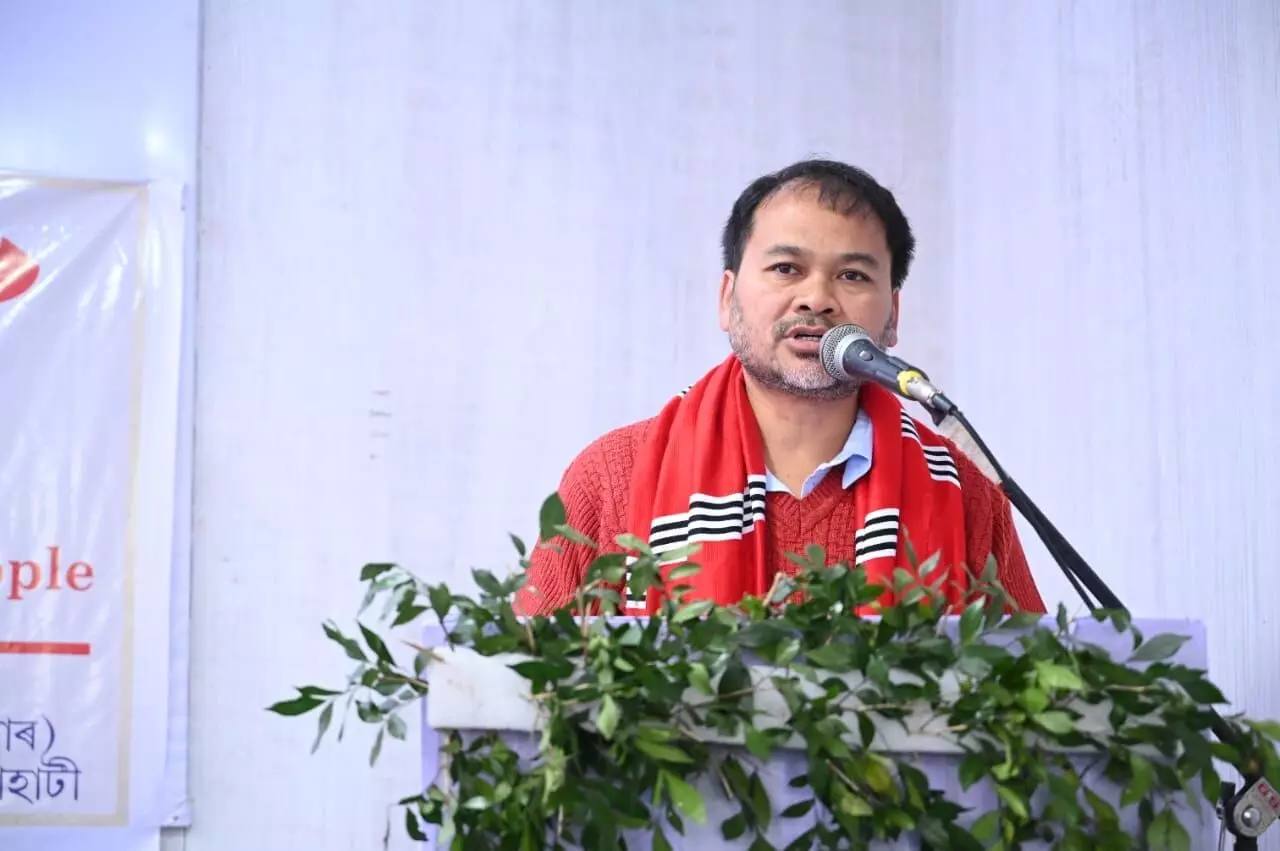
File image of Raijor Dal President, Akhil Gogoi (Photo: Meta)
Guwahati, March 29: Akhil Gogoi’s rise in Assam politics is hard to ignore. From winning a single seat in the 2021 Assembly polls, his party, Raijor Dal, has managed to secure 13 seats during seat-sharing negotiations with the Congress, reshaping Opposition arithmetic, and complicating NDA equations in Sivasagar, where alliance partners BJP and AGP are pitted against each other in a so-called “friendly fight”.
From leading movements of peasants and landless people on the streets to emerging as an undeniable electoral variable, Akhil Gogoi is always remains in news.
Expelled several times from the Assembly for disrupting proceedings with his theatrics, Gogoi has also been a powerful voice of the Opposition on many critical fronts. Just days before the 2026 elections, the Congress finally entered into an alliance with him after multiple rounds of back-and-forth negotiations.
Interestingly, it was the Congress government against which he had protested the most.
Once known as the face of the Krishak Mukti Sangram Samiti, Gogoi built his reputation on anti-corruption campaigns, agitations for land rights, and sustained mobilization against big dam projects. However, it was the anti-CAA agitation of 2019 and his subsequent arrest under UAPA that transformed him from an activist into a political leader. His victory from Sivasagar in 2021 while lodged in jail, cemented that transition, proving how “protest politics” can translate into votes.
Five years later, Gogoi is no longer just a one-seat phenomenon. Though his Raijor Dal is contesting 13 seats, his influence in alliance negotiations extends beyond numbers. Within the Opposition space, he has emerged as both a mobilizer and a disruptor – independent in positioning, yet central to anti-BJP narratives.
Dr Bakul Chandra Patar, Associate Professor of Political Science at Sivasagar University, believes the battle for Sivasagar has turned into a perfect triangular contest with BJP entering the fray. Akhil Gogoi seemed to have an edge in a contest with AGP’s Prodip Hazarika, but with the entry of BJP candidate Kushal Dowari, the equations have become unstable.
Kushal Dowari, alias Jayanta Hazarika, was an ULFA cadre who surrendered in 1991. He represented the Thowra Assembly constituency twice.
On Gogoi’s term as an MLA, Patar said that while his vocal presence in the Assembly resonated with voters, people’s demand for higher educational and technical institutions in Sivasagar has yet to be fulfilled.
“The BJP has built a strong organisational base here, but Akhil Gogoi’s reach in minority-dominated pockets and some loyal communist vote bank make him a formidable contender. Another aspect is that the conscious voters and young generation are unhappy with Dowari’s candidature, which might reflect in the results,” he added.
Interestingly, CPI candidate Madan Baruah withdrew his nomination in support of Akhil Gogoi this time. Post-delimitation, the constituency has 2.09 lakh voters, with a female majority.
What makes the battle for Sivasagar interesting this time is that its outcome will be seen as a verdict on whether Akhil Gogoi’s politics has matured from a movement into a durable electoral force. And, whether his opponents, despite being a divided house, have found a way to counter it.
In 2021, Akhil Gogoi defeated BJP’s Surabhi Rajkonwar by a margin of 11,875 votes, securing more than 46 per cent of over 1.5 lakh votes cast. Once the capital of the mighty Ahoms and considered the heart of Assamese nationalism, Sivasagar has traditionally been a Congress bastion, followed by CPI influence. The BJP or its ally AGP has never had much success in this prestigious constituency.
Beyond his histrionics in the Assembly, his empathy towards minority populations has been widely publicized by his opponents, who seek to build a narrative around Gogoi comforting minority community women in distress situations. On the flipside, this has added a new dimension to his politics. Raijor Dal has fielded four minority candidates from Gauripur, Goalpara East, Dalgaon, and Dhing.
He has also attempted to expand his footprint by fielding a new crop of candidates, such as Dr Gyanashree Bora from Mariani and Rahul Chhetri from Margherita.