
From resistance to reflection: Paresh Baruah’s call for meaningful negotiation
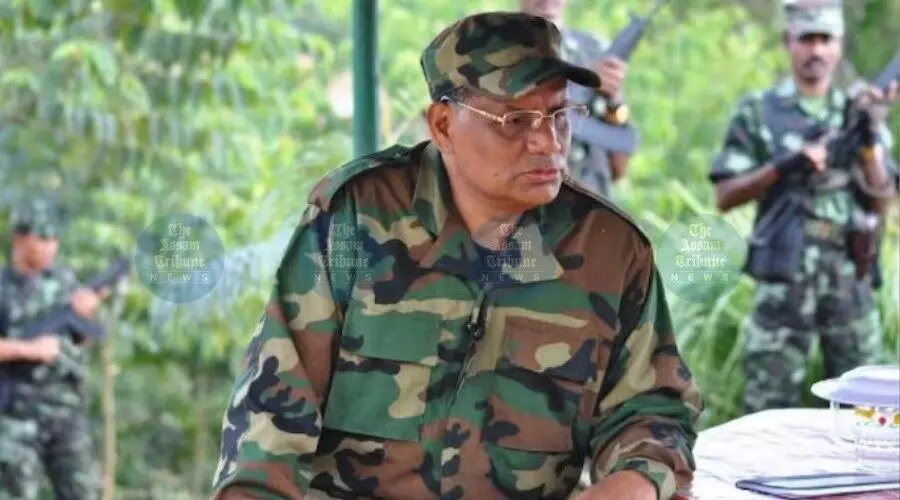
A file image of ULFA (I) chief Paresh Baruah
In an important telephonic conversation with this newspaper, the Commander-in-Chief of the United Liberation Front of Asom (Independent), Paresh Baruah, commented on a number of aspects of the revolutionary movement of which he is the last remaining flag-bearer.
He expressed his dissatisfaction with the all-India parties, asserting that the Congress, when in power, adopted a divide and rule policy instead of trying to find a permanent solution to the problem, while the BJP has been trying to wipe out the ULFA(I) with military might, which are telling reminders of the truth that these parties were not interested in political solution of the issues raised by the organisation.
He expressed his confidence that it would not be possible to wipe out the movement militarily, considering that armed operations had been launched against it since as far back as 1990, including Operation All Clear in Bhutan, but it has not been finished.
The use of armed forces can never bring any solution, he added, giving the example of Ukraine. In the absence of any initiative from the current Indian regime, Baruah asserted that the outfit would continue its armed battle, but assured that it would not target Assamese people or Assamese police officers unless attacked first.
He also reiterated his objections to the inadequate manner in which the NRC was updated and berated the administration for allowing encroachments on forests and government land.
However, the most important message conveyed by the ULFA(I) chief in the conversation was that the ULFA(I) is not against talks if the government shows sincerity on the issue. No doubt, his outfit is sceptical about the genuineness of democracy in India, where even a high-ranking individual like the Vice President has been forced to resign, but if the current Chief Minister can persuade the Centre to hold talks with ULFA(I) on the core issue, he is not averse to embarking on negotiations.
But the outfit will not sit for talks just for the sake of it – it had demanded a political settlement and will not waver from this goal and betray the people of the State. Despite the obvious constraints restraining both sides from holding talks – the central one being the ULFA(I)’s insistence that it was unwilling to come to the negotiating table unless the core issue of ‘Assam’s sovereignty’ was discussed – yet the admission of the ULFA(I) chief that his outfit is not against talks per se does leave the door to such an objective open.
It is a historic reality that the people of Assam, particularly an entire youthful generation, had sacrificed enormously during the titanic Assam Movement that gave birth to the ULFA, and would like to see a closure to that tragic chapter. It is incumbent upon New Delhi, too, to bow down to the combined will of the Assamese people and work towards that end.