
Nagaland moves to secure GI tags for 24 traditional handlooms, craft products
The initiative aimed to identify, document, and facilitate the filing of GI applications for traditional craft and handloom products of Nagaland
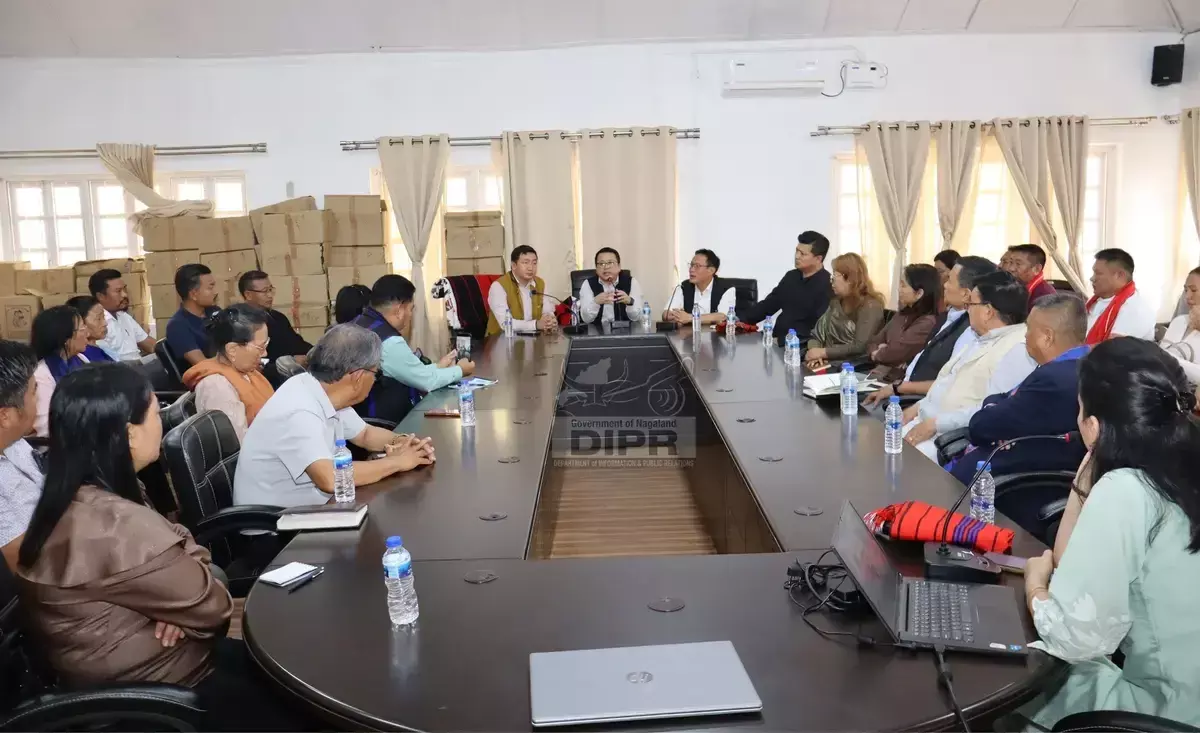
Planning Advisor, NEC, Som Kamie, at the stakeholder meeting on GI initiatives for traditional crafts & handloom products of Nagaland on Thursday (Photo: @dipr_nagaland/X)
Dimapur, March 6: A total of 24 products from Nagaland have been identified for geographical indication (GI) registration.
This was stated at a stakeholders’ meeting on GI initiatives for traditional craft and handloom products of Nagaland held at the Nagaland Handloom and Handicraft Development Corporation office here on Thursday.
The North Eastern Handicrafts and Handlooms Development Corporation Limited (NEHHDC), in collaboration with the Ministry of Development of North Eastern Region, organised the meeting.
The initiative aimed to identify, document, and facilitate the filing of GI applications for traditional craft and handloom products of Nagaland.
During the meeting, several potential GI products from different tribes of Nagaland were highlighted, including the Pochury textile, Pochury shawl, Zeliang textile, Sumi shawl, Sumi textile, Ao textile, Tikhir jewellery, and Tikhir textile.
The applicants for these products include the Pochury Hoho, Zeliang People’s Organisation, Sumi Hoho, Ao Senden, and Tikhir Council.
During the meeting, Monmayuri Saikia, senior executive (business development), NEHHDC, gave a PowerPoint presentation, highlighting the concept of GI, its benefits, and the process of registration.
She said that other tribal communities of Nagaland including Angami, Chakhesang, Chang, Khiamniungan, Konyak, Lotha, Phom, Rengma, Sangtam and Yimkhiung are also in the process of identifying suitable traditional products for GI registration through their respective tribal organisations.
It was highlighted that GI tagging carries numerous benefits and is important not only from a commercial perspective but also for preserving and promoting the rich cultural heritage of indigenous communities.
According to data presented during the meeting, the North Eastern region currently has 89 registered GI products, with handicraft items forming the largest share with 48 products, followed by 28 agricultural products, eight manufactured products, and five food products.
The meeting emphasised the importance of collective efforts by tribal organisations, government agencies, and stakeholders to protect traditional knowledge and promote indigenous products through GI registration, while strengthening collaboration to improve market opportunities for artisans and weavers of the State.