
Manipur’s Tamenglong welcomes Amur falcons; three birds to be tagged for research
Tamenglong is on the international map for conserving these long-distance migratory birds.
Source: X
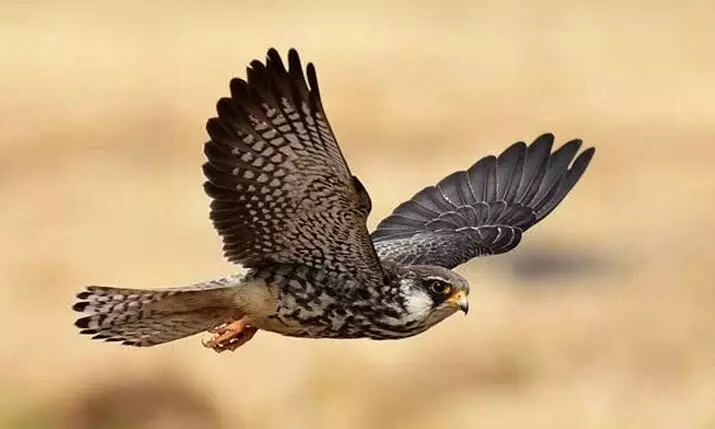
Imphal, Oct 8: Tamenglong district plays host to thousands of migratory Amur falcons (locally called ‘Akhuaipuina’ or ‘Tamuanpui’) during their journey from Siberia to southern Africa, typically between October and November, arrived at Guangram village in Tamenglong district on Tuesday.
The Tamenglong Forest Division, along with many NGOs, village authorities, and the youth club of Tamenglong district since 2015, has been constantly promoting protection of these migratory birds. Tamenglong is on the international map for conserving these long-distance migratory birds.
This year also, the Forest Department, Manipur, in collaboration with the Wildlife Institute of India, is going to tag three more Amur falcons with satellite transmitters to continue the ongoing research works.
As in the past years, the district administration and local communities will be active in protecting the Amur falcons, issuing bans on hunting and trapping, and working to raise awareness about the significance of the avian guests. As per the officials of the Tamenglong Forest Department, the successful conservation of the Amur falcons highlights the potential for harmony between human beings and nature.
The most important roosting village for Amur falcons in Tamenglong are Chiuluan and Guangram. These birds are protected under the Wildlife Protection Act. They breed in south-east Russia and north-east China during the summer and migrate to their wintering grounds in Africa. Their yearly journey covers about 20,000 km, passing through Afghanistan and East Asia. Along the way, they stop in North East India and Somalia.
The pigeon-sized raptors arrive in the North East, including Nagaland and Manipur, in October. They leave the region in November after feeding themselves enough to sustain their nonstop flight to Africa, where they spend their winters.
Correspondent