
From isolation to connection: Bairabi–Sairang Rail Line brings new hope for Mizoram
First conceived in 1999, the Bairabi-Sairang rail line received a boost in 2014 when Prime Minister Modi virtually laid its foundation stone.
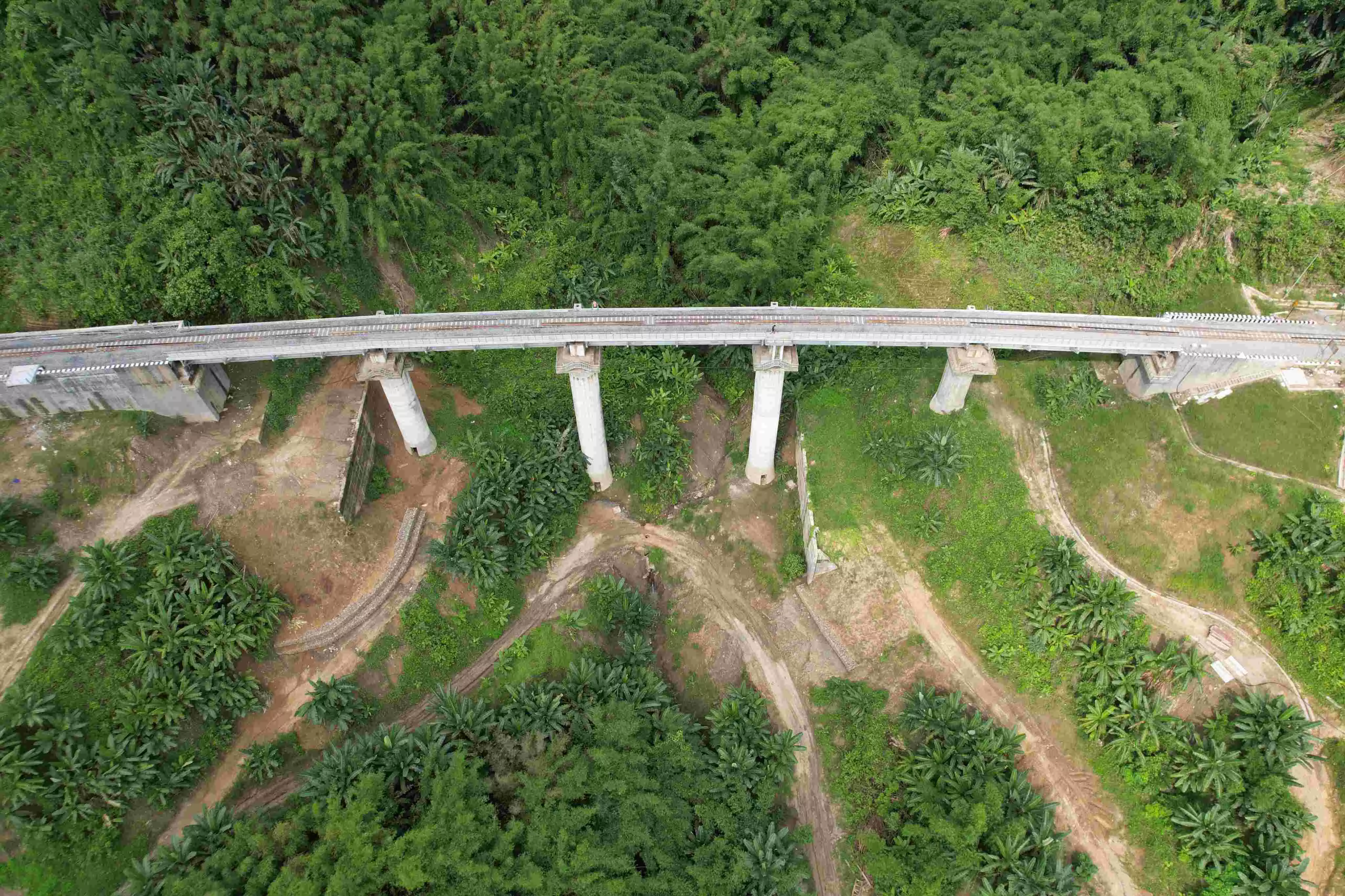
A hawk-eye view of the picturesque Bairabi-Sairang railway line. (AT Photo)
Source: 'X'
Aizawl, Sept 12: For 60-year-old farmer, Rama (name withheld), who hails from Sairang, a small town near the Mizoram capital, the train’s arrival felt like a dream come true. As he “hitchhiked” in the trial run in the company of media personnel on Wednesday, the smile on his face said it all: the dream of a railway line connecting his village to the rest of India was now a reality.
“This train service will change everything for us. We will be able to move around more easily; goods from Assam will become cheaper, and we can travel to places like Silchar and Guwahati in much less time and at cheaper rates,” the farmer said.
Rama’s farm is located at Khamrang village along the 51.38-km Bairabi-Sairang broad gauge rail line. Transportation has been a challenging proposition due to the remoteness of the area.
“The train will make it easier for us to transport our farm produce,” he said, smiling as the train surged forward. “I am grateful to the Indian Government, especially ‘Pu (a Mizo honorific equivalent to the respectable sir) Modi,’ for bringing the railway to this far corner of Mizoram.”
The new rail line, which has been under construction for several years, will be inaugurated by Prime Minister Narendra Modi on Saturday. The project, which has cost an estimated Rs 5,021 crore, has been hailed as an engineering marvel featuring 48 tunnels and 55 major bridges. Some of these tunnels stretch over 1 km, and bridges like Krung stand as tall as 114 metres above the ground.
For the past week, trial runs have been conducted by the NF Railway, allowing media personnel from across the country to witness the majesty of the project. The tracks wind through steep hills and valleys, crossing numerous tunnels and bridges – a feat that has required both determination and expertise.
First conceived in 1999, the Bairabi-Sairang rail line received a boost in 2014 when Prime Minister Modi virtually laid its foundation stone. In 2016, he flagged off the first passenger train between Bairabi and Silchar, with the first freight train arriving at Bairabi later that year.
Sairang has long been a key point of connection. After the British invasion of Mizoram in the early 1870s, Bengali traders set up the first marketplace at Sairang. In 1894, the first European missionaries arrived at Sairang. During the 1890s, the journey from Sairang to Silchar – about 140 km – in flat-bottomed boats took 15 to 30 days depending on the water level of the Tlawng river.
The first vehicle was brought to Mizoram in 1942 was disassembled and transported in a boat from Assam’s Cachar district to Sairang where it was reassembled. Then it was driven to Aizawl by a Mizo driver named Rochhing. Now, as Sairang is marked on India’s rail map, the residents are optimistic about dawning of a new future.