
Cherrapunjee braces for driest monsoon in decades; rainfall 45% below normal, says IMD
Cherrapunjee faces 45% monsoon rainfall deficit, likely to record driest season amid shifting climate patterns.
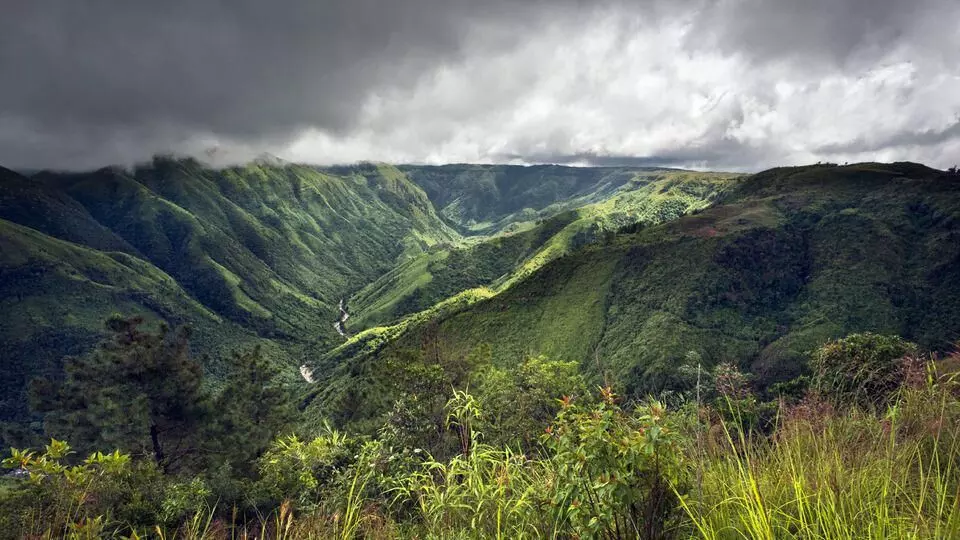
(photo:@InstantMusings/X)
Guwahati, Sept 22: The climate crisis is unfolding more vividly in the rain capital of the world – Cherrapunjee. Once the wettest place on Earth, the most sought-after tourist destination in Meghalaya appears to be bracing for the driest ever monsoon this year.
With less than two weeks left for the curtains to come down on the monsoon season, Cherrapunjee (called Sohra now) is unlikely to make up the 45 per cent deficit rains it has recorded so far.
The Sohra IMD station has recorded 4,369 mm rainfall till date – 55 per cent of the normal. Interestingly, several stations in Karnataka crossed the 6,000-mm monsoon rainfall mark on August 31 itself, with Hulikal topping at 7,005 mm.
The lowest ever rainfall recorded during the monsoon season (June-September) in Sohra was in 2013 (5,093 mm) followed by 1962 (5,401 mm).
It will need more than 700 mm rainfall by the end of this month to cross that record low mark, which though not impossible appears unlikely. Rain forecast is there for the next few days, but is expected to decrease again.
The average monsoon rainfall in the area is 8,131.9 mm.
In June and July this season, Sohra got just 40 per cent of the normal rainfall. August rainfall was normal, but September again went into deficit.
The highest one-day rainfall in Cherrapunjee this year is 196 mm on August 4, at a place where 400-600 mm rainfall is not rare. The highest recorded 24-hour rainfall at the place was 1,563.3 mm on June 16, 1995 (highest one-day rainfall ever in India), and then 973.8 mm on June 5, 1956, according to IMD data.
However, between July 27 to August 11 this year, there were only 13 heavy rainfall events, out of which 8 were 100 mm and above. Overall, from June to September (till date) there were only 13 days with 100 mm-plus rainfall.
In 1974, it had rained 24,555.3 mm at Cherrapunjee, which once was the highest recorded annual rainfall in any one place in any one year in the whole world. However, over the years, change in the rainfall pattern also moved the rainfall intensity and frequency to further west of the place to Mawsynram – about 15 km away – making it the wettest place on Earth by the late 1970s. In 1985, Mawsynram recorded rainfall of 26,000 mm.
Various studies conducted over the last few decades have indicated that Cherrapunjee’s raining glory is waning by the day and the decrease is alarming. It was after a gap of 27 years that 24-hour rainfall in Cherrapunjee had crossed the 800-mm mark in 2022.
A study had revealed that Cherrapunjee has been losing 27.15 mm of annual rainfall every year over the last 42 years.