
Bnei Menashe community of Mizoram prepare for long-awaited return to Israel
Nearly 300 members of the Bnei Menashe community in Mizoram are set to migrate to Israel early next year under the Aliyah programme
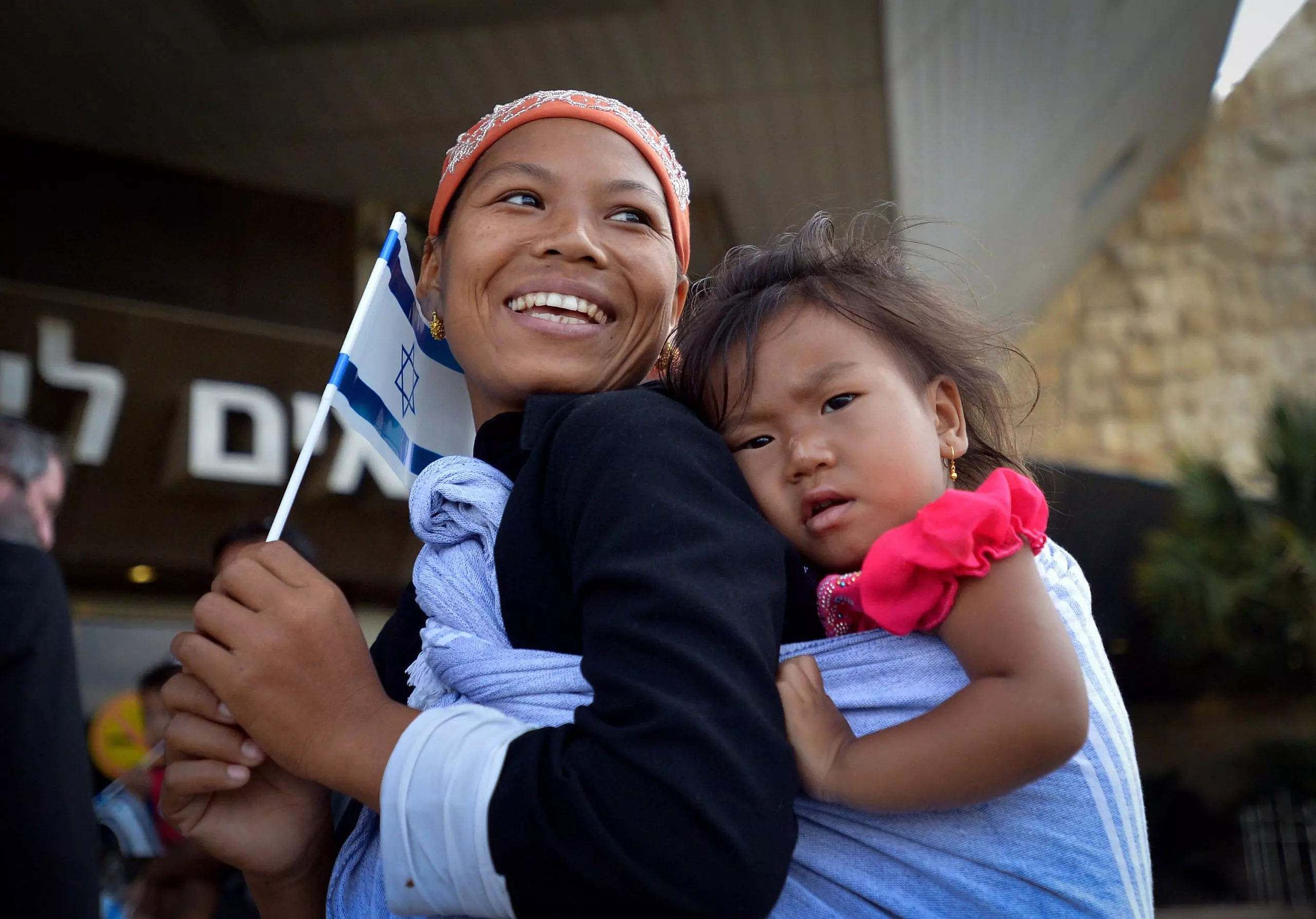
Members of the Bnei Menashe community still living in Mizoram and Manipur will return to Israel (Photo - @Defensa_Israel / X)
Aizawl, Nov 26: For the Bnei Menashe community still living in Mizoram and Manipur-one of the last remaining Jewish groups which has not migrated to Israel over the last two decades the yearning for return to Zion remains as strong as ever. Now, for nearly 300 members of the group, the dream is finally nearing fulfilment.
By early next year, they will leave the hills of Mizoram for what they call the Promised Land, continuing a journey many of their relatives began years earlier.
"It feels like the journey our forefathers started long ago, is finally reaching its destination," said community leader Jeremiah L Hnamte, who will leave Aizawl with his wife as part of the group.
"Our children are already in Israel. They miss us, and we miss them," Hnamte, an entrepreneur who runs a bam-boo-based industry at Zuangtui here, said.
The Bnei Menashe, who identify themselves as descendants of the Biblical tribe of Manasseh - one of Israel's "lost tribes" - have long woven into their prayers the yearning for Zion, much like Jewish communities across centuries of dispersion. Many in Mizoram say they grew up hearing songs and stories about a faraway homeland, sung softly during family prayers. For this group of 300, that old longing now takes the shape of packed suitcases, farewell gatherings, and one-way tickets.
Another 300 Bnei Menashe people from neighbouring Manipur are preparing to leave around the same time, Hnamte said.
After their departure in early 2026 under Israel's Aliyah (Return to Zion) programme, more groups are expected throughout the year. More than 2,000 from Mizoram have already resettled in Israel.
Among those preparing to go is 29-year-old Chhani (name changed), whose siblings migrated several years ago. "I have never seen the land they call home, but I feel like my heart has known it for a long time," she enthused.
Israel recently approved a plan to absorb nearly 6,000 Bnei Menashe by 2030. Most new arrivals from the North East primarily from Mizo and Kuki tribes - are expected to settle in the Galilee region of northern Israel, an area affected by conflict with Hezbollah. Prime Minister Benjamin Netanyahu described the move as "important and Zionist," saying it would help strengthen Israel's north.
The Israeli government will provide newcomers with initial financial support, Hebrew language instruction, job guidance, temporary housing, and social programmes. The community, which practised Christianity for generations before embracing Judaism, now observes major Jewish festivals, dietary laws and synagogue traditions in both Mizoram and Manipur.
Although Israel formally recognised the Bnei Menashe as descendants of a lost tribe only in 2005, their connection to Jewish identity stretches back through oral histories and community practices.
Several batches such as a group of 218 in 2006 - have been settled in Nazareth Illit and Karmiel as part of Israel's efforts to strengthen population presence in the Galilee and Negev. The movement resumed more steadily after 2012, and by late 2023, about 5,000 Bnei Menashe had migrated.
For those preparing to leave Mizoram now, the journey is deeply emotional. As one elderly member said during a recent prayer gathering in Aizawl, "We go with tears for the land we leave behind, but with songs for the land promised to our ancestors."
For the Bnei Menashe of Mizoram, the ancient longing for Zion continues - one family, one farewell and one homecoming at a time.