
37 nanotech PMGSY roads fail in Arunachal, MLA seek gap funding
Pasang Dorjee Sona addressed Assembly that 37 of 42 pilot rural roads built using nanotechnology under PMGSY failed due to terrain and climate challenges.
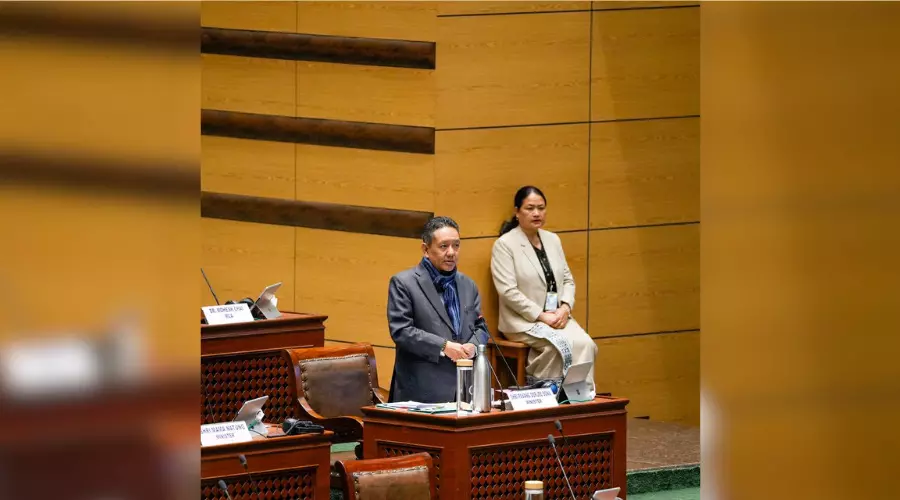
Pasang Dorjee Sona (Photo: Pasang Dorjee Sona / Meta)
Itanagar, March 12: The issue of failure of nanotechnology-based rural roads built under the Pradhan Mantri Gram Sadak Yojana (PMGSY) in Arunachal Pradesh was raised in the State Assembly today, with members cutting across party lines to demand gap funding to restore damaged and incomplete projects.
Responding to a short-duration discussion initiated by MLA Laisam Simai, Rural Works Department Minister Pasang Dorjee Sona informed the House that 37 out of the 42 PMGSY roads constructed across the State by using nanotechnology on a pilot basis have failed due to the State’s difficult terrain and climatic conditions.
“Out of the 42 projects, only five roads were found to be successful,” Sona said. He added that the technology faced major hurdles due to the fragile hilly terrain, steep slopes, unstable geological formations, heavy rainfall, frequent landslides, and erosion-prone conditions.
The minister told the House that the State Government has repeatedly taken up the matter with the Centre, seeking gap funding to restore the damaged and incomplete PMGSY roads, but no positive response has been received so far.
Sona said that he has requested Chief Minister Pema Khandu to raise the issue with the Centre, adding that the Chief Minister is expected to meet the Union minister concerned after the ensuing plenary session of the North Eastern Council.
Earlier initiating the discussion, Simai said that the PMGSY has helped connect remote villages with markets, schools, health centres, and district headquarters.
However, he noted that the use of nanotechnology in road construction under the PMGSY has not yielded the desired results.
The legislator observed that apprehensions were raised earlier regarding the feasibility of using nanotechnology for road construction due to the long rainy season, damp conditions, difficult topography, and short working season.
The MLA also highlighted that the introduction of the new technology reduced the use of locally available materials such as Random Boulder Masonry, Water Bound Macadam-II and Water Bound Macadam-III, which are widely available in districts like Longding. This limited local participation and reduced employment opportunities for local people.
He warned that without adequate gap funding, the project may remain incomplete, causing hardship to local residents and affecting regional connectivity.
Simai urged the Government to review all affected PMGSY roads and adopt hill-specific and climate-suitable engineering practices.
Senior members of the House including Honchun Ngandam, Wanglin Lowangdong and Wanglam Sawin also called for the provision of dedicated gap funding for restoration and completion of the failed projects.