
CAA protests sought to “choke Assam out of India”: Delhi Police to SC
Opposing bail for activists in the February 2020 Delhi riots case, the Delhi Police linked the violence of anti-CAA protests to organised mobilisations and regime-change attempts.
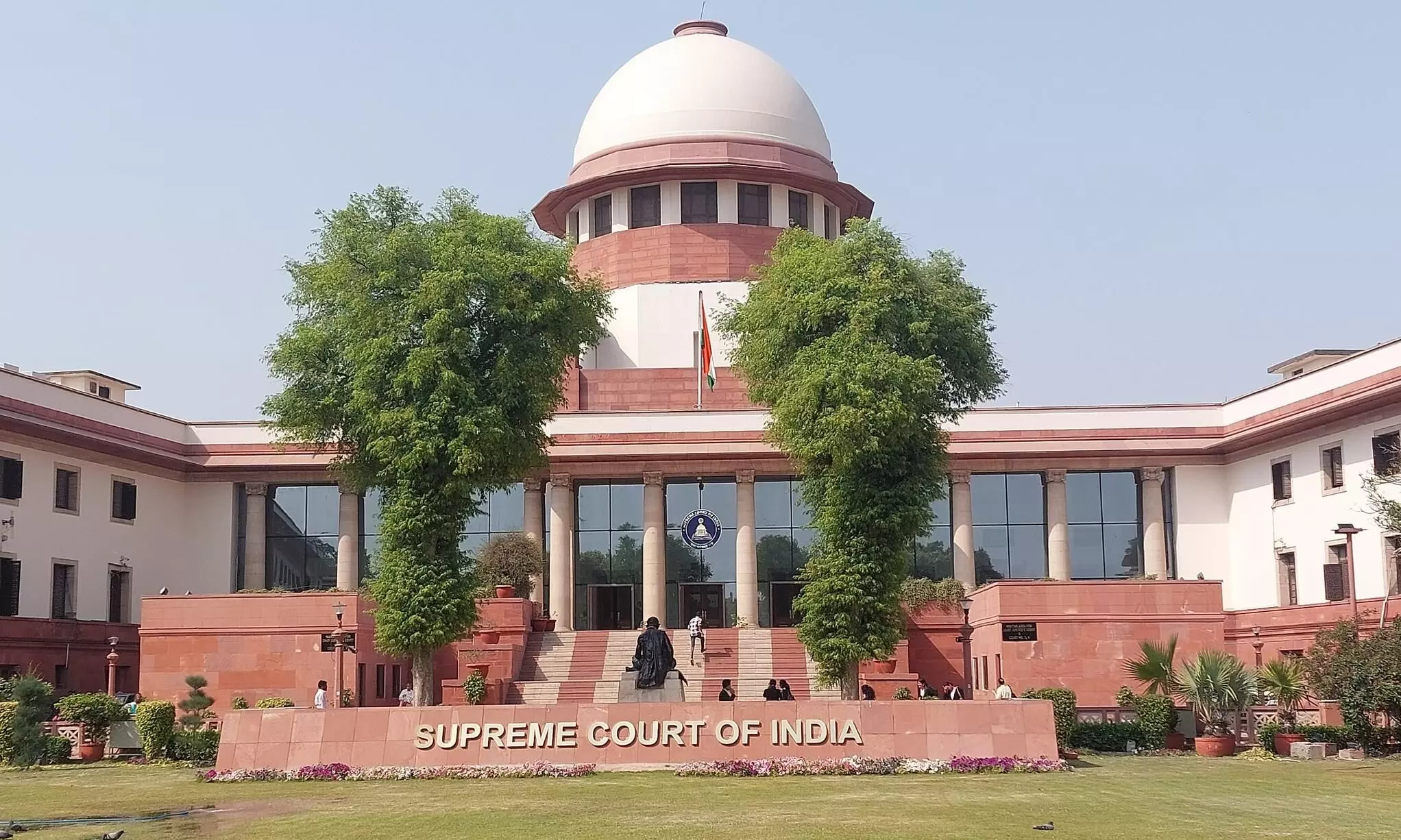
A file image of Supreme Court of India (Photo: @AdvHridayBiswas/'X')
Guwahati, Nov 22: The Delhi Police on Friday told the Supreme Court that the protests against the Citizenship (Amendment) Act (CAA) in the national capital were not mere expressions of dissent but part of a wider conspiracy that sought to destabilise the government and “choke Assam out of India”, drawing a direct link between the agitation and attempts to target the State’s political and social stability.
Appearing before a bench of Justices Aravind Kumar and N.V. Anjaria, Additional Solicitor General S.V. Raju, representing the Delhi Police, strongly opposed the bail pleas of activists Umar Khalid, Sharjeel Imam and others accused in connection with the February 2020 Delhi riots.
He contended that the movement, under the garb of peaceful protest, was orchestrated to engineer large-scale violence, with Assam being central to the narrative pursued by the conspirators.
Raju informed the court that the riots were the outcome of a well-planned conspiracy involving several accused, including Tahir Hussain, Shifa Ur Rahman, Meeran Haider, Ishrat Jahan and Khalid Saifi, who allegedly played roles in organising and financing the violence.
Referring to witness statements, he submitted that the conspirators had mobilised people for aggressive street protests, enforced chakka jams, and deliberately attempted to disrupt normal life with the objective of isolating Assam from the rest of the country.
He told the bench that rioters were armed with sticks and acid bottles and engaged in heavy stone-pelting, further stating that the agitation was never intended to be a simple dharna against the CAA but rather a calculated attempt at regime change, drawing comparisons with political upheavals in Bangladesh and Nepal.
“This is not a case of peaceful protest. Offences under the Unlawful Activities (Prevention) Act, 1967 are clearly attracted. It involved conspiracy to commit terrorist acts, murder and organised violence,” the ASG argued, adding that large-scale rioting intensified after CCTV cameras in the affected areas were destroyed.
The Delhi Police further claimed that the violence led to the death of a police constable and an Intelligence Bureau officer, besides injuries to several police personnel, underscoring the seriousness of the situation.
Commenting on the nature of those accused, the police argued that individuals with academic and professional backgrounds were increasingly becoming part of what it described as “anti-national activities,” stating that when intellectuals engage in such acts, they pose a greater threat than those operating on the ground.
The Supreme Court is scheduled to continue hearing the bail pleas in the matter on November 24.
PTI