
Three endangered indigenous languages of Assam digitally preserved
The AASU-led project digitally preserves Khamyang, Tai Phake & Singpho, archiving manuscripts, photos and rare audio speech records
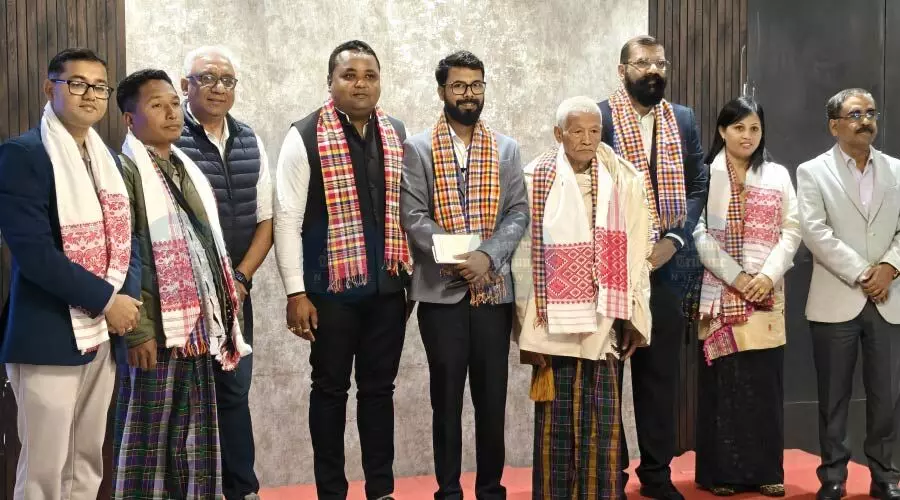
Twelve Khamyang manuscripts comprising 650 pages were digitised, along with 250 curated photographs capturing cultural practices, lifestyle and collective memory.
Guwahati, Jan 20: The All Assam Students’ Union (AASU), in collaboration with the Nanda Talukdar Foundation, has completed the digital preservation of three nearly extinct indigenous languages - Khamyang, Tai Phake and Singpho - under the Digitising Assam initiative.
The eight-month-long project, officially known as the Endangered Language Programme (ELP), has documented and digitised rare manuscripts, photographs, and extensive audio records of the three languages, many of which were at the brink of irreversible loss.
The entire collection is being placed in the public domain, allowing students, researchers and the general public to freely access and study the materials through digital platforms.
Among the three, Khamyang is in the most critical condition. According to project documentation, only one person in the world is fully proficient in speaking, reading and writing Khamyang.
The person, Bhogeswar Thmung, a resident of Powaimukh near Margherita, played a central role in anchoring the documentation process to authentic living knowledge.
Recognising the urgency, the project team carried out intensive textual, visual and audio documentation.
Twelve Khamyang manuscripts comprising 650 pages were digitised, along with 250 curated photographs capturing cultural practices, lifestyle and collective memory.
Under audio documentation, around 540 commonly used words and phrases were recorded, both in isolation and within sentences, preserving accurate pronunciation, everyday usage and intergenerational speech patterns.
The resulting audio archive has been designed to support language revitalisation, education and community access.
For the Tai Phake language, the project achieved one of its most extensive documentation efforts.
A total of 262 manuscripts and 19,950 manuscript pages were digitised, including rare classical texts such as the Mahabharata and Ramayana written in Tai Phake.
In addition, 350 photographs documenting traditions, rituals and daily life were archived along with audio documentation for the language.
Based on more than 675 core vocabulary units, recordings cover domains such as family and kinship, body and health, daily activities, food systems, nature, time, emotions and social relations.
Multiple recording sessions were conducted to capture natural pronunciation, idiomatic usage and tonal variation.
The archive has been developed with a long-term vision for learning resources, academic reference and future digital language tools.
For Singpho, where original manuscripts are no longer available, the focus was on digitising old books and printed literature as textual records.
The visual archive includes 450 photographs reflecting traditions, rituals and social life.
Audio documentation followed UNESCO-aligned endangered language documentation frameworks, resulting in an extensive audio profile with over 350 recorded speech units.
These recordings combine core vocabulary, narrative speech and contextual oral knowledge, ensuring that linguistic structure and cultural context are preserved together.
Field documentation indicates that the Khamyang community numbers between 1,000 and 1,400 people, mainly across Tinsukia, Sivasagar and Golaghat districts.
The Tai Phake community has around 2,000 speakers, largely in Tinsukia and Dibrugarh, while the Singpho population is estimated at around 9,000, predominantly in Tinsukia district.
Despite these numbers, functional language use has been found to be sharply declining, particularly among younger generations underscoring the importance of this initiative.
The ELP operates as a core vertical of Digitising Assam, which has already digitised over 2.9 million pages of rare Assamese literary, historical and knowledge resources.
Led by the Nanda Talukdar Foundation with institutional backing, the initiative is designed to remain open-access and non-proprietary.
The endangered language project integrates written texts, spoken language, oral narratives, songs, prayers and cultural practices, positioning languages not merely as data sets but as living cultural systems.
The programme is fully sponsored by AASU, with a formal Memorandum of Understanding signed in April 2025.
The project was led by author-journalist Mrinal Talukdar, with linguistic guidance from Dr Palash Kumar Nath, Assistant Professor at the Anundoram Borooah Institute of Language, Art & Culture (ABILAC).