
Mercury soars, safety stalls: Guwahati’s streets turn hostile for outdoor workers
As Guwahati battles rising temperatures, a lack of concrete policy leaves outdoor workers vulnerable.
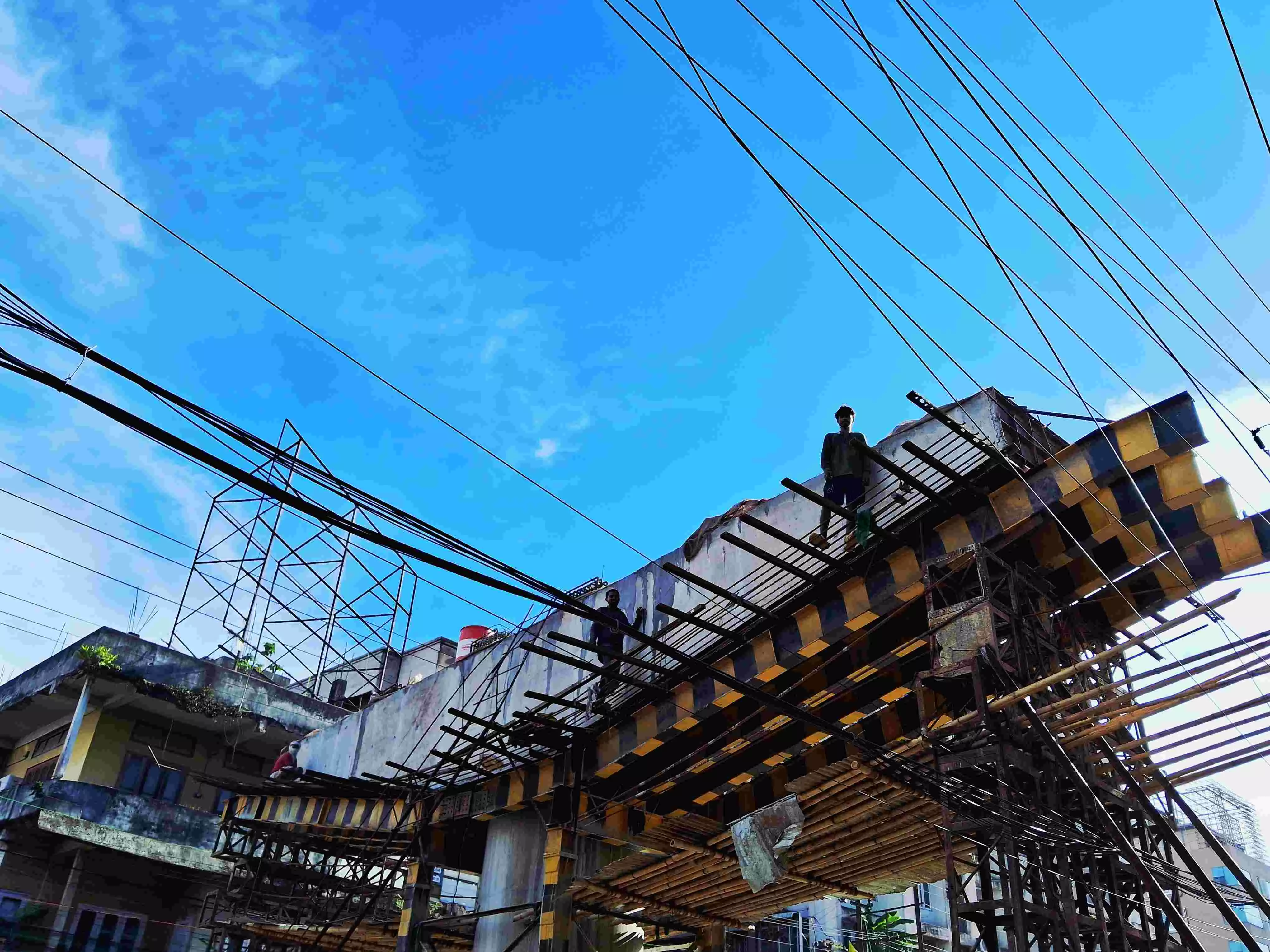
Midday heat doesn't halt the day's labour
The sun has turned unforgiving in Guwahati this summer, beating down relentlessly on streets teeming with life and labour. Amid the shimmering heatwaves, thousands of outdoor workers like traffic police, rickshaw pullers, street vendors, and daily-wage labourers are braving dangerously high temperatures with little more than sheer willpower and minimal protection.
According to the India Meteorological Department (IMD), the city recorded highs of 38.4°C in mid-July, with “feels-like” temperatures soaring beyond 50°C due to punishing humidity.
On July 23, the city logged a maximum of 36.7°C and a minimum of 28.5°C — numbers that have become the norm across much of Assam. The IMD has warned that temperatures will likely remain 3–4°C above average in the days ahead, thanks to clear skies and intense solar radiation. To top it, the lack of rains has only exacerbated the issue.
The result is a prolonged spell of discomfort that has made life on the streets increasingly perilous — especially for those who don’t have the privilege of stepping indoors.
Just yesterday, a police constable collapsed on the road, prompting widespread concern. While many suspected heatstroke, authorities are yet to confirm the cause.
Working under a blazing sun
For rickshaw pullers, traffic police, street vendors, and construction workers, the threat of heatstroke isn't theoretical, — it’s the daily danger they live with.
At one of Guwahati’s busiest junctions, Jayanta Rajbanshi, a traffic police officer stationed at the Chandmari intersection, manages traffic under the open sky for hours on end.
This is a critical stretch connecting the city’s central and eastern corridors — often choked with peak-hour snarls and slowed further by ongoing flyover construction.
“We work in two shifts, eight hours each. I keep a bottle of ORS water beside me — it helps. But the department provides water only when the heat is officially declared ‘extreme’. These days, every day feels extreme,” he told The Assam Tribune.
What were once occasional heatwaves have become everyday working conditions. And with construction making traffic management even more demanding, Rajbanshi’s presence at the intersection remains non-negotiable. “Someone has to be on point always. We can’t afford to be absent,” he says.
Govinda Das, a rickshaw puller in his 50s, has been working in Guwahati for over two decades. “This summer feels worse. I have to take breaks in between, otherwise I feel dizzy and nauseous,” he says.
He’s already been hospitalised once this summer due to dehydration — but returned to work the next day. “I had no choice,” he adds. His story mirrors that of thousands of others.
Fatigue, dizziness, and nausea have been normalised — not treated. The long-term health impacts remain invisible and undocumented.
At a flyover construction site in Chandmari, labourers toil in 12-hour shifts under the direct sun — hauling materials, welding metal frames, and operating heavy machinery amid dust and heat.
Most wear only plastic caps or cotton scarves for protection. “If we rest too long, our pay gets cut,” one worker says. Some manage quick five-minute breaks under scaffolding, but most power through.
Nearly all report feeling ill in recent weeks — yet continue regardless, because survival depends on showing up.
Unlike those in formal sectors, these workers operate entirely outside the safety net. There are no mandated rest hours during extreme heat, no paid sick leave, and no provision for water or medical care on site.
Bipul Das, officer-in-charge of Dispur Traffic Police, confirmed no major cases of heat illness had been reported so far among their personnel.
“We have around 35–40 traffic men working under us. Thankfully, no one has faced any major health problems or conditions due to this heat. We try to push through,” he says, admitting that water supplies and provisions are made only when possible and not as a matter of protocol.
But with temperatures continuing to rise year after year, it’s not clear how long this approach will remain viable.
Offering a medical perspective on the heatwave's impact, Dr. J.P. Sarma, director of Marwari Hospital in Guwahati, there has been a noticeable uptick in patients presenting with heat-related ailments this year.
“We are seeing more cases of heat cramps, skin rashes, vertigo, and even heatstroke,” he noted.
Dr. Sarma emphasised that heatstroke, in particular, is a life-threatening condition requiring urgent medical attention. “It’s extremely important to be cautious and avoid prolonged exposure to direct sunlight during this weather,” he warned.
To stay safe, he recommends wearing full-sleeve, breathable cotton clothing, staying well-hydrated, and limiting outdoor activity, especially during peak afternoon hours.
“Prevention is the most effective protection,” he added.
No plan in place
Despite the rising temperatures and surge in heat-related illnesses, there appears to be a glaring policy vacuum when it comes to heatwave preparedness in Assam.
Unlike cities like Ahmedabad and Nagpur, which have clear systems for heat alerts, water stations, and flexible work timings, Guwahati still depends on individual effort and patchy departmental responses.
Without proper protection, street workers fend for themselves — bringing their own water, taking breaks when they can, and returning to work each day, knowing the risks.
The signs are everywhere — slower movements, soaked uniforms, and tired faces.
This isn’t just about discomfort anymore. It’s a public health issue, a question of dignity, and a test of how seriously we take climate threats. If Assam is to face future heatwaves, this summer must be treated as a warning — and a call to act.
By Tanishqua Kashyap