
Lack of rainwater harvesting turns Guwahati flyovers into waterlogging risks
Experts highlight how integrating rainwater harvesting could reduce urban flooding, recharge groundwater, and improve infrastructure planning in Guwahati.
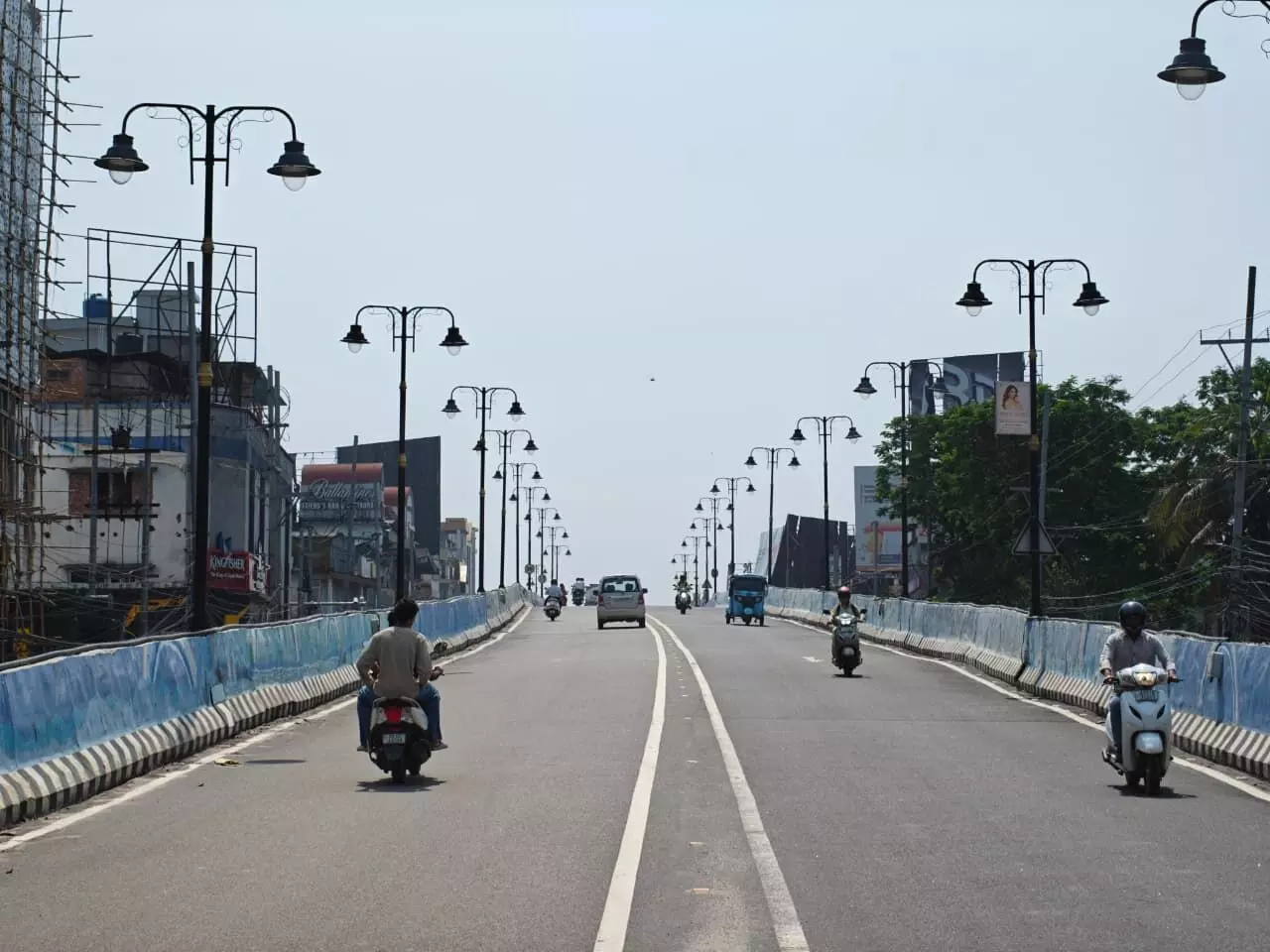
A flyover in Guwahati (AT Image)
Guwahati, March 21: Flyovers in Guwahati could have served a purpose beyond easing traffic congestion by incorporating features such as rainwater harvesting and systems to mitigate waterlogging. However, the absence of such components points to gaps in foresight, leaving key urban challenges unaddressed.
The result – during rains, water gushes down from these elevated structures like waterfalls, not only worsening waterlogging but also posing risks to infrastructure below, including roads and footpaths.
Experts agree incorporation of water harvesting features could have reduced waterlogging on roads beneath besides enabling recharge of shallow aquifers.
It could also have provided water for non-potable uses – like irrigation, cleaning, firefighting – besides preventing sudden water discharge from flyovers, preventing water from splashing on passing vehicles and commuters.
Rainwater harvesting (RWH) from flyovers and elevated road structures is an increasingly adopted international practice designed to manage storm runoff, reduce waterlogging, and provide non-potable water for urban landscapes.
In India, places like Bengaluru have some projects with built in RWH systems. On Namma Metro’s Reach 1 from Baiyappanahalli to MG Road, Bangalore Metro Rail Corporation Ltd (BMRCL) has built underground tanks with 3,000-litre capacity on either side of every second pillar. The pillars on the 33-km overground stretch of the Metro Phase 1 have inbuilt downpipes to collect rainwater from the viaduct into the underground tanks. Once the tanks get filled, the excess rainwater is diverted to pits of 18-ft and 5-ft.
The 10.1-km Avinashi Road Elevated Flyover of Coimbatore has dedicated rainwater harvesting structures, 200-foot-deep borewells, and a drip irrigation system has been built to sustain greenery between the pillars, making environmentally conscious.
“Rainwater harvesting (RWH) from flyovers and bridges is an emerging component of urban stormwater management – especially relevant in dense cities where impervious elevated surfaces generate rapid runoff but are usually wasted. Flyovers and bridges represent high-yield rainwater catchments due to their impervious nature. With proper hydrological design and integration of filtration and recharge systems, they can significantly contribute to urban flood mitigation, groundwater recharge and sustainable infrastructure,” Dr Bipul Talukdar of Assam Engineering College said, when asked to comment.
When contacted, Prof Arup Kumar Sarma of IIT Guwahati said his team had suggested a rainwater harvesting system at stretch of national highway in Nagaon.
“In Guwahati flyovers, the challenge will to be store the water or channelize it somewhere. It can also be used for groundwater replenishment, particularly during the lean period,” he said, adding that such a system could definitely help mitigate the problem of waterlogging on roads.
Rainwater harvesting is mandatory in water-stressed zones for highway projects.
The NGT in one of its order in 2015 had also directed the Centre and all public authorities to ensure that rainwater harvesting systems are installed in every project including flyovers, bridges or any other construction activity carried out by the government.
At present, Guwahati has 20 flyovers, eight rail overbridges, and three bridges over the river Brahmaputra.