
IIT Guwahati researchers create smart nanocrystals for advanced anti-counterfeiting
These materials have sizes in the nanometre range, and hold the capability to produce very pure and intense colours with very narrow emission ranges.
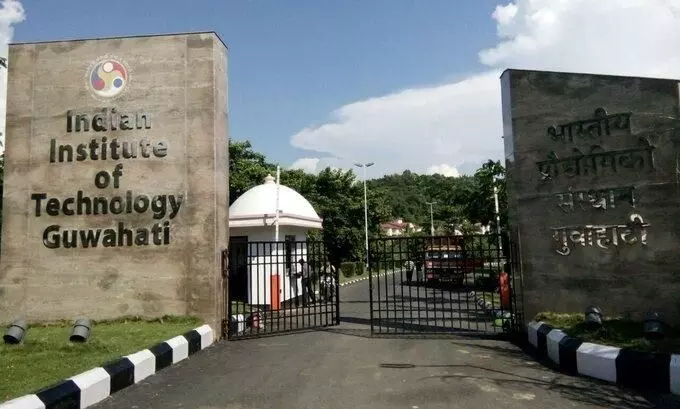
GUWAHATI, May 28: Researchers from the Indian Institute of Technology (IIT) Guwahati have developed an advanced light-emitting perovskite nanomaterial that could improve protection against fake currency, forged documents, and other counterfeit products.
To achieve this, the research team has developed nanocrystals capable of producing light-based security patterns that cannot be replicated using traditional printing and imaging methods.
Counterfeiting has become a global concern affecting various industries, ranging from pharmaceuticals and electronics to banking and identity documentation.
With the help of modern technologies, offenders have found ways to accurately copy conventional security measures such as barcodes, QR codes, holograms, and watermark labels. These challenges can also have implications for national security, as they can pose risks by enabling financial fraud, illegal activities, and security breaches. This has created an increasing demand for smart and difficult-to-reverse-engineer anti-counterfeiting systems.
To address this challenge, the IIT Guwahati research team has developed light-emitting perovskite nanocrystals, a group of crystalline materials known for their optical and electronic properties.
These materials have sizes in the nanometre range (a hundred thousand times smaller than the width of a single human hair), and hold the capability to produce very pure and intense colours with very narrow emission ranges.
This property helps in providing accurate optical signatures and larger colour tunability than traditional fluorescent materials. These properties make it suitable for secure authentication technologies.
However, one of the major challenges of these materials is their limitation when exposed to moisture, heat, and environmental conditions, under which they degrade easily.
To solve this problem, the research team developed a double-layer coating around the nanocrystals, making them heat and chemical-resistant while maintaining their light-emitting properties.
Then, the team created tiny patterns from these materials with the use of a direct laser writing technique.
The multi-layer coating enabled the developed nanocrystals to create these patterns without using conventional lithographic masks, which helped in achieving resolutions of 10-40 micrometers, allowing very complex patterns and encoding of information.
“A unique feature of this perovskite material is that, unlike normal security labels, which always show the same mark, it exhibits very narrow emission spectra and the emission intensity changes depending on the environment. For example, an invisible fluorescent pattern can be erased by heating and regenerated by subjecting it to a chemical process. This means that the security label does not simply glow under UV light but rather acts in a very specific and predictable manner when subjected to certain treatments,” Prof Saikat Bhaumik, assistant professor in the Department of Physics at IIT Guwahati, and lead author of the research, said.
He added, “However, in the case of the developed materials, to produce a fake, a counterfeiter will need to copy the visible pattern along with the way in which the nanocrystals respond to heat and chemicals. This makes the security system much harder to copy using traditional techniques. It also has the potential to embed information into company products and banknotes for secure information storage and retrieval.”
The researchers have coined this approach as ‘4D Anti-counterfeiting’.
Prof Bhaumik said the laser patterning technique developed by the research team can also be utilised in developing cutting-edge micro-LED displays for smartphones, wearables, and Augmented Reality (AR) systems, among other things.
The findings of the research have been published in the Advanced Optical Materials journal in a paper co-authored by Prof Bhaumik, in collaboration with Prof PK Giri, and their research scholars Latika Juneja and Garima Choudhary from the Department of Physics at IIT Guwahati.
By
Staff Reporter