
Guwahati rises to 21st in air quality rankings after PM10 levels drop
PM10 levels have dropped from 119 to 103 µg/m³, improving Guwahati's national position from 38th to 21st in the Swachh Vayu Survekshan rankings.
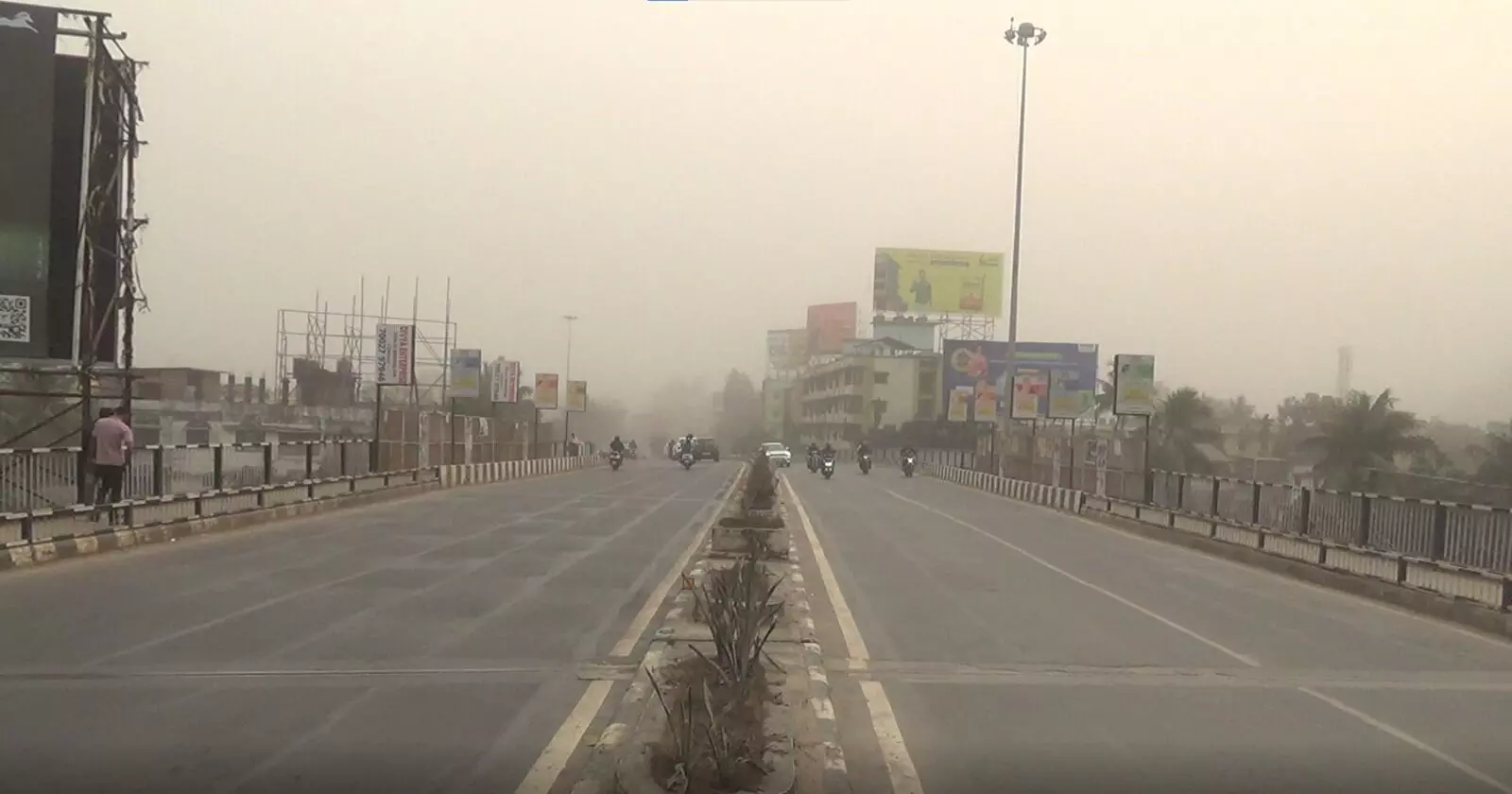
A file image of pollution in Guwahati
Guwahati, Dec 2: Assam Chief Secretary Dr Ravi Kota, chaired a review meeting with major departments, including GMC, APCB, Transport and PWD, to strengthen air-pollution control measures in Guwahati ahead of winter, when particulate levels typically rise.
NCAP source apportionment studies identify road dust and construction activities as the primary causes of particulate pollution, along with vehicular and industrial emissions and open waste burning.
Guwahati's bowl-shaped terrain and wind-blown silt from the Brahmaputra further trap pollutants during the dry season.
GMC has stepped up dust mitigation through multi-shift water sprinkling, mechanical sweeping using four machines (with four more being pro-cured), faster removal of desilted and construction waste, and repairs of over 375 minor roads and drains.
PWD is enforcing dust-control measures at major flyover sites, including water sprinkling and installation of air-quality sensors, a press release stated.
The State is advancing clean mobility with 100 CNG buses and a large electric bus fleet under Smart City and PM e-Bus Sewa projects. GMC has deployed 180 electric vehicles for waste collection, reducing open burning and emissions.
Old government vehicles are being scrapped, and incentives have been introduced to boost private EV adoption and phase out diesel buses.
APCB monitors air quality through 10 manual and four real-time stations, with daily AQI updates published by CPCB. A new MoU with iFOREST will support advanced pollution studies.
Due to targeted interventions, Guwahati's PM10 levels improved from 119 µg/m³ (2023-24) to 103 µg/m³ (2024-25), helping the city rise from 38th to 21st in the Swachh Vayu Survekshan rankings.
Officials affirmed continued commitment to cleaner urban development.