
Cotton University develops India’s first indigenous cancer therapy technology
The research was published on November 12, 2025, in the globally recognized journal Nuclear Instruments and Methods in Physics Research, B
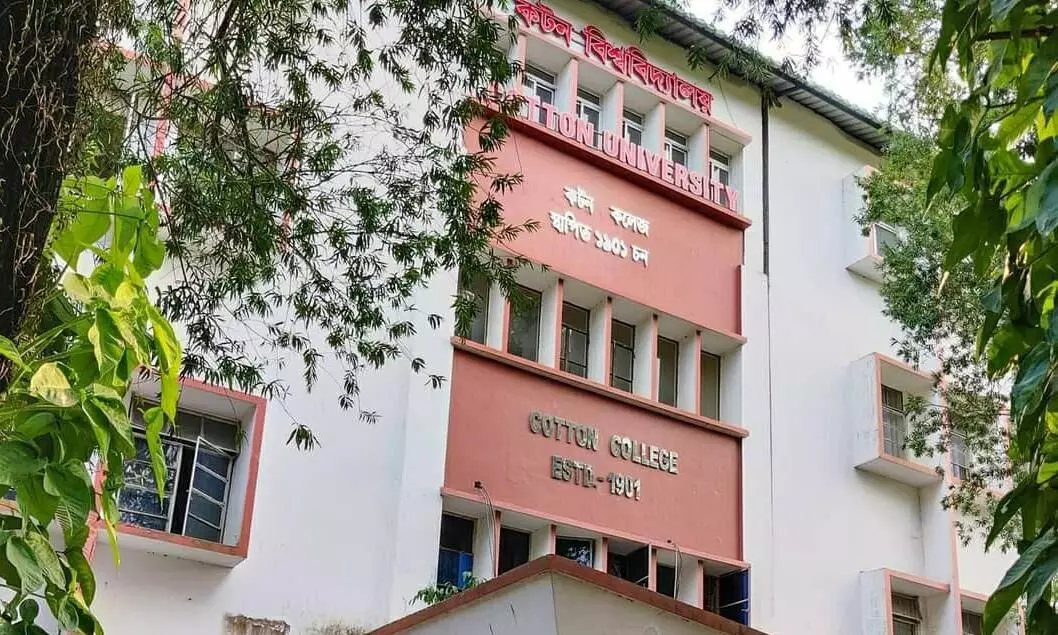
Guwahati, Nov 24: In a groundbreaking scientific achievement, Cotton University has developed India’s first indigenous Accelerator-Driven Boron Neutron Capture Therapy (AD-BNCT) technology, a next-generation cancer treatment expected to greatly enhance outcomes for aggressive and radio-resistant tumours.
The Cotton University Particle Accelerator Centre – North East (CUPAC-NE) has designed and built a BNCT-specific Beam Shaping Assembly (BSA) entirely in-house, overcoming global barriers such as the scarcity of special materials and stringent international IPR restrictions. The accomplishment marks a major milestone in the country’s pursuit of advanced cancer-therapy capabilities.
The research was published on November 12, 2025, in the globally recognized journal Nuclear Instruments and Methods in Physics Research, B, under the title “Design and optimisation of a neutron beam shaping assembly for AD-BNCT applications (D3) at Cotton University by CUPAC-NE collaboration.”
The pioneering work was led by research scholar Dimpal Saikia of the Department of Radiation Oncology, State Cancer Institute, GMCH, under the supervision of Prof JJ Das of Cotton University. The initiative received robust support from multiple national institutions including UGC-DAE, BARC, IUAC, NEHU, Gauhati University, Tezpur University, Bodoland University and others.
Explaining the significance of the breakthrough, Prof Das noted that India’s most advanced radiation therapy at present is Proton therapy, widely used for tumours near critical organs and for several childhood cancers because of its high precision. “AD-BNCT, however, offers a non-invasive, highly selective approach that uses boron compounds and neutron beams to destroy cancer cells while sparing healthy tissue. It also has the potential to be far more cost-effective,” he said.
CUPAC-NE is also setting up a cutting-edge accelerator facility equipped with a 5 MV Van de Graaff system to strengthen research in cancer therapy and other scientific areas. The project aligns with India’s Mega Science Vision 2035 and has already drawn interest from international partners, including the Government of Novosibirsk region in Russia. Cotton University has additionally signed an MoU with Dr B Barooah Cancer Institute to advance clinical applications.
According to researchers, AD-BNCT could substantially reduce treatment costs compared to Proton therapy. Although BNCT has already been introduced in a few countries, the required equipment remains prohibitively expensive and largely patented. Cotton University’s achievement under the Make in India initiative marks a transformative step, delivering the nation’s first fully indigenous BNCT-specific BSA.
By
Staff Reporter