
Bharalu River reduced to sewage channel amid years of neglect
The tragedy of the Bharalu lies not only in how polluted it has become, but in how casually this decline has been accepted
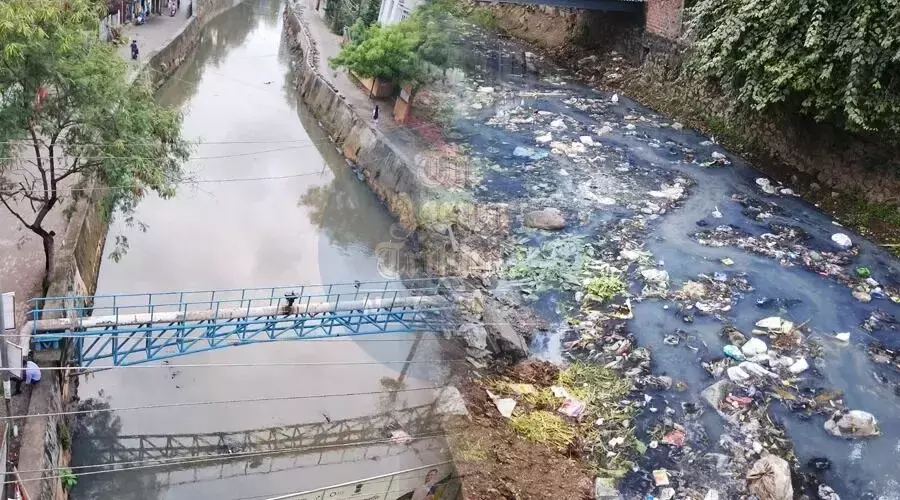
File image capturing pollution in the Bharalu river, Guwahati (Photo: AT)
The Bharalu river did not collapse in a moment of carelessness. Its death has been slow, deliberate, and painfully visible. For years, it has been suffocated by neglect, indifference, and a collective willingness to look away.
Today, as disturbing images of its polluted waters circulate across social media and attract global attention, Guwahati is forced to confront an uncomfortable truth: the Bharalu is not merely polluted, it has been abandoned by the very city it once sustained.
There was a time when the Bharalu functioned as a natural artery of Guwahati. Flowing through the city before merging with the Brahmaputra, it helped regulate water, supported local ecosystems, and served nearby communities.
That river has now been reduced to a sewage channel, carrying untreated waste, plastic, and urban excess. The outrage visible today may seem sudden, but it is the result of years of accumulated frustration. The decay did not happen quietly; it happened in plain sight.
The tragedy of the Bharalu lies not only in how polluted it has become, but in how casually this decline has been accepted.
Over decades, poor urban planning diverted raw sewage directly into its waters. Storm drains were merged into its channel without consideration of capacity or ecological impact. Solid waste was dumped with impunity, gradually choking its flow.
Authorities were never unaware of this. Studies repeatedly warned of alarming pollution levels, and residents living near the river complained of unbearable stench, mosquito infestations, and rising illness. Yet the river continued to be treated not as a living system but as a convenient dumping ground.
Calling the Bharalu a river today feels almost dishonest. In many stretches, it barely flows. What moves instead is a thick, stagnant mixture of human waste and refuse. This is not a hidden crisis unfolding in some distant corner of the city.
It exists openly, normalized by daily exposure and collective resignation. People pass by it, hold their breath, and move on.
What has changed now is not the condition of the river but its visibility. A viral video showing the Bharalu clogged with garbage has drawn attention far beyond Assam, forcing Guwahati’s environmental crisis into the global conversation.
Some officials have been quick to dismiss the outrage as exaggerated or politically motivated. But the images do not lie. They reveal a failure that cannot be spun away.
This global attention should not embarrass the city because outsiders are watching. It should shame us because we allowed this to happen.
The Bharalu reflects Guwahati’s priorities with brutal clarity. Roads and flyovers were constructed in the name of development while drainage systems were ignored. Urban expansion was celebrated while ecological limits were forgotten.
Master plans were drafted, revised, and quietly shelved, while the river continued to deteriorate inch by inch. Growth was pursued without responsibility, and the Bharalu paid the price.
Responsibility for this decay does not lie with one institution alone, though institutional failure is undeniable. Civic bodies failed to build adequate sewage treatment infrastructure even as the city expanded rapidly.
As a result, most of Guwahati’s wastewater continues to enter natural waterways untreated. Environmental regulations exist largely on paper, and enforcement is sporadic at best. Encroachments along the riverbanks have narrowed its channel, reducing its ability to drain water and increasing the risk of flooding.
At the same time, citizens cannot claim innocence. Every plastic bag thrown into a drain, every act of dumping waste along the riverbank, and every silence when encroachments crept closer were conscious choices.
Civic responsibility cannot be outsourced entirely to the government. The Bharalu was not only mismanaged by authorities; it was misused by society. Demanding accountability requires acknowledging this shared failure.
The consequences of the Bharalu’s decay extend far beyond environmental loss. This is a public health crisis unfolding slowly but relentlessly. Polluted, stagnant water creates ideal breeding grounds for mosquitoes, increasing the risk of dengue and malaria.
Foul air affects respiratory health, particularly for children and the elderly. During the monsoon, clogged channels worsen flooding, damaging homes, disrupting livelihoods, and disproportionately affecting low-income neighborhoods.
If the river continues to degrade, the cost will not be measured in headlines or viral outrage. It will be paid in hospital bills, lost working days, damaged property, and deepening inequality. Environmental neglect always finds its way back to human lives.
Yet responses to this crisis have often focused on appearances rather than solutions. Periodic clean-up drives are announced with enthusiasm. Machines are deployed, photographs are taken, and promises are made.
But removing visible garbage without addressing untreated sewage, illegal dumping, and encroachment is little more than cosmetic governance. It may improve how the river looks for a few days, but it does nothing to restore its function or dignity.
The Bharalu does not need symbolic cleaning exercises. It needs structural change. It needs sewage to be treated before it reaches the water.
It needs waste management systems that actually work. It needs its banks reclaimed from encroachment and its channel scientifically restored. Above all, it needs urban planning that respects natural drainage rather than overriding it in the name of convenience.
Cities around the world have shown that polluted rivers can be revived, but only when they are integrated into public life rather than hidden or ignored.
When rivers are accessible, visible, and valued, people develop a sense of ownership and responsibility. Guwahati must begin to see the Bharalu not as an inconvenience to be buried or diverted, but as a public asset that demands care.
This moment of renewed anger must not be wasted. Public outrage has a short lifespan, and attention inevitably shifts.
If this moment passes without structural reform, the Bharalu will remain what it is today: a slow-moving symbol of failure. The river is not asking for sympathy. It is demanding responsibility.