
Tinsukia's Maguri-Motapung Beel welcomes new year with wings & wanderers
Spread across a vast landscape between Barekuri, Baghjan and Natun Gaon, the beel is home to over 300 species of indigenous and migratory birds.
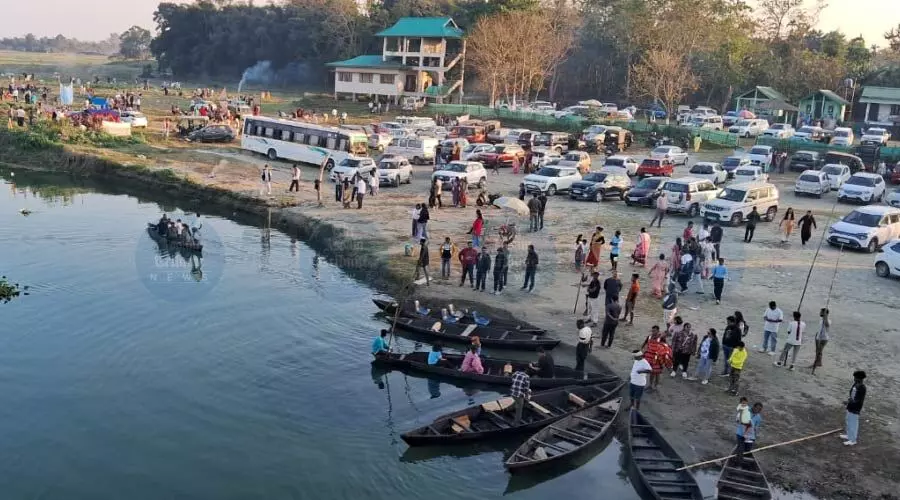
Maguri-Motapung Beel
Doomdooma, Jan 8: As the first Sunday of the New Year dawned over Upper Assam, Maguri-Motapung Beel stirred to life - not just with the soft flapping of migratory birds, but also with the laughter, music, and eager footsteps of thousands of visitors.
Nestled about 10-12 km from Tinsukia town, this internationally recognised wetland once again became the meeting point of nature’s rhythm and human celebration.
For many, welcoming the New Year amid shimmering waters, winter sunshine, and open skies held a charm far removed from urban routines. Families, groups of friends and picnic parties gathered along the beel’s banks, sharing meals, and moments of carefree joy.
Yet Maguri-Motapung is far more than a picnic destination. Spread across a vast landscape between Barekuri, Baghjan and Natun Gaon, the beel is one of Assam’s richest biodiversity hotspots, home to over 300 species of indigenous and migratory birds. From October to March, flocks of birds arrive from distant lands, transforming the wetland into a living canvas of movement and sound. Ducks, geese, herons, egrets and many rare species fill the air with a chorus that signals the return of winter visitors.
With the onset of winter, birdwatchers, ornithologists and tourists from different parts of India and abroad are drawn to the beel. Visitors from countries such as Germany, Japan, England, France and the United States have long regarded Maguri-Motapung as a paradise for avian diversity. Recently declared an ‘Eco-Sensitive Zone’ under the Dibru–Saikhowa National Park biosphere, the beel also shelters several rare to find and endangered flora and fauna.
But, beneath the festive mood and natural splendour lies a story of fragility. The catastrophic explosion and fire at the BGR 5 Oil Well in Baghjan in 2020 left deep scars on the beel’s ecosystem. Oil contamination damaged aquatic vegetation, disrupted bird habitats and affected fish, turtles and other aquatic lives. The disaster also struck at the livelihoods of thousands of people living around the wetland.
Environmentalists caution that unchecked human activity now poses a renewed threat. While winter picnics bring festivity and commerce to the area, plastic waste, loud music, and reckless celebration risks the delicate balance of the wetland. “People should come here to watch birds, to learn from nature,” says noted environmental activist Niranta Gohain, “Eco-friendly picnics are welcome, but noise and litter in the name of enjoyment harm both birds and the environment.”
Despite these concerns, hope glimmers across the beel’s waters. Floating lotus and water lilies, dense aquatic plants and the ceaseless movement of birds create a scene that continues to enchant visitors. Nature lovers believe that with timely and sincere intervention by the government and the tourism department, Maguri-Motapung Beel could secure its rightful place on the global eco-tourism map.
As the winter sun sets and the sky comes alive with fluttering wings, Maguri-Motapung stands at a crossroads – celebrated, admired, yet vulnerable. In the mingled sounds of picnic, laughter, and birdsong lies a quiet question – can joy and responsibility learn to coexist in this fragile paradise?
By
Abhijit Khatniar