
Tiger deaths in Kaziranga: What infighting reveals about habitat strain
Experts say that while tigers naturally disperse to establish new territories, their success depends on habitat suitability and prey availability
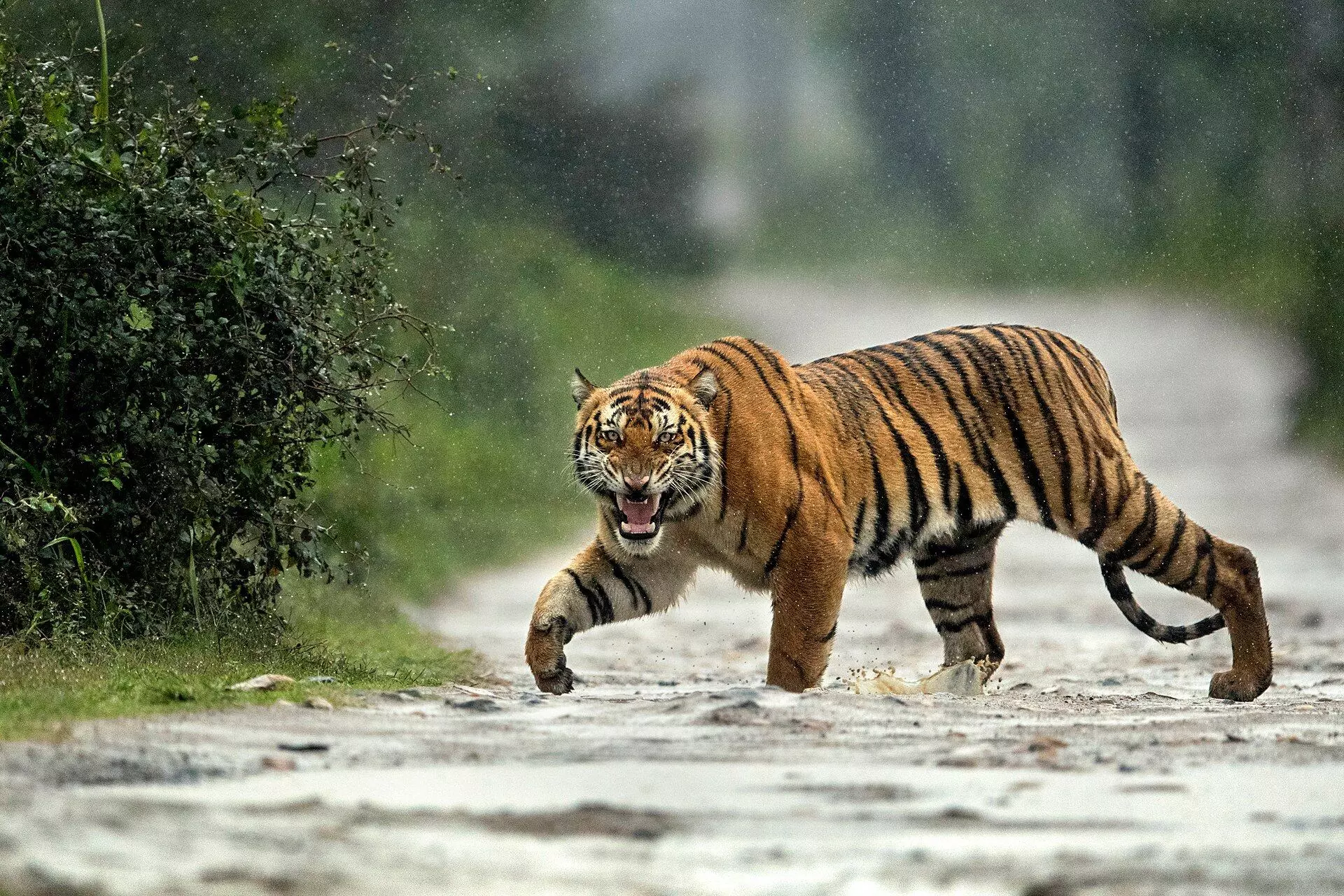
A royal bengal tiger spotted in the wilderness of Kaziranga National Park (Photo: _mohanthomas/meta)
Assam’s tiger population has recorded a sharp rise over the past decade and a half with the number of big cats in the state touching the 227 mark in 2022 from 70 in 2006.
The surge is seen as a significant milestone in conservation efforts across Assam’s protected areas. However, the positive trend has been tempered by a series of tiger deaths reported this year.
In just the first two months of the year, four tiger carcasses were recovered from Kaziranga National Park and Tiger Reserve, a UNESCO World Heritage Site known globally for its biodiversity.
The latest case was reported on February 7, when park personnel discovered the carcass of a male tiger in the western side of the Mandir Baneshwar Anti-Poaching Camp (APC) area under the Burapahar Range at Ghorakati.
The carcass of the male tiger recovered from Mandir Baneshwar Anti-Poaching Camp (APC) area under the Burapahar Range at Ghorakati. (Photo: IANS)
Earlier, an adult female tiger was found dead in the Bagori Range; a young male tiger, estimated to be between two and three years old, was recovered from the Eastern Range at Gamiri and another tiger death was reported from the Bagori Range on January 18.
The deaths have brought renewed focus on tiger conservation in the state, with questions being raised about ecological pressures in high-density habitats and the challenges of limited dispersal space within and beyond protected areas.
While wildlife experts have warned that rising tiger numbers in confined habitats can heighten territorial conflict, The Assam Tribune examined the recent deaths to assess the causes and their broader implications for conservation in the state.
Mortality often under-detected
According to latest official data from Kaziranga National Park, the reserve recorded 148 adult tigers in 2024, with a density of 18 tigers per 100 sq. km.
Responding to concerns over the recovery of four tiger carcasses this year, renowned wildlife biologist K. Ullas Karanth, noted that tiger mortality is often under-detected in forest environments.
“Detecting dead tigers in forests is very difficult, so the absence of detected carcasses does not mean mortalities are not occurring,” he said.
Tiger conservation expert Dr Firoz Ahmed of the Assam-based not-for-profit Aaranyak, echoed this concern. “The four carcasses are only those that were detected, but the actual number may be higher, as some dead tigers may go unnoticed and eventually decompose in the forest,” he said.
Karanth prefers not to comment directly on official population estimates as well. “I do not want to comment on government tiger numbers, as many (not all) such estimates do not follow scientific protocols,” he said.
He noted that Kaziranga’s strong prey base creates favourable breeding conditions. “I expect reproduction rates in Kaziranga to remain high because of the abundance of prey animals,” he said.
Infighting & territorial conflicts
In a statement on February 7, after the carcass of the fourth tiger was discovered, the Kaziranga officials said that preliminary findings during the post mortem suggest that infighting led to the death of the tiger. Previously, post-mortem and investigations suggested that all the three deaths were due to infighting as well.
Experts believe that infighting among tigers is a natural ecological process driven primarily by territorial overlap or limited space.
“Infighting is natural and mostly happens when territories overlap, or resources are scarce. Even if there are some other reasons, the Forest Department is the only one that can inform because they conduct the post-mortem,” Dr Ahmed said.
Responding to concerns, Karanth said such incidents, while alarming, are not unusual in healthy tiger populations.
“My long-term research on tiger populations in Karnataka and Thailand shows that even secure and stable tiger populations living at high densities experience mortality and other losses of about 15-20% each year,” he said.
He explained that such losses are largely due to natural causes, including territorial conflicts, injuries, and dispersal. “In my opinion, this kind of social conflict and mortality is expected and is nothing to worry about, as long as reproduction rates remain high,” he added.
First ever camera-trapped evidence of successful breeding of tigers in Laokhowa Burhachapori Wildlife Sanctuary (Photo: @kaziranga_/X)
Dr Ahmed said improving habitat quality and prey availability in surrounding protected areas could help address the issue.
Restricted dispersal & prey density
Experts further emphasised that restricted dispersal opportunities are a major contributing factor behind such conflicts. Dr Ahmed says that primary issue appears to be the park’s high tiger density, which has likely reached its ecological carrying capacity.
“The infighting may be influenced by a tiger's inability to move out of Kaziranga and settle elsewhere outside the core area,” Dr Ahmed said.
While nearby landscapes such as the Karbi Anglong Hills offer potential habitat, they currently support fewer prey animals and can accommodate only a limited number of tigers, he said.
As a result, many tigers remain confined within Kaziranga’s core zones, intensifying territorial competition and increasing the likelihood of violent encounters.
Karanth said that while tigers naturally disperse to establish new territories, their success depends on habitat suitability and prey availability.
“Tigers can and do disperse to new areas, but the real problem is the lack of places with enough prey for them to survive and establish territories,” he said.
“Prey densities are depressed in most places because of human hunters. I expect this to be true of the wider landscapes around Kaziranga,” he added.
He, however, clarified, that prey scarcity is not a concern in Kaziranga, which supports abundant prey species due to its rich biodiversity and protected ecosystem.
Looking ahead
Strengthening ecological conditions in nearby reserves such as Laokhowa Wildlife Sanctuary and Burhachapori Wildlife Sanctuary may allow surplus tigers to disperse safely and establish territories.
“It is important that the population is managed scientifically for both tigers and prey animals inside core areas for long-term conservation of the species and to improve coexistence with people,” Dr. Firoz Ahmed said.
On measures to reduce infighting, Karanth said direct human intervention in wild tiger populations is neither necessary nor advisable.
“You need not, and cannot, take measures to prevent such conflicts, and interfering in natural populations is not a good idea,” he said.
He emphasised that territorial conflict is an inherent aspect of tiger ecology. “Tigers are large carnivores, and territorial conflict is a natural part of their biology. We humans, should remain as hands-off as possible,” he added.
Assam’s tiger recovery has been impressive, but the recent deaths show that numbers alone are not enough.
Protecting corridors, improving nearby habitats and ensuring enough prey will decide whether the state’s tiger population can survive and grow in the years ahead.