
On RTI's 20th anniversary, Assam Congress accuses BJP of weakening law
LoP Debabrata Saikia warns CIC understaffing threatens transparency, as just 2 of 11 commissioners manage thousands of pending cases
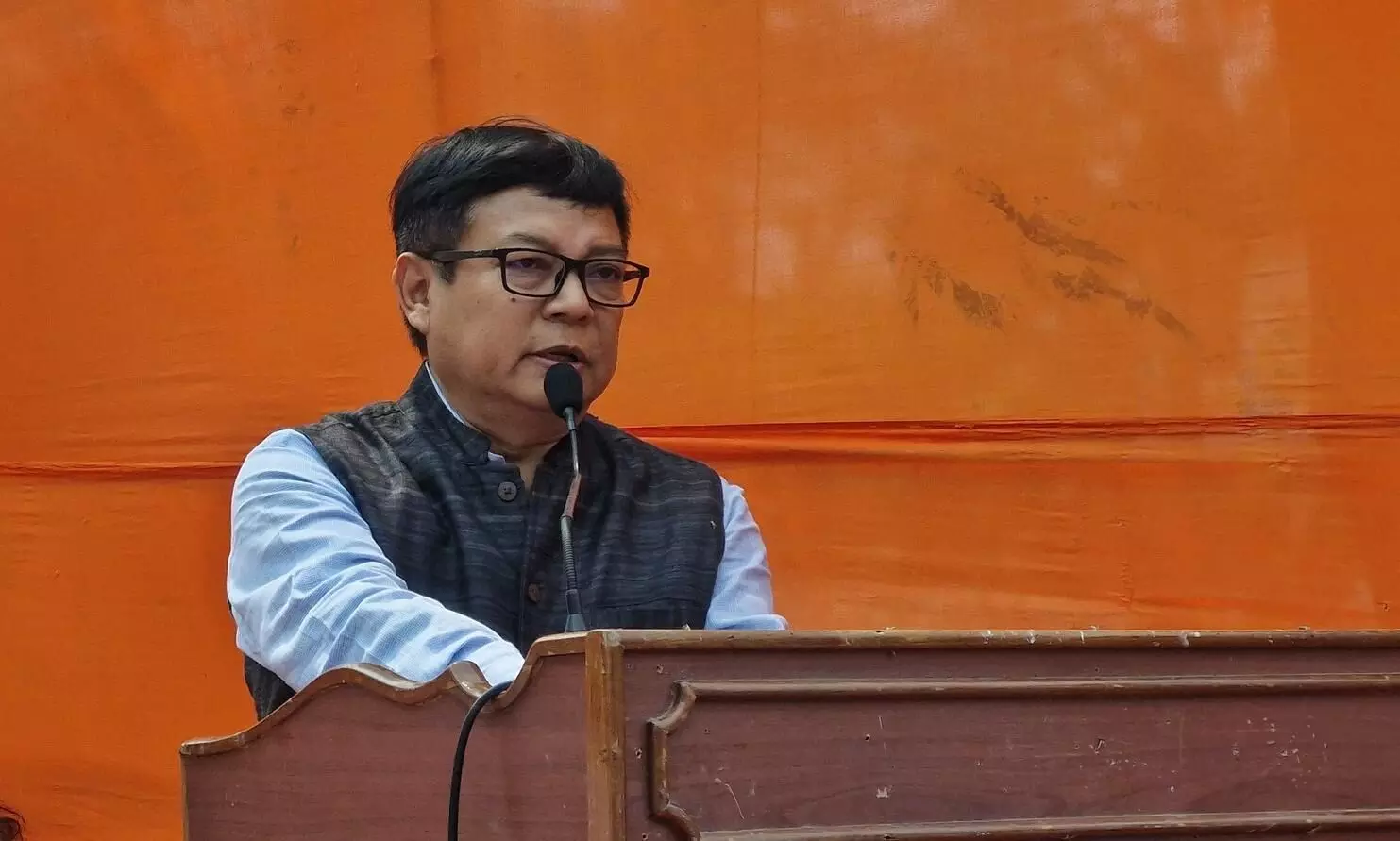
Guwahati, Oct 12: On the 20th anniversary of the enactment of the Right to Information (RTI) Act, Leader of Opposition, Debabrata Saikia, on Sunday, accused the ruling BJP-led National Democratic Alliance (NDA) of “systematically” weakening the landmark Act’s framework through amendments and administrative neglect.
“Ever since the BJP government took over, the RTI Act has faced repeated attacks. The 2019 amendment changed service conditions of information commissioners, making their tenure and salary dependent on the government’s discretion. This undermined their independence and reduced their ability to act impartially,” Saikia told the press, at Rajiv Bhawan.
Terming the RTI Act as the biggest weapon against corruption, Sakia said that the essence of the law has been eroded, particularly after the BJP came to power in 2014.
“The Right to Information Act, enacted under Dr. Manmohan Singh’s leadership in 2005, was a transformative step in India’s fight against corruption. RTI is not just a law; it’s a tool for social development. We demand that the government reinstate the powers of the Information Commissions and protect citizens’ right to know. The integrity of democracy depends on it,” Saikia asserted.
He further criticised the Digital Personal Data Protection Act of 2023, arguing that certain clauses within it, particularly Clause 44.3, allow public data to be classified as personal information, shielding it from scrutiny.
“This provision has created a loophole for hiding corruption. If information can be declared as personal data, it no longer falls under RTI. This goes against the spirit of transparency that the Act once stood for,” he said.
Highlighting the administrative lapses, Saikia pointed out that the Central Information Commission (CIC), which should ideally have one Chief Information Commissioner and ten Information Commissioners, currently functions with only two commissioners.
“Due to this shortage, there are over 23,000 pending cases as of November 2024. Nationwide, more than 4.5 lakh complaints remain unresolved, many of which should have been disposed of within one or two months,” he added.
Referring to the Assam State Information Commission, he said that significant irregularities have been reported, further weakening public confidence in the system.
Saikia also accused the government of failing to implement the Whistleblower Protection Act of 2014, leaving those who expose corruption without security or support.
“Without protecting whistleblowers, the fight against corruption is meaningless. People are afraid to speak up because the law is not implemented in spirit,” he said.
Drawing parallels between the UPA and BJP governments, Saikia recalled that the UPA’s tenure saw several pro-people legislations, including the Mahatma Gandhi National Rural Employment Guarantee Act (2005), Right to Education (2009), and National Food Security Act (2013).
“The Congress government focused on empowering people through rights-based laws, while the BJP has worked to curtail them,” he remarked.
He concluded his address by demanding that the government restore the original provisions of the RTI Act, strengthen the institutions governing transparency, and review conflicting laws like the Digital Privacy Act.
In addition to his remarks on the RTI Act, Saikia also addressed the ongoing probe into the circumstances leading to the death of cultural icon Zubeen Garg case, stating that a letter was sent to the Singapore Embassy on September 22 and another to the President of India on September 25, urging a fair and transparent investigation.
He demanded an all-party meeting to ensure justice for the late artiste, stating, “Zubeen deserves justice through an impartial probe. The Chief Minister has made this a political issue, but for us, it is about truth and justice.”