
Niti Aayog ranks Assam low on EV readiness, highlights poor charging infra
The State’s private EV adoption rate has been poor (score of 11 out of 100) and is ranked 29 among 36 states and UTs.
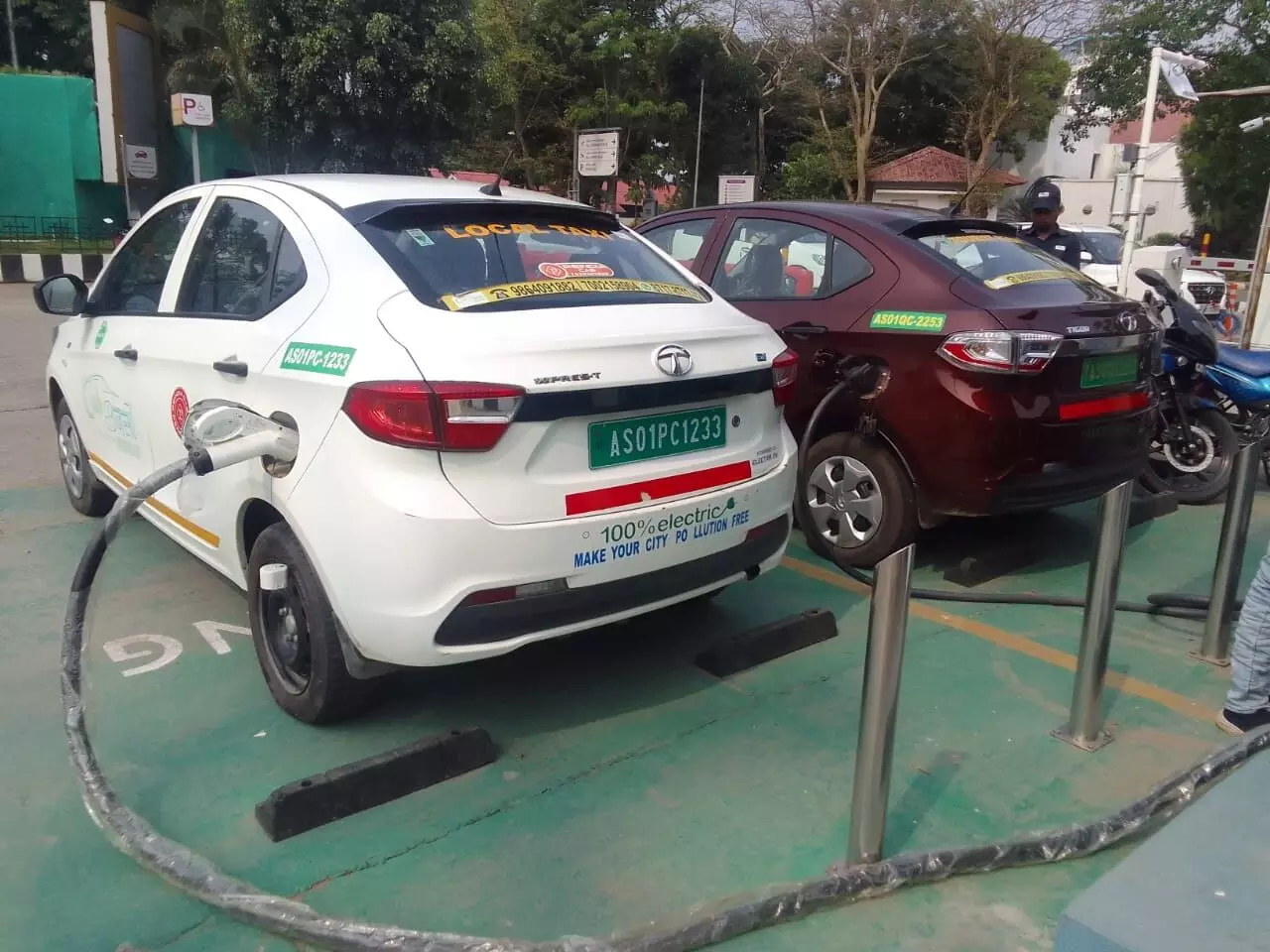
The State was also lowly placed (29th) in the EV Research and Innovation Status category which focuses on the growth of EV R&D initiatives. (Photo:CAB BIJLI Taxi Service)
Guwahati, Aug 11: Assam’s progress in strengthening of e-mobility ecosystem has receded during 2024, according to a Niti Aayog report, indicating the need for renewed focus on innovation-driven initiatives. The overall rank of Assam across all indicators – including EV adoption, charging infrastructure and EV technology – is 27th among 36 states and UTs.
While the State’s commercial EV adoption rate - share of commercial EVs in the total commercial vehicles registered in the State during the assessment period (2024) - has been the highest in the country, but lack of charging infrastructure and other factors have kept consumers’ confidence in e-mobility low.
The State’s private EV adoption rate has been poor (score of 11 out of 100) and is ranked 29 among 36 states and UTs. The private EV adoption rate refers to the share of private EVs among the total private vehicles registered in a state during the assessment period, as sourced from the Vahan database or official state portals. Higher scores indicate stronger consumer confidence in e-mobility, widespread awareness and effective state-level incentives leading to significant uptake of EVs by individuals.
In terms of charging infrastructure readiness, Assam has been placed at the bottom with a score of 5 out of 100, in the list of states which was topped by Haryana with a score of 83, according to the report ‘India Electric Mobility Index 2024’. The poor progress reflects Assam’s inadequate State-led initiatives and incentives designed to support the establishment of charging networks and promote RE generation.
Various issues like purchase incentives, transition incentives and operational support incentives are lacking in Assam.
In ‘Transport Electrification’ Progress, which primarily revolves around state-led efforts to promote adoption of EVs by incentivizing EV purchases and operations, the State scored 49, and is placed at 9th.
The State was also lowly placed (29th) in the EV Research and Innovation Status category which focuses on the growth of EV R&D initiatives.
On the brighter side, over 85 per cent of three-wheelers registered in Assam in 2024 are electric, driven by strong government incentives with road tax and registration fee waivers. Assam government launched one of India’s first app-based e-bike taxi services - ‘Baayu’. It is a fully electric and decentralized bike taxi service.
The report suggested some interventions like setting up a state website for EV awareness, promotion of EV adoption by introducing vehicle scrapping incentives, low emission zones and commercial EV permit exemptions, setting up of a nodal agency for charging infrastructure and improved streamlined approval processes, concessional land rates for charging stations and recommending EV charging infrastructure in building bylaws.
Rising vehicle ownership in India has significantly intensified the environmental burden posed by the transport sector. With over 310 million vehicle registrations in the past 15 years, the transport sector accounts for about 12 per cent of India’s energy-related carbon dioxide emissions, with road transport responsible for over 92 per cent of these emissions. Moreover, the sector is a major contributor to air pollution, accounting for 20-30 per cent of the urban air pollution in Indian cities, predominantly from road transport.