
Kaziranga’s hidden world: Survey finds 77 fish, 108 reptile & amphibian species
The survey was conducted between July and September this year in collaboration with scientists and researchers from the Wildlife Institute of India (WII), Ghosh said.
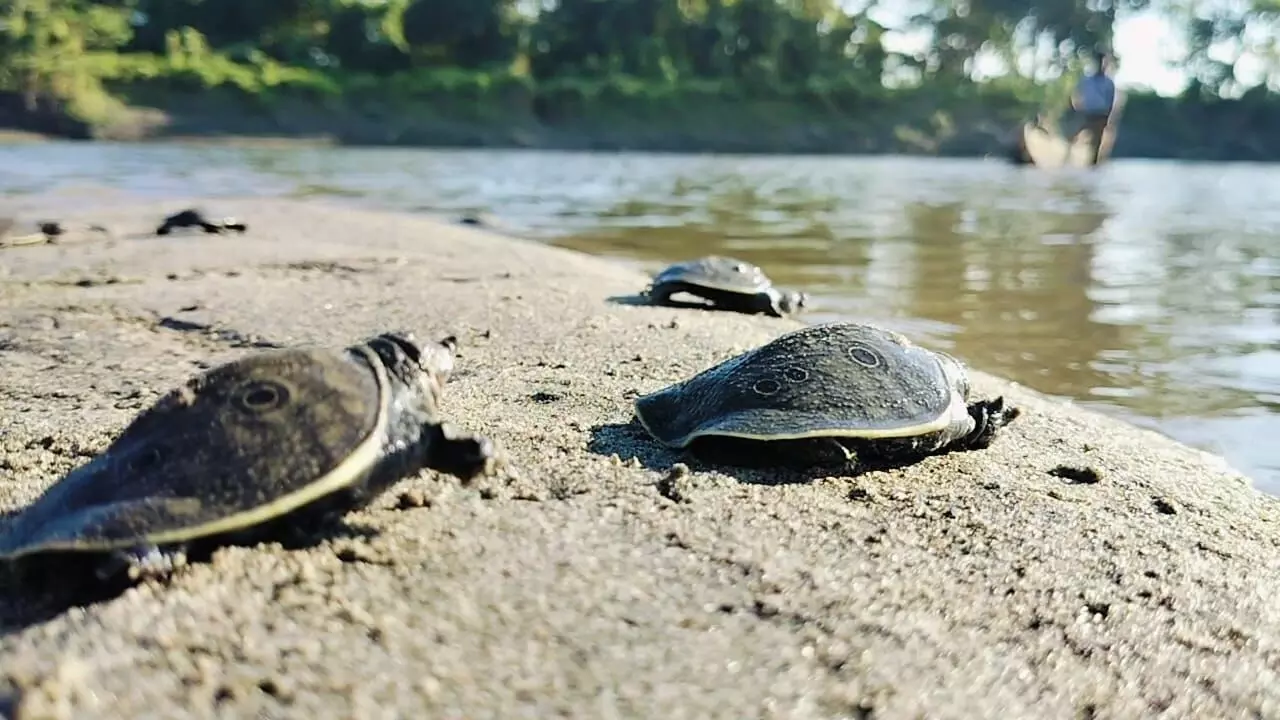
Critically endangered Black Softshell Turtle hatchlings from Nagshankar Temple released into the wild at Kaziranga. (Photo:@kaziranga_/X)
Guwahati, Nov 6: Beneath and along the iconic grasslands of Assam’s Kaziranga National Park, India’s seventh UNESCO World Heritage Site, thrives a vibrant world of fish, frogs, and reptiles, showcasing the park’s rich biodiversity.
Kaziranga National Park and Tiger Reserve (KNPTR) Director Sonali Ghosh on Thursday said that a rapid survey conducted by the Kaziranga Park authority has revealed a rich assemblage of 77 species of freshwater fish, forming a major share of Assam’s 216 indigenous fishes and contributing to the Northeast’s remarkable diversity of 422 native fish species.
The park also supports 108 species of amphibians and reptiles, far exceeding the 70-plus herpetofauna recorded from other parts of the state and adding to the 274-plus herpetofaunal species known from the northeast.
The park supports 108 species of amphibians and reptiles, far exceeding the 70-plus herpetofauna
The survey was conducted between July and September this year in collaboration with scientists and researchers from the Wildlife Institute of India (WII), Ghosh said.
She noted that the unique species and richness of native species of fish and herpetofauna indicate that Kaziranga is providing a pristine habitat to wild fauna.
The diversity of amphibians and reptiles in turn also serves as key indicators of ecosystem health that play vital roles in maintaining ecological balance, the senior Indian Forest Service (IFS) official said, adding that the surveys, although rapidly undertaken, mark a significant step toward deepening ecological understanding of this UNESCO World Heritage site.
She said that the reports were released along with other publications, such as the annual report of the KNPTR and a Poetry Collection by Dr Tapti Baruah Kashyap, in a ceremonial event earlier this week at Kohora Convention Centre by Assam’s Environment, Forest and Climate Change Minister Chandra Mohan Patowary.
The diversity of amphibians and reptiles in turn also serves as key indicators of ecosystem health
Assam Chief Minister Himanta Biswa Sarma took to social media and posted a video along with a message, lauding the dedicated work of the Forest Department’s officers and frontline staff of the KNPTR.
"Kaziranga National Park, a vibrant emblem of Assam’s natural heritage. Nestled in the heart of unique wilderness, this forest thrives with an extraordinary diversity of rare species. It is heartening to note that a recent survey has identified 108 species of herpetofauna here, representing a significant share of the 274 species of amphibians and reptiles found across Northeast India. This achievement reflects the sustained conservation efforts of our government and the dedicated work of the forest department’s officers and frontline staff, who continue to safeguard this invaluable ecosystem," he said.
Referring to the fish survey report, the KNPTR Director said that a total of 44 fish species belonging to 18 families were recorded, with Cyprinidae and Danionidae emerging as the most dominant families. When combined with earlier research, Kaziranga’s overall ichthyofaunal diversity stands at 77 unique species, reaffirming its status as a key refuge for freshwater biodiversity in the Brahmaputra basin.
The report underscores the ecological importance of fish in sustaining nutrient cycles, food webs, and habitat connectivity, while supporting species such as otters, fishing cats, and waterbirds.
IANS