
Source: X
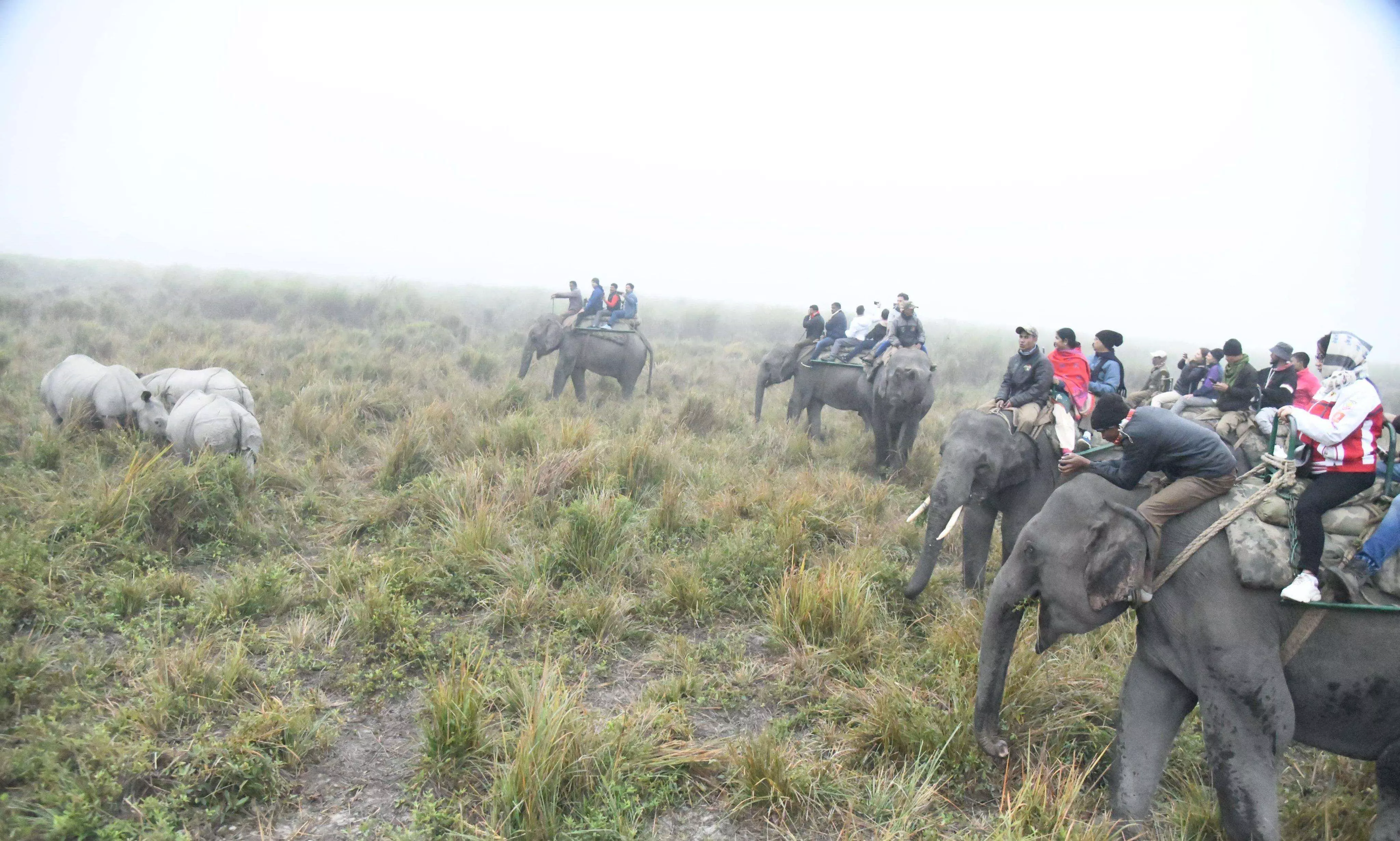
Guwahati, Feb 11: Nestled in the heart of Assam, Kaziranga National Park stands as a testament to the harmonious coexistence of nature and wildlife. As this renowned national park celebrates its 50th anniversary today (February 11), it's essential to delve into the rich history and evolution that have shaped this ecological haven.
Recognised as a UNESCO World Heritage Site in 1985, the transformative journey of Kaziranga arrived in 1974, when it officially attained the prestigious status of a National Park.
This marked a prominent shift in its conservation narrative, elevating its importance on a national scale. As a reserved forest established in 1908, Kaziranga had undergone notable changes, progressing from a reserved forest to a game sanctuary in 1916 and subsequently evolving into a wildlife sanctuary in 1950.
Interestingly, in 1905, Mary Curzon, wife of Lord Curzon, embarked on a visit to Kaziranga and was dismayed by the absence of the Indian one-horned rhinoceros. Taking cognizance of her concern, Lord Curzon took immediate action, initiating plans for the protection of this endangered species. This conservative initiative laid the foundation for Kaziranga’s role in safeguarding wildlife.
The year 1905 witnessed the establishment of the Kaziranga Proposed Reserve Forest, covering an extensive area of 232 km2 (90 sq mi). This marked the inception of a dedicated effort to protect and preserve the unique wildlife that graced the Kaziranga region.
The transition to a National Park in 1974 resulted in a growing recognition of Kaziranga’s ecological significance and the need for dedicated efforts in biodiversity conservation. This designation brought with it an increased emphasis on comprehensive protection and management practices to ensure the well-being of the diverse flora and fauna.
Over the years, Kaziranga has not only served as a haven for the Indian one-horned rhinoceros but has also become a symbol of successful conservation efforts. The journey from a reserved forest to a National Park is a testament to the enduring commitment to ecological preservation and the remarkable success of ongoing conservation initiatives in Kaziranga.