
Jorhat DVO urges strict biosecurity as ASF outbreak halts pig trade
Pig trade in Jorhat remains suspended amid an African Swine Fever outbreak, with over 500 pigs culled and infection spreading to across 20 locations
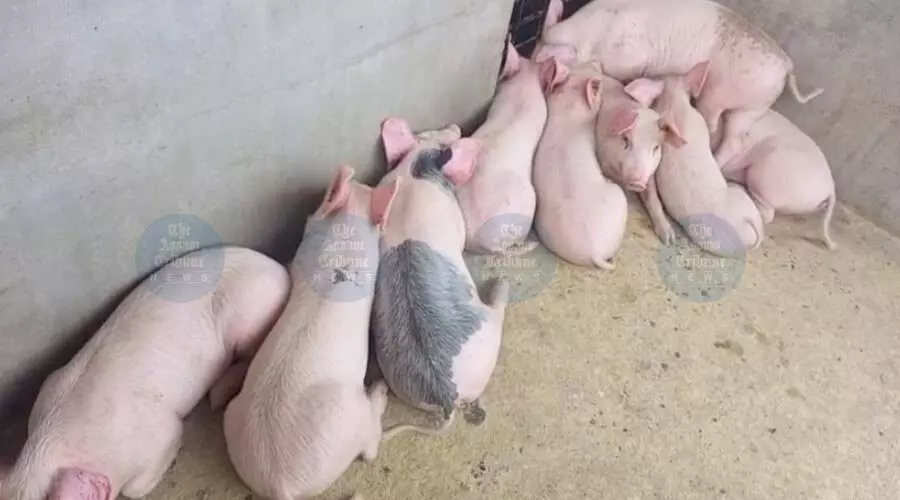
Pigs remain suspended for over a month following the outbreak of African Swine Fever. (AT Photo)
Jorhat, Dec 5: Pig farmers across Jorhat continue to incur heavy losses as the sale and movement of pigs remain suspended for over a month following the outbreak of African Swine Fever (ASF). The restriction, imposed on November 3, has disrupted pig markets across several Upper Assam districts, with no clarity yet on when operations may resume.
District Veterinary Officer (DVO) Ripunjay Chakravarty confirmed that ASF had spread into Jorhat from the neighbouring districts of Dhemaji and Lakhimpur.
“We collected samples from dead pigs and sent them to Delhi, and the tests confirmed the presence of the disease,” he said.
The virus has so far been detected across 20 locations in Jorhat, leading to the culling of 522 pigs. Chakravarty said the Animal Husbandry Department is working continuously on the ground.
“Our team is on alert at every moment and working actively in the field,” he noted.
According to the DVO, the situation has shown signs of improvement since pig markets were shut.
“Once we closed the pig market, the spread of swine fever immediately began to decline,” he said, stressing that the restrictions were essential to safeguard the region’s pig industry.
However, the economic impact remains severe. With the ban on pig movement still in effect and no updates from higher authorities in Delhi or Guwahati, farmers remain uncertain about when trade will resume.
“All decisions on market closure or reopening come from Delhi and Guwahati. We have no indication yet. The coming days will be challenging,” he cautioned.
Chakravarty described ASF as a fast-spreading disease, comparing its transmission among pigs to the spread of coronavirus among humans. Although harmless to people, the virus is highly contagious within pig populations.
“Even a bird that comes into contact with an infected pig can carry the virus to another farm,” he said.
Issuing a strong appeal, the DVO urged farmers to strictly adhere to biosecurity protocols.
“If pig farmers properly maintain biosecurity, the rate of infection can be significantly reduced,” Chakravarty said.
He advised farmers to regularly disinfect farm premises, use bleaching powder and potash, maintain separate clothing for inside and outside the farm, disinfect footwear, and limit movement to prevent accidental spread.
He further warned that any violation of the district administration’s restrictions, especially illegal pig sales during the ban, would invite strict legal action.
“Anyone found selling pigs during this period could even face imprisonment,” he said.
Reiterating that the measures aim to protect the pig population and stabilise the industry, Chakravarty appealed for complete cooperation from farmers during this difficult period.