
Jihadi groups attempting to establish network in Assam: Police
Police and security agencies are on their toes to tackle the jihadi activities.
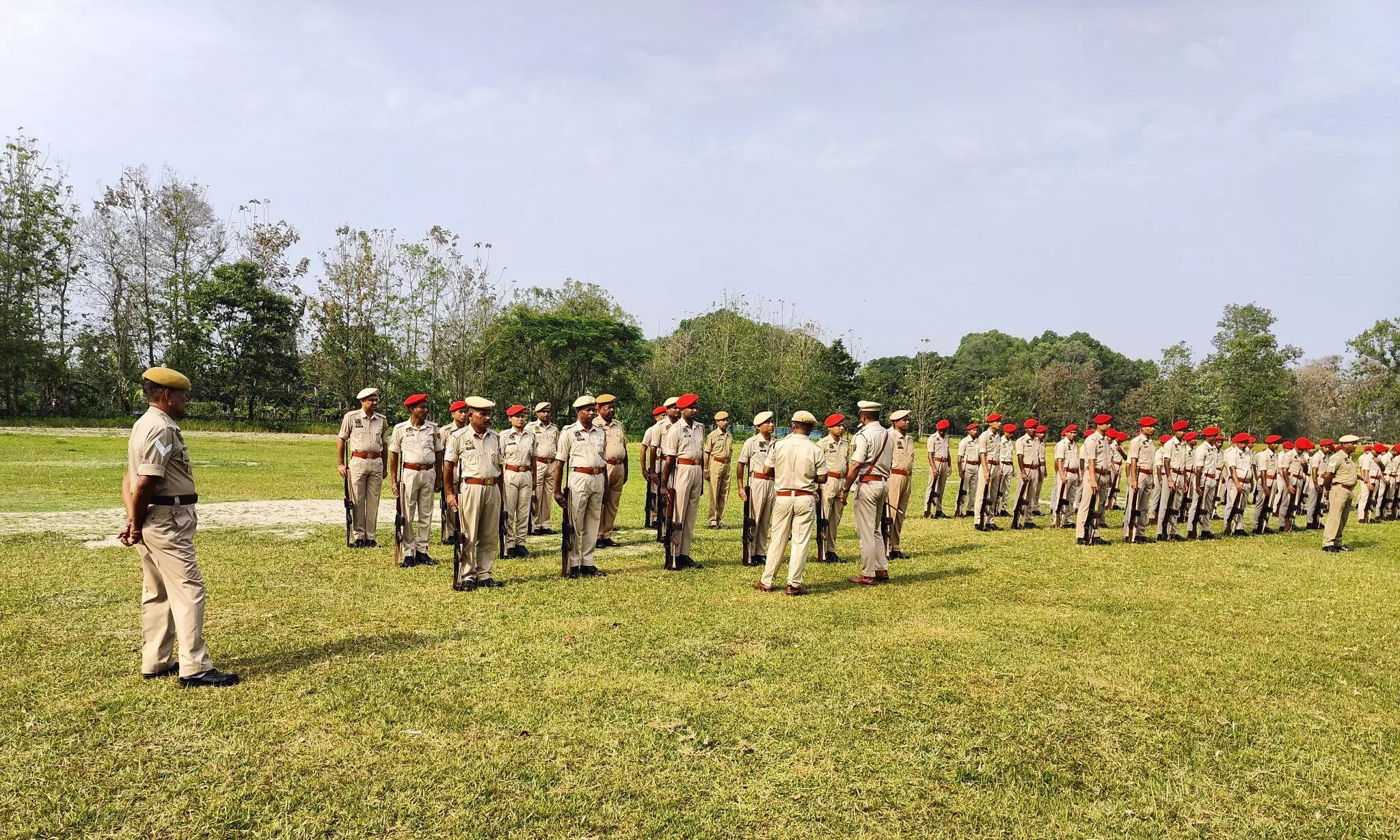
A file image of Assam Police personnel. (Representational use)
Guwahati, Jan 1: Jihadi activities in Assam have become a serious cause of concern, and despite arrests of a number of jihadi activists from time to time, such anti-national forces have been trying to establish roots in the State.
Police sources told The Assam Tribune that the police and security agencies are on their toes to tackle the jihadi activities. Sources revealed that apart from trying to establish roots in the State, the jihadi organizations are also trying to use the states sharing international border with Bangladesh to sneak into India and then fan out to other parts of the country. Their game plan is to establish a network in India and then indulge in acts of sabotage.
Assam Police has been keeping a hawk's eye on the jihadi activities in this part of the country. "We have also been coordinating with central intelligence agencies. Based on the analysis of different inputs, we came to know about the activities of Imam Mahmuder Kafila (IMK) module," sources said. As many as 11 members of the group have been arrested by the STF of Assam Police.
The IMK is a Bangladesh-based offshoot of Jamaat-ul-Mujahideen Bangladesh (JMB), which is banned in India. The IMK was founded in 2018 by Jewel Mahmud alias Imam Mahmud Habibullah alias Sohail, an ex-JMB member who claims to be the Amir of IMK and propagates the ideology of "Ghazwatul Hind". It has been reliably learnt that following the regime change in Bangladesh in August 2024, senior leaders of JMB, Ansarullah Bangla Team (ABT) and Al-Qaeda in the Indian Subcontinent (AQIS) issued directions to IMK leadership to activate and expand its Indian modules.
In furtherance thereof, Bangladeshi nationals Umar and Khalid were assigned to coordinate the group's activities in Assam. The head of the Assam cell is one Nasim Uddin alias Tamim of Barpeta Road.
The said activities are co-ordinated through secure social media platforms. One such group is titled 'Purba Akash', which functions as a principal communication and recruitment platform. Persons based in Assam, West Bengal and Tripura were being radicalized, recruited, financially mobilized and connected with the said outfit, including individuals possessing Indian passports and having made prior visits to Bangladesh, as well as known former members of proscribed terrorist organizations.
The IMK projects itself as a Ghazwatul Hind-centric extremist module and propagates an ideology aligned with proscribed transnational jihadi organizations. It was found that following the change of Government in Bangladesh, cadres of JMB, ABT and AQIS were released or emboldened, resulting in the revival of their ideological influence and Indian networks, including through IMK-linked platforms. IMK disseminates extremist propaganda advocating violent jihad and the armed conquest of India through digital platforms, including dedicated websites and social media platforms under the banner of Ghazwatul Hind.
It has been further disclosed that radical literature authored by IMK leadership, including 'Sarbobhoumo Khamatar Malik Allah' and 'Ghazwatul Hind er Sonkhip-to Alochona', is systematically circulated to indoctrinate cadres and sympathizers through online platforms.
In Assam, such extremist content was circulated within the encrypted social media platform titled 'Purba Akash'.
The IMK module employs a systematic process to radicalize and recruit followers. Indian members are first identified through on-line jihadist channels; they are fed IMK propaganda (books and lectures) and monitored in secure social media groups to formally join IMK, recruits must take a 'bayat' (pledge of allegiance) to Amir Mahmud Habibullah. The procedure requires each recruit to submit personal details and identity proof on a prescribed form, then record and send a video of their oath to an 'Indian Zimmedar' (responsible cadre). The 'Indian Zimmedar' then forwards. the oath video to the Amir in Bangladesh for verification and acceptance. Only after this authenticated ceremony recruits are admitted into the fold. This method is stat-ed to have resulted in the radicalization of several youths in Assam, mainly in Barpeta and Chirang districts, and West Bengal.
IMK also exploits social and religious gatherings. Several clandestine meetings were held at local mosques in December 2024. At a December 28, 2024 meeting in Barpeta, IMK ideologues including Nasim Uddin and Manirul Islam made statements advocating violent armed struggle in India and one such statement said that "atrocities on Muslims in India must be stopped with armed struggle".
Each meeting typically convenes six to eight local youths, who are then indoctrinated and urged to prepare for jihad. Additionally, some IMK cadres and recruits have already visited Bangladesh on valid passports and visas to meet IMK leadership, and many are being encouraged to go to Bangladesh (even with family) for arms training. Notably, at least two Assam operatives (Nasim Uddin and Siddik Ali of Barpeta) crossed into Meghalaya in April 2025 to meet their Bangladeshi handlers.