
How Zubeen Garg probe exposes media trials & growing menace of misinformation online
Calls for regulating digital platforms grow louder as unverified reports & rumours complicate public understanding
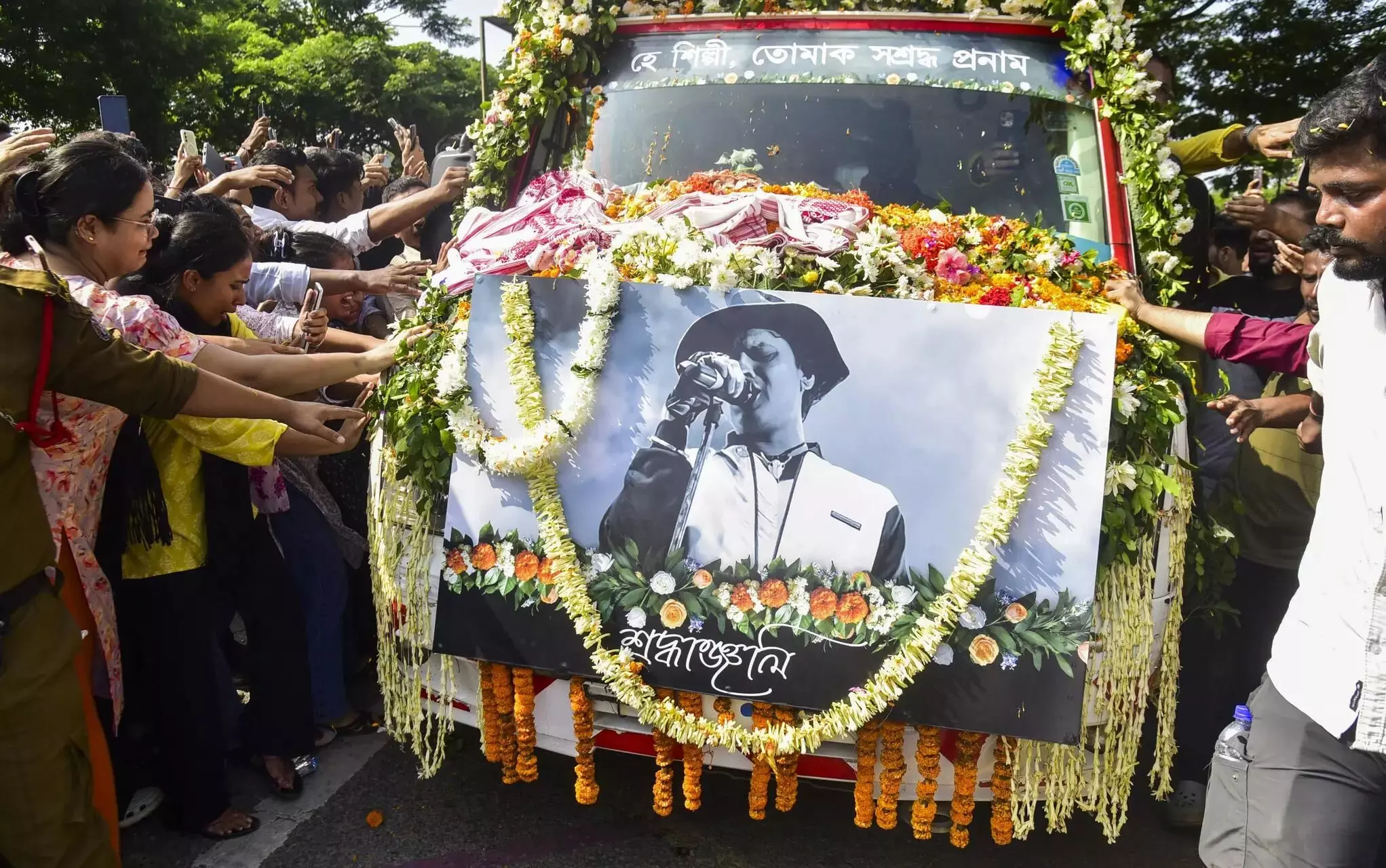
A file image of the vehicle carrying the mortal remains of Zubeen Garg. (AT Photo)
It has been a month since Assam lost its cultural icon, Zubeen Garg, leaving fans and the artist community grappling with grief. In the weeks since his passing, public attention has turned to the investigation, with questions swirling around the roles of organisers, his manager and fellow artistes who accompanied him to Singapore for the North East India Festival.
The probe has already seen some key developments. Seven individuals have been arrested and sent to judicial custody and multiple FIRs have been registered. The Special Investigation Team (SIT) has taken charge and is set to travel to Singapore on October 20 to coordinate with local authorities and gather crucial details for the ongoing investigation.
However, with social media and online forums turning into arenas for media trials, the investigation has faced additional challenges. False reports, ranging from claims of individuals being detained to rumours about arrivals in Guwahati, have circulated widely, only to be proven untrue later. This flood of misinformation has heightened public confusion, underscoring the difficulty of distinguishing verified facts from speculation as the probe unfolds.
“In this time of immense grief, we looked to the media for updates. What disturbed me most, however, was how some online portals began conducting media trials. News is meant to be factual and objective; since when did it become so opinion-driven and speculative?” questioned Sagarika Ray, a resident of Guwahati.
Zubeen Garg's Cremation site in Sonapur
Regulation demands grow
Senior journalist Nitumoni Saikia expressed deep concern about the rise of media trials. He noted that, following Garg’s death, social media and online portals were flooded with unverified claims, including false reports about Shyamkanu Mahanta being held at Guwahati airport or Siddharth Sharma’s arrival in the city.
“Journalists have a duty to report facts, not opinions—especially in legal cases,” Saikia said. He added that the rapid spread of misinformation is “fuelled by unregulated online portals and influencers operating without editorial oversight or accountability,” highlighting the urgent need for a regulatory framework to ensure responsible reporting.
Echoing these concerns, journalist Anupam Chakraborty points out that while traditional media is regulated and accountable, digital platforms often lack oversight. “Many chase the spotlight through shortcuts, bypassing the hard work and fact-checking that define true journalism,” he said. According to Chakraborty, the absence of a dedicated authority to report online violations leaves a serious gap that is easily exploited.
Another senior journalist Prakash Mahanta further highlighted the growing impact of social media in such cases. “The harm it causes is significantly greater; possibly tenfold. With around 80% of circulating content coming from portals, YouTube channels and vloggers, mandatory registration is essential,” he said, stressing the need for a formal law from the central government to regulate such a vast space.
Yet veteran journalist Atanu Bhuyan offered a slightly different perspective, denying that mainstream outlets were conducting media trials.
“No media house in Assam is conducting a media trial in the Zubeen Garg case, but a public trial is unfolding—and that can be even more damaging,” he said, citing instances like social media outrage over jail uniforms worn by suspects.
“Such misinformation misleads the public and undermines justice,” he added.
As Assam continues to grapple with the loss of Zubeen Garg, the investigation has laid bare not only legal complexities but also the perils of unchecked digital media. Misinformation, speculation, and social media outrage threaten to overshadow facts, making responsible journalism more crucial than ever.