
GSI identifies Rare Earth Element deposits in Assam, unveils exploration roadmap
The roadmap is based on three principal themes – systematic exploration, critical mineral targeting, and regional integration of baseline geo-science datasets.
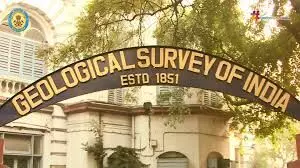
A file image of Geological Survey of India
Guwahati, Oct 10: The Geological Survey of India (GSI) has formulated a multi-year exploration roadmap, commencing from the ongoing Field Season (FS) 2025–26, with particular focus on converting geo-scientific knowledge into economically viable mineral blocks in Assam as well as other Northeastern states.
The roadmap is based on three principal themes – systematic exploration, critical mineral targeting, and regional integration of baseline geo-science datasets.
According to the handbook Geological Potential of North East India compiled by the GSI, there is potential for Rare Earth Elements (REEs) and Rare Metals (RM) in the State.
“The REEs – grouped into light and heavy categories – are indispensable in modern electronics, wind turbines, electric vehicles, and defence systems. GSI’s investigations have revealed promising REE anomalies across several states in the North East Region (NER)... Assam’s Jashora and Samchampi Alkaline Complexes have demonstrated encouraging results through pedo-geochemical surveys and trench sampling. These complexes have returned REE concentrations ranging from 1,000 to 5,000 parts per million (PPM), alongside associated elements such as Nb (niobium) and Y (yttrium),” the handbook stated.
It added, “While the NER has long been associated with hydrocarbons, recent exploration efforts have brought to light substantial deposits of other mineral commodities. Arunachal Pradesh and Assam have emerged as promising zones for graphite, vanadium, REEs, base metals, gold, coal, and limestone.”
The planned activities of the GSI under the multi-year exploration roadmap include detailed mapping of REE-enriched alkaline and carbonatite complexes in Assam.
REEs are a group of 17 chemically similar elements (including lanthanum, neodymium, and yttrium) critical in magnets, electronics, and green technologies.
The GSI stated that Assam is traditionally known for its oil and natural gas reserves “… but it also hosts valuable deposits of iron ore, glass sand, limestone, and REEs. The Jashora Alkaline Complex and the Samchampi-Samteran belt have emerged as important targets for rare earth exploration with encouraging geochemical anomalies and soil signatures. REE resource of 28.64 million tonne has been augmented in the Jashora Alkaline Complex. The granite gneisses within Assam Meghalaya Gneissic Complex (AMGC) also has potential for REEs and RMs. Assam’s largest non-energy mineral resource is limestone, with over 1,490 million tonne delineated from Dima Hasao district alone. These resources, hosted in the tertiary formations of the Jaintia Group, are suitable for cement and other industrial applications. Five GR/GM (Geological Reports/Geological Memoranda) on limestone have been handed over for blocks such as the Sikilangso, Krungming and Boro Hundong areas, out of which three blocks have been auctioned by the State government. Iron ore deposits with an estimated resource of 18.29 million tonne, at an average grade of 37.45 per cent Fe, have been reported from the Chandardinga area in Dhubri district. Glass sand with high silica content (up to 85 per cent SiO2) has been identified in Nagaon and Karbi Anglong districts, while placer gold has been recorded from the Subansiri River Basin in Upper Assam. Although modest in grade (0.007 g/t), these gold occurrences are important indicators of potential upstream mineralisation,” the publication stated.
The GSI said the Jashora Alkaline Complex in Assam holds special potential.
“Located in Karbi Anglong, the Jashora complex drew interest for its soil geochemistry and alkaline lithology. GSI’s FS 2020-22 investigations found phosphate-rich breccias (up to 35 per cent P2O5) and REE-enriched soils (up to 5,000 ppm), along with niobium and iron oxide anomalies. G3 level resource of 28.64 million tonne of REE has been estimated in this complex. The area is further upgraded to G2-level to delineate auction-ready resource blocks with higher confidence level,” the handbook added.
It stated that the GSI has played a central role in mapping the geology of the NER and identifying zones of mineral potential.
“Recognising the potential of the NER to contribute to India’s economic and strategic goals, the Ministry of Mines has prioritised the region in its exploration and mineral development agenda... Between 2015 and 2024, GSI has carried out more than 200 various stages (G4/G3/G2) mineral exploration projects and delineated 38 potential blocks in the region across multiple states,” it stated.
In this period, GSI has completed and handed over 38 exploration blocks across four states, including Assam. “In Assam, seven blocks have been handed over, notably for limestone, iron ore, and silica sand,” the handbook informed.