
Goru Bihu sets tone for Rongali Bihu as Assam honours its agrarian roots
Across districts, farmers follow sacred customs, bathing cattle & performing rituals believed to ensure health and prosperity
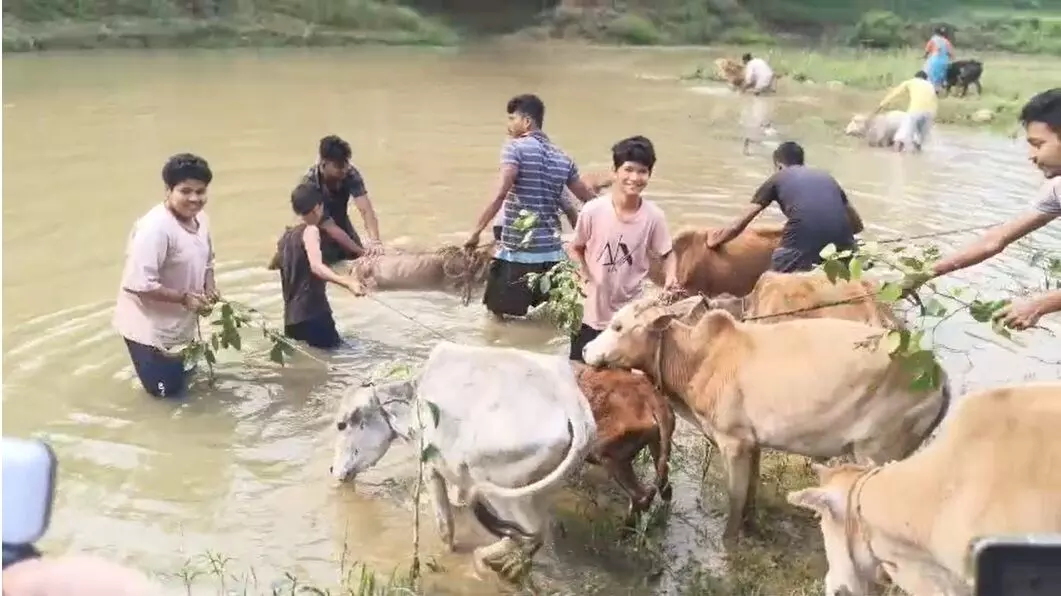
Villagers lead cattle into the Bhogdoi River for a wash in Jorhat. (AT Photo)
Jorhat/Biswanath/Nalbari, Apr 14: Goru Bihu, an integral part of the Rongali Bihu festivities heralding the onset of the Assamese New Year, was celebrated with utmost fervour across multiple districts of Assam on Tuesday.
From riverbanks to village courtyards, vivid scenes of ritual and celebration unfolded as communities upheld practices preserved across generations, reflecting the enduring bond between farmers and their livestock at the heart of the state’s rural economy.
In Jorhat, residents of the greater North-West region came together under the aegis of the Sankardev Kala-Krishi Gabeshana Kendra to celebrate Goru Bihu collectively at the banks of the Bhogdoi River.
Cattle were bathed ceremonially, with farmers applying a paste of turmeric and other traditional ingredients to their bodies, seeking their well-being and prosperity.
In keeping with tradition, vegetables such as bottle gourd, brinjal, thekera and bitter gourd were gently brushed against the cattle during the ritual bath, accompanied by chants wishing for their growth and strength.
Villagers were seen striking the animals lightly with makhiyoti leaves while reciting the traditional couplets – “Lao kha, benegna kha, bosore bosore barhi ja…” - a symbolic gesture believed to ward off ailments.
The river bank turned into a vibrant cultural space as groups from multiple villages gathered, with the rhythmic beats of the dhol and the piercing notes of the pepa lending a festive air.
Later in the evening, households will tie their cattle with new ropes in cowsheds, following another traditional belief that applying turmeric, oil and pulses to the rope helps prevent diseases.
Lighting of ritual fires using hay and specific herbs, and wafting the smoke towards the cattle, would also be observed as part of the customary practices.
In Nalbari district, Goru Bihu was celebrated at Moiradanga along the Pagladiya River (see video below) under the initiative of the Nalbari Zila Rongali Bihu Sanmilani, in collaboration with the Pub Batamgila regional committee.
Several Bihu troupes performed during the celebrations, adding a cultural flourish to the rituals.
Assam minister and BJP candidate Jayanta Malla Baruah joined locals in the festivities, participating in the ceremonial bathing of cattle, donning a traditional gamusa.
Speaking to the press, Baruah said, “This is our tradition to bathe our cows on Goru Bihu. Today, the Pagladiya River is filled with locals following this age-old practice. This is how our farmers and agrarian economy begin Bihu by pampering their cattle. I wish everyone a very happy Bihu.”
He was later seen playing the dhol and joining villagers in singing Bihu songs.
Meanwhile, in Biswanath, personnel of the Biswanath Sadar Police Station observed Goru Bihu within the station premises under the leadership of Senior Superintendent of Police (SSP) Ajagaurab Basumatary.
Police personnel bathed the cattle housed within the premises and took part in the rituals.
“This is our responsibility to preserve and carry forward the rich Assamese traditions. On the eve of Manuh Bihu, we extend our greetings for the Assamese New Year,” Basumatary said.
Amid the widespread celebrations, there were also calls from sections of civil society to promote Goru Bihu on a global platform, akin to Nagaland’s Hornbill Festival, highlighting its cultural and agricultural significance.
Across districts, the day stood as a testament to Assam’s enduring rural traditions, blending devotion, community participation and cultural pride as Rongali Bihu festivities got underway.