
Dibrugarh University researchers discover plastic-degrading bacteria in coal samples
The bacteria from coal in Darjeeling and Arunachal Pradesh is capable of degrading plastic-like materials
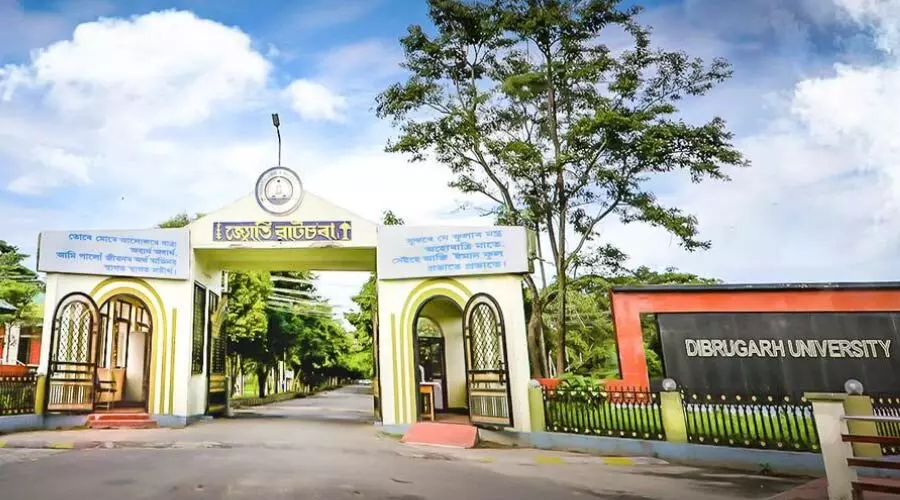
Dibrugarh University (Photo - @DibruUniv / X)
Dhemaji, Aug 26: A team from Dibrugarh University (DU) has conducted a study on bacteria capable of degrading plastic and plastic-like materials in a coal-based environment. The researchers collected coal samples from the Lesser Himalayas in Darjeeling and Arunachal Pradesh and isolated bacterial samples present in the coal.
The aim of the study is to isolate this bacterial consortium and assess their ability to degrade plastic and plastic-like substances. This may be the first study in India to isolate bacteria from coal that could degrade plastic and plastic-like higher density materials.
This finding reveals that certain bacterial isolates from the coal samples were able to degrade polyethylene glycol 6000 (PEG 6000) by utilising it as their sole carbon source. This demonstrates their potential use in breaking down plastic and similar synthetic materials.
The research was carried out by Manuranjan Konwar, a research scholar registered in the Department of Petroleum Technology who is pursuing his PhD degree under the supervision of Dr Dhrubajyoti Neog and Dr Diganta Bhuyan of the Dibrugarh University.
Konwar is carrying out his PhD work on coal characteristics and coal bed methane potential in Lesser Himalayan Gondwana coal. As part of his research work, Konwar examined the presence of plastic-degrading bacteria in the Centre for Biotechnology and Bioinformatics under the expert guidance of Dr Pranit Saikia in collaboration with Manjusha Devi, a research scholar from the same department.
The team is continuing its work to gain deeper insights into these bacteria and their possible applications in plastic degradation.