
BTR govt mulls heritage park & GI villages, linking artisans directly to markets
The move follows Bodoland securing 21 GI tags, aiming to preserve culture, crafts, and tribal livelihoods
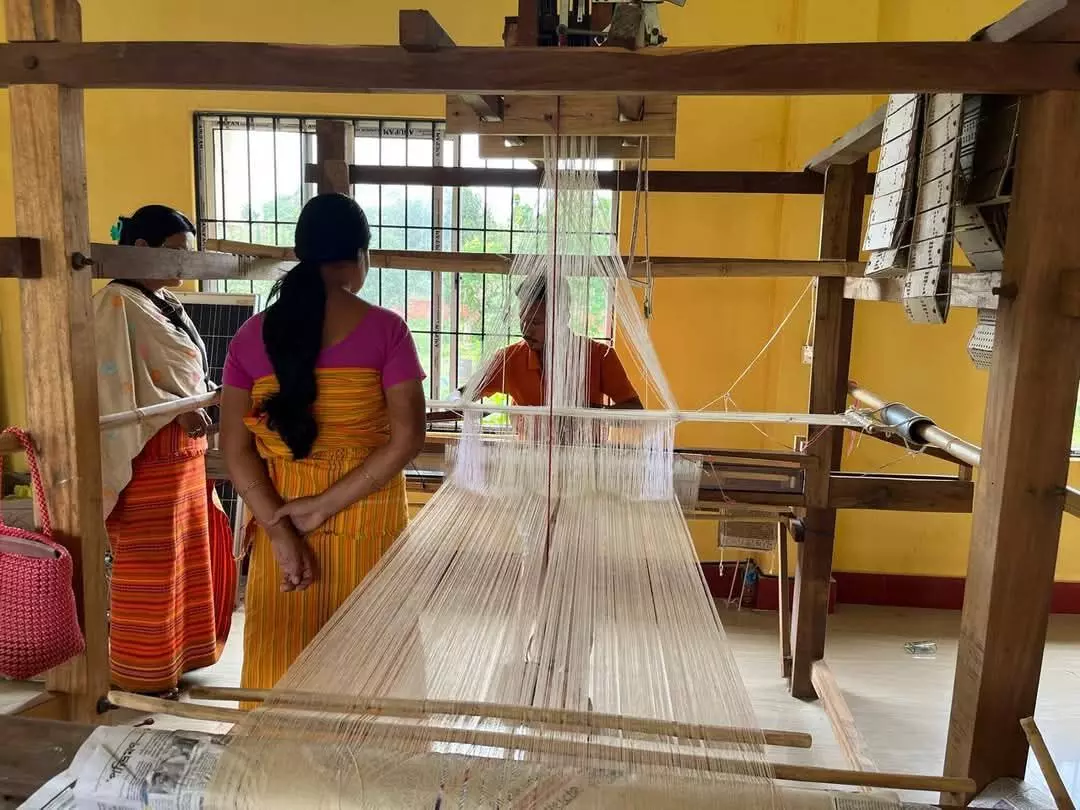
A file image of silk weavers in Kokrajhar. (Photo:@airnews_ghy/X)
Guwahati, Sept 6: In a major push to preserve cultural heritage and promote economic growth in the Sixth Schedule region, the Bodoland Territorial Region (BTR) government has lined-up a series of initiatives aimed at empowering local artisans, farmers, and entrepreneurs.
The government plans to establish “GI Villages”, where clusters of artisans and farmers will receive training, infrastructure, and direct market linkages to foster a self-sustaining ecosystem.
Additionally, a Bodo Heritage Park is envisioned as a centre of excellence to showcase GI products, generate employment, and create sustainable revenue for local communities.
In a bid to widen access, the BTR government is also launching a massive Authorised Users (AU) registration drive under the Chief Executive Member’s Special Initiative Scheme.
A mobile application has been developed to include over one lakh tribal artisans, farmers, and weavers as authorised users, linking each AU to multiple GI products.
Registered users will benefit from government schemes, training, exposure trips, modern marketing tools, and legal protection, enabling them to participate actively in the regional economy.
A list of GI-tagged products from BTR.
The move comes on the heels of a landmark achievement, with Bodoland securing 21 Geographical Indication (GI) tags for its traditional products, crafts, and agricultural items between November 29, 2023, and May 31, 2024.
These tags formally protect the origin, quality, and uniqueness of items ranging from Bodo Dokhona (traditional attire) and handloom crafts to musical instruments, Bodo cuisine, and three traditional alcoholic beverages, ensuring only genuine producers from the region can use the names.
The inclusion of traditional Bodo alcoholic beverages among the GI-tagged items reflects a vision to elevate them into global brands, similar to whisky and French wine, which originated as local village brews.
Ling Narzihary, one of the initiative’s leaders, said, “We missed the Industrial Revolution and the IT Revolution, but we will not miss the GI Revolution.”
Following the landmark achievement of securing 21 GI tags, the Pramod Boro-led BTR government has recently launched a special drive to register cultural artefacts from all 26 communities of the region.
The Gandhi Hindustani Sahitya Sabha has been roped in to provide expert guidance through a series of workshops, assisting community scholars and leaders in identifying and documenting their unique cultural items for GI tag applications.
Beyond economic benefits, GI recognition also ensures protection of tribal identity and traditions, preserving practices such as handloom weaving, bamboo crafts, and organic farming.
These eco-friendly practices align with Sustainable Development Goals (SDGs) and offer potential carbon credit opportunities, linking cultural preservation with climate-conscious production.
Experts believe Bodoland’s GI success can serve as a model for other Sixth Schedule regions in the Northeast, highlighting the region as one of resilience, tradition, and economic opportunity.
With the combined initiatives of GI villages, a heritage park, AU registration, and global marketing of traditional products, Bodoland is positioning itself as a role model in leveraging indigenous heritage for sustainable development and economic empowerment.