
Bhupen Hazarika at 100: The Bard of the Brahmaputra lives on
A century on, Bhupen Hazarika’s music, poetry & vision continue to inspire hearts across generations
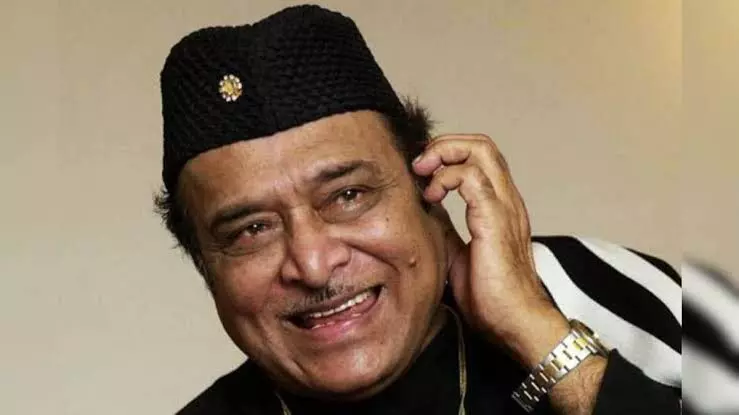
A file image of Bhupen Hazarika
It was a sunny day in 2010 when my father turned on the radio to listen to Manuhe Manuhor Babe by the Bard of the Brahmaputra, Dr. Bhupen Hazarika.
I remember it vividly. It was a holiday, and this was part of his daily routine. He often said, “All his songs carry deep meanings; something that today’s songs lack.” His admiration was unwavering, indeed.
Then came November 5, 2011, the day Bhupen Da left for his heavenly abode. I still recall my father waiting patiently among a sea of people at Judge’s Field since morning to pay his final respects to the visionary.
Back then, being a sixth-grader, I couldn’t quite grasp why my father felt such a deep connection to Bhupen Da’s music.
But today, as we mark the Bharat Ratna’s birth centenary, I understand – Bhupen Hazarika was not just a multi-faceted artiste, but a movement; a voice; a force.
Sadly, much of today’s generation may not fully comprehend the depth of who he was or what he stood for, let alone his music.
Yet for those who take the time to listen and explore his wide repertoire of music, cinema, and poetry, Bhupen Hazarika is not just remembered—he continues to inspire generations.
Bhupen Hazarika was not just a multi-faceted artiste, but a movement; a voice; a force.
Legacy that transcends borders
For Indians at large, and Assamese people in particular, the name Bhupen Hazarika resonates as a symbol of cultural expression.
His artistry was deeply rooted in Assam’s rich traditions, yet carried a universal appeal that transcended borders. A true visionary, Bhupen Da was a multifaceted genius, celebrated for his powerful musical imagery and profound intellect.
From his scholarly pursuits and acclaimed cinematic work to his impactful contributions to literature and his brief but notable involvement in politics, Hazarika stood as an institution unto himself.
His influence is deeply embedded in the cultural fabric of Assam. Across music, film, and literature, Bhupen Hazarika remains an enduring source of inspiration—a guiding light for generations past, present, and future.
In 2011, when he was hospitalised, Hazarika’s long-time accompanist and confidant Kamal Kataki told a local daily, “For Assamese society, Bhupen Da is like Bhishma Pitamah. He is not God, yet he is nothing short of one. I believe personalities like Bhupen Da, Pablo Picasso, MF Hussain, and the like never resided on earth but lived on a layer above it.”
Echoing the sentiment, acclaimed singer Mausumi Saharia told the publication in the same year, “Studying and singing Bhupen Da’s songs was like learning the grammar of music. The first time I heard his music, I asked myself why I hadn’t listened to him before. He is a godly figure to me. I still remember when he complimented me, saying ‘Aai, tumimur protidhoni,’ and I will cherish that moment forever.”
Mumbai-based Assamese author and professional translator Anee Hazarika shared a similar sentiment: “To truly understand Bhupen Hazarika through his songs, one must first understand Assamese literature. His emphasis was more on the power of words than just the music.”
She added that Hazarika skillfully blended diverse musical rhythms into his compositions without ever diluting the soul of Indian classical music. “His songs carried themes of protest, like ‘Ahh Ahh Ulai Ahh,’ and powerful messages of humanity, as in Manuhe Manuhor Babe, and much more,” she said.
She further noted that many consider Bhupen Hazarika to be the closest successor to Lakshminath Bezbaruah in expressing deep love for Assam while living away from it. “In the 1970s, while residing in Bombay (now Mumbai), he missed his homeland so profoundly that he composed the song Asom Amar Rupohi as a heartfelt tribute to his beloved state,” she said.
Bridging art beyond boundaries
One evening in 1970 at Jamugurihat, Tezpur, Professor Bhaben Bora, then a schoolteacher at the local higher secondary school, had told Hazarika, “Hazarika Deu, a time will come when the younger generation will write research theses on you.”
Several decades later, those words ring true. Today, Bhupen Da is not only a subject of academic study but a timeless source of inspiration. With an illustrious career as a songwriter, singer, filmmaker, author, poet, and actor, he remains one of the most revered figures from the Northeast—a true cultural icon.
In 1951, Bhupen Hazarika returned to Assam to teach at Gauhati University, where he immersed himself in the cultural scene and participated in musical conferences. Though his tenure was brief, it laid the groundwork for his move to Kolkata after receiving a professional offer. There, he flourished promoting Assam’s culture nationally and earning acclaim as a filmmaker and composer.
Bhupen Da soon ventured into filmmaking, earning critical acclaim as both a director and music composer. As his popularity soared, opportunities began to flow in. His close ties with artistic stalwarts across India—many of whom were based in Kolkata at the time—eventually opened doors to the Hindi film industry.
Recalling a memorable moment, his youngest brother Samar Hazarika in 2011 shared, “One day in 1979, a friend brought a bearded, charismatic man to our Nijarapar home. I later learned it was none other than the renowned painter MF Husain, who had come to see where his friend Bhupen lived. I still regret not recognising him then.”
Today, Bhupen Da is not only a subject of academic study but a timeless source of inspiration.
Inspiring future generations
Today, as India gears up for a year-long celebration of Sudhakantha’s birth centenary, apartments and local communities in Guwahati are joining in with their own heartfelt tributes.
Sankardev Housing Complex in Jalukbari is among those taking the initiative, planning a small gathering on September 8 to mark the legendary icon’s 100th birth anniversary.
One of the organisers, Indrajit Konwar, emphasised the importance of introducing Bhupen Hazarika’s life and legacy into school curricula to inspire future generations.
“Bhupen Hazarika was much more than just a singer. He was a lyricist, educationist, filmmaker, director, and even served as an MLA. His contributions can’t be confined to a one-time celebration,” Konwar said.
He further urged the government to take gradual steps to ensure that younger generations understand and draw inspiration from the many facets of Bhupen Hazarika’s life.
Another organiser, Ikramul Mazid, added, “I believe that if we guide the younger generation properly, they will carry Bhupen Hazarika’s legacy far better than we could.”
As Assam and the rest of the country celebrate Bhupen Hazarika’s centenary, what stands out is not just the legacy of his music, but the legacy of his mind—his fearless voice for justice, his embrace of humanity, and his deep-rooted love for his land.
He was more than an artist—he was a conscience keeper, a cultural bridge, and a mirror reflecting both the pain and hope of his people.
Today, while new voices emerge and fresh sounds take the stage, Bhupen Da’s words continue to echo through time, “Asom Amar Jononi/Ami Tarun Senani/Natun Dinor Pratishrutire/Ami Ganamukto Bahini…”
He was more than an artist—he was a conscience keeper, a cultural bridge, and a mirror reflecting both the pain and hope of his people.