
Assam tea fail FSSAI norms, ATPA calls for urgent industry reforms
Non-compliance drives buyers to other regions; ATPA urges focus on quality, support for small growers, and export incentives
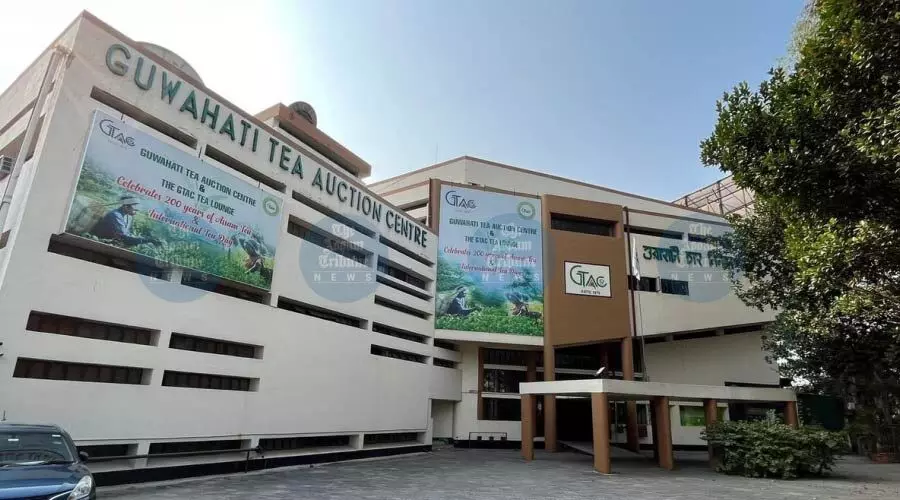
A file image of Guwahati Tea Auction Centre.
Guwahati, Sept 12: A significant portion of the teas listed at the Guwahati and Siliguri Tea Auction Centres (GTAC and STAC) have been found to be non-compliant with Food Safety and Standards Authority of India (FSSAI) standards this year, as per the Federation of All India Tea Traders’ Associations (FAITTA).
This non-compliance has led buyers to shift toward South Indian teas and even imported teas from Africa, as packers face legal risks for sourcing non-compliant products. As a consequence, major packeteers are losing interest in Assam and West Bengal teas, which is an alarming trend.
Observing this, the Assam Tea Planters’ Association (ATPA) – the oldest association representing the interests of ethnic tea planters in Assam – has sounded an urgent call for sweeping reforms in the tea industry.
“Time has come for North India (Assam, West Bengal) to make a decisive shift toward quality,” ATPA chairman Samudra P Baruva said. “Quality doesn’t just mean taste, it means compliance with FSSAI standards, which is crucial for restoring credibility in the market.”
“Enforcement on quality control started only recently. We had also been calling for 100 per cent dust auction to ensure quality checking. Compliance entails additional costs, which puts the small growers in a difficult position. They need assistance in compliance and quality enhancement,” he said.
Baruva underscored the pressing need for immediate action to address the ongoing crisis affecting both large and small-scale tea growers in North India.
The ATPA highlighted that the current market glut, driven by excessive cropping in recent months, has flooded the market with poor-quality teas. This oversupply, has resulted in “crippling price realizations” for the plantation sector, which is already struggling with fixed production costs.
Stressing the need for the industry to prioritize quality to restore buyer confidence and stabilize production volumes, Baruva asserted “quality is the only way forward”.
The ATPA proposed a minimum price of Rs 25 per kg for green leaf, with at least 40 per cent fine count to ensure fair compensation for growers producing compliant leaf.
“At this price point, Bought Leaf Factories (BLFs) will be compelled to reject substandard leaf, improving overall quality,” Baruva explained.
While addressing problem areas, the ATPA urged the Tea Board to map and enforce quality parameters for green leaf sourced from regions like Arunachal Pradesh, Nagaland, and Bihar, which have been flagged for contributing to the quality crisis.
The ATPA also recommended that the Tea Board allocate maximum funds toward quality enhancement programs for small tea growers, including subsidies for battery-operated plucking machines and other innovations that improve leaf quality.
To compete with cheaper teas from countries like Kenya and Sri Lanka, Baruva called for government incentives such as transport subsidies and enhancements in RODTEP (Remission of Duties and Taxes on Exported Products). “Exports must be incentivized to protect India's global market share,” he emphasized.
The ATPA demanded stricter controls over imported teas meant for re-export to prevent leakage into the domestic market, which undermines local growers and manufacturers.
The ATPA further called for a unified industry effort to promote Indian teas both domestically and globally. “Educating domestic consumers about the quality difference in tea is essential for better realization of premium teas,” he said.
Defending industry self-regulation, the ATPA chairman defended the industry’s recent move toward 100 per cent dust auctions and early closures last year, describing it as a “self-regulation mechanism” aimed at improving quality and compliance.
“These measures may face initial resistance, but they are vital for the long-term health of the industry,” he added.
The ATPA appealed to all stakeholders-including the government, growers, and packers-to act swiftly to safeguard the future of Assam’s tea industry. “This is not just about economics – it’s about preserving the identity and heritage of Assam,” he said.
With millions of livelihoods in Assam and West Bengal tied to the tea industry, the ATPA has made its stance clear: “The time to act is now.”
By Staff Reporter