
Assam LPG crisis deepens as black market thrives, eateries struggle
The hospitality sector faces mounting pressure as fuel shortages force menu cuts, reduced hours, and operational challenges.
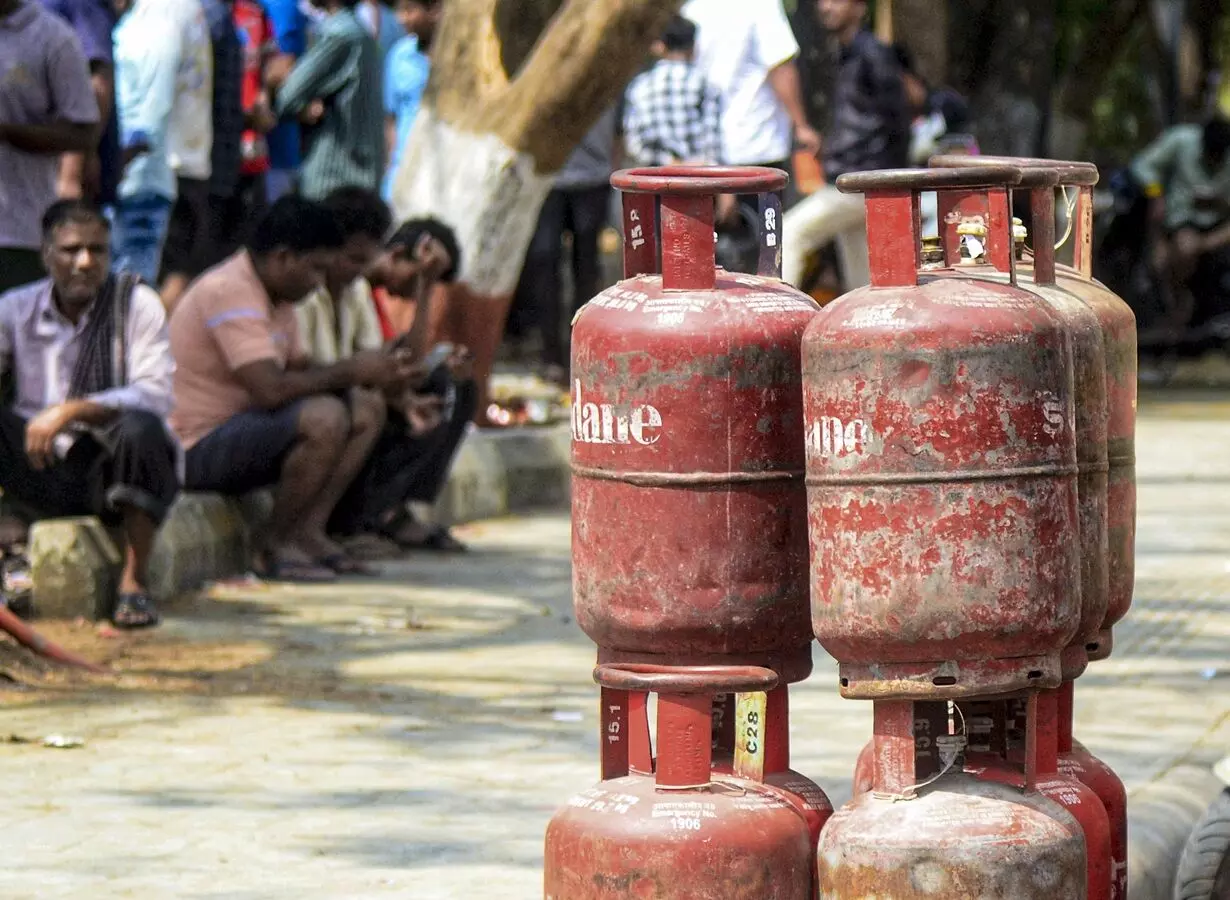
Image used for representational purpose only. (Photo:PTI)
Guwahati, April 1: Despite attempts by refiners and marketing companies to streamline LPG supply amid the West Asia situation, a crisis-like situation persisted in Assam due to black marketing and leakages in the distribution network, forcing many roadside food stalls to shut down and restaurants to curtail their menus and scale back operating hours.
Many restaurants are turning to electric cooking equipment, diesel-fired bhattis, and even firewood as alternatives. However, this transition has resulted in significantly longer cooking times, which has affected the services of food delivery platforms. Some stalls have hiked the prices of food to cope with the rising costs.
“The government has capped commercial LPG supply at 20 per cent, but even that quota is not reaching us. Distributors are allocating this 20 per cent based on the number of cylinders rather than actual consumption. For example, if I have four cylinders, I’m entitled to just one - and even that arrives only after three to four days,” said a restaurant chain owner, who has been forced to switch to electric and diesel-fired equipments.
The All Assam Restaurant Association had written to the Kamrup Metro district administration, stating that many restaurants had already scaled down their operations, limited menus, or suspended online delivery services. “The sector is in the verge of collapse. Unless the supply is restored, hundreds of establishments will be forced to shut down indefinitely, threatening the livelihood of thousands of people,” they said.
The association also alleged that the scarcity has led to rampant black marketing, with commercial cylinders reportedly being sold unofficially for as much as Rs 4,000.
Several people have complained that cylinders - both domestic and commercial - are being sold illegally at prices ranging from Rs 3,000 to Rs 4,000, raising questions about the monitoring mechanism. Even domestic consumers complained that delivery has not been prompt.
Branded induction cooktops have also vanished from the store shelves, further adding to the crisis.
“The manufacturers were not anticipating this. Induction cooktops occupy a 15-17 per cent share of small appliances. But now every second call is for induction. The makers are not able to keep pace with the demand. Chinese items are, however, available, but they lack customer trust,” a representative of a leading brand said.
A 16-ampere (16A) socket is generally required for induction cooktops to handle high power consumption, which is not available in hostels and small one-room apartments. They also require special utensils.
Meanwhile, IOCL’s Digboi, Guwahati and Bongaigaon refineries and NRL is learnt to have ramped up their LPG production by over 20 per cent.
The present stock in the State (9,873 MT) can meet the demand for three and a half days, and if the transit stock of 15,059 MT is taken into consideration, it would suffice for nearly nine days.
Around 1,13,022 domestic cylinders were delivered yesterday against the total day’s booking of 1,06,705. Upliftment by distributors was 1,38,234, while opening stock today with distributors this morning was 1,64,564, an IOC spokesman said. Average daily delivery before the crisis was 1,25,000.
“Oil companies are doing their best, and the Government of India is monitoring at the highest level. More stringent monitoring is required at the lower level to check black marketing, as the district administration and Supplies Department have full authority on the distribution mechanism of the essential commodity,” an oil company official said.