
Arimora Chapori becomes winter haven for migratory birds in Tezpur
This sanctuary’s wetlands and grasslands provide a breeding ground for migratory birds including Bengal Florican, Black-necked stork and various other species.
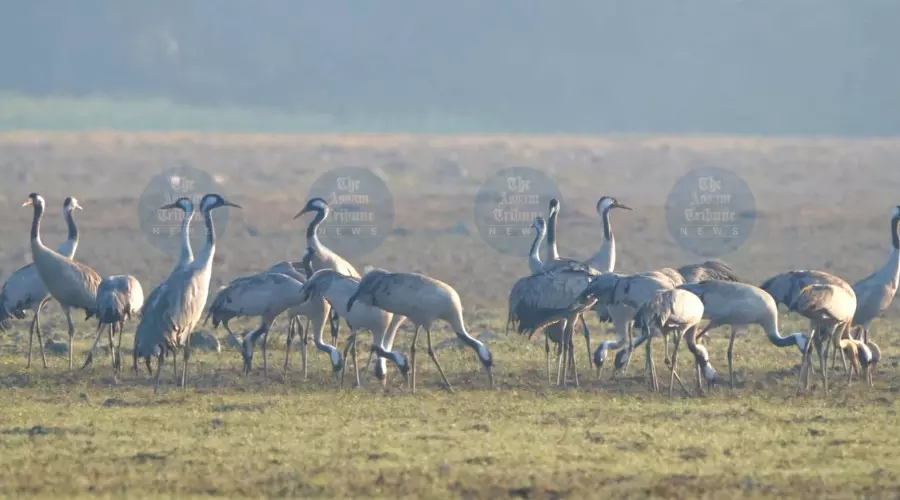
Migratory birds in Arimora Chapori in Tezpur
Tezpur, December 15: Arimora Chapori, a rich riverine landscape sustained by the Brahmaputra, has emerged as safe haven for migratory birds, even as concerns grow over threats from encroachment and poaching.
Known for its diverse fauna, including wild elephants, wild pigs, deer, wild buffalo and even the Royal Bengal tiger, the chapori has, in recent years, also become an important winter habitat for migratory birds.
Its wetlands and grasslands offer ideal breeding and resting grounds for species such as the Bengal florican, black-necked stork and several other migratory birds.
The chapori’s unique ecosystem supports both breeding and seasonal shelter, playing a crucial role in sustaining migratory bird populations during their long journeys.
Among the notable visitors is the common crane, locally known as karchan sorai, which migrates across vast regions including Siberia, China, Tibet, parts of Europe and the Russian plateaus.
As in previous years, flocks of these birds have returned to Arimora Chapori this winter, drawing the attention of local residents and bird watchers.
However, conservationists warn that the fragile habitat continues to face threats from illegal encroachment and poaching. Activists from Hati-Bandhu, a nature and wildlife organisation working on mitigating human–wild elephant conflict in the district, have urged the Forest Department to strengthen protection of the chapori.
Migratory birds in Arimora Chapori
The importance of Arimora Chapori in reducing human–elephant conflict becomes clear during the seasonal movement of elephants into nearby villages in search of food.
As part of this natural cycle, elephants often enter farmland, and panic among villagers sometimes causes the herds to get stuck near the elephant corridor in the Depota and Bihaguri areas.
Members of nature and wildlife organisations regularly guide these herds back to Arimora Chapori, where the animals find sufficient food and shelter.
The Nameri–Sonai Rupai–Arimora Chapori corridor, which crosses National Highway 15 at Depota, has long helped elephants move safely during seasonal migration, reducing conflict in the region.
However, activists warn that the corridor is now under serious threat. Despite protests by organisations such as Hati-Bandhu, large development projects in the area are blocking the free movement of elephants towards Arimora Chapori.
With support from wildlife groups and the Forest Department, elephant herds are currently being guided into Arimora Chapori, where they have been staying peacefully for several days.
Activists said that compared to previous years, fewer herds have entered rural areas this season, crediting round-the-clock monitoring by Forest Department staff.
At the same time, Hati-Bandhu raised concerns about growing dangers to Arimora Chapori. They alleged that poachers continue to move freely in the area and that suspected illegal encroachment from the southern side is destroying greenery, threatening the chapori’s survival.
The group urged authorities to take immediate steps to protect this vital wildlife habitat.
By
Shubham Boro