
A million tears, a single name — Zubeen Garg
Famous beyond borders, yet forever ours; Zubeen Garg, the once-in-a-millennium soul that touched countless lives
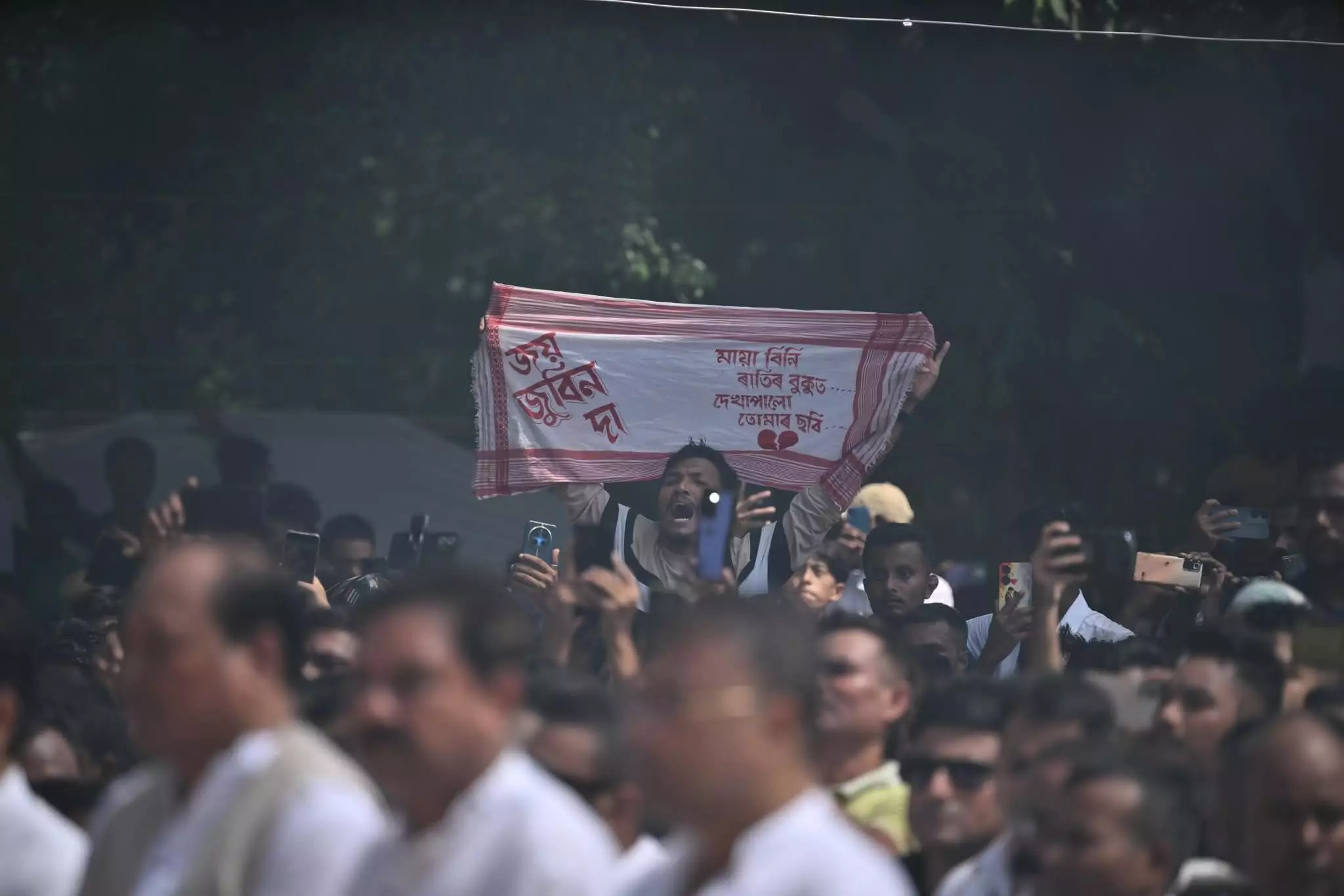
A fan brandishes a gamosa with the words ‘Joi Zubeen Da’ imprinted on it during his final rites on Tuesday. (Photo: Meta)
When the world asks what made Zubeen Garg so special, look no further than the united tears of Assam. Over the past five days, the state, the region and beyond have mourned together, hearts breaking in unison.
From uniformed police officers and political leaders to children as young as three and elders in their nineties, everyone became vulnerable. Everyone wept. Everyone let go off their sorrow at the loss of Zubeen Da, the voice that had been the soundtrack of our lives.
The scenes spoke louder than any tribute - a swelling crowd at the airport to welcome him home, throngs lining the streets and Sarusajai Stadium flooded with lakhs of people standing under blazing sun and pouring rain — all yearning for one last glimpse of the man whose melodies touched their souls.
The world may have known him as the Ya Ali singer, but on September 19, that changed forever. The internet watched in awe as millions mourned. Many outsiders admitted, “We didn’t know he was this famous.”
But for us, he was never just “famous”. Not for his Bollywood hits; not even for his countless Assamese chartbusters. For us, he was ours. A rare soul, perhaps born once in a millennium, who touched and transformed lives before slipping away silently.
When he sang, crowds went wild. When he spoke, the youth felt inspired. When he protested, he gave hope to those who thought they had none. That was Zubeen Garg.
He himself once said, “When I die, just play Mayabini.” And when he left us, that song became more than just music. It became an anthem, a movement to keep him alive in our hearts.
His songs were not just entertainment. They were lullabies for the sleepless, love letters for the broken-hearted and battle cries for the restless. They carried people through sadness, joy and even revolutions.
From the playful Ghenta moi kaku khatir nokoru? to the profound Mur kunu jati nai, mur kunu dhormo nai, moi okol manuh, his words echoed through generations.
He was a voice of the people, so powerful that lives of the entire state paused for four straight days, just to stand in endless queues for one last glimpse.
Since September 19, Assam has been drowned in music. Every road, every lane, every household plays his songs on loop. There could not be a more fitting farewell than this — music for the man who gave us everything through music.
But Zubeen was more than a singer or actor. He was a fighter for nature, for animals, for youth, for the downtrodden, for Assam. He was a voice of society. He was our Zubeen Garg.
There can never be another Zubeen Garg. Not tomorrow. Not in 100 years. Not in 1000 years. Not ever.