
Why Rural India Still Trusts Ladder-Frame SUVs for Long-Term Ownership
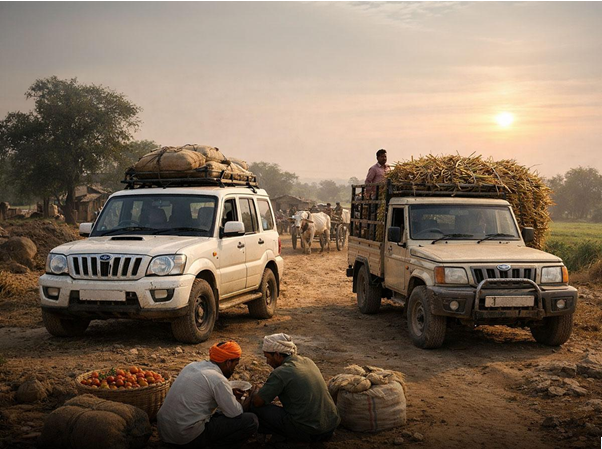
While urban buyers increasingly gravitate toward monocoque crossovers and compact SUVs, rural India continues to rely on vehicles built for resilience rather than refinement. In regions where roads are unpredictable and utility outweighs aesthetics, ladder-frame SUVs remain the preferred choice. This is why a second hand Mahindra Scorpio is often viewed as a dependable workhorse capable of handling rough terrain, heavy loads, and long-distance travel with ease. The same reputation extends to the used Mahindra Bolero durability, which has made it a staple across villages and semi-urban markets for years.
What unites these models is their rugged construction and mechanical simplicity. Unlike modern unibody cars that may struggle with demanding payloads or uneven terrain, these body-on-frame SUVs are engineered to endure sustained wear and tear. In the pre-owned market, they are especially valued for offering long-term reliability, easy repairs, and relatively affordable maintenance making them practical investments rather than lifestyle purchases.
Understanding why ladder-frame construction remains the gold standard in rural regions requires a look at how these vehicles handle the unique stresses of the Indian countryside. From carrying farm produce to navigating non-existent roads, the requirements here are purely functional.
The Structural Advantage of Ladder-Frame Chassis
At the heart of every rugged SUV is a chassis that looks much like a literal ladder. This design consists of two long, heavy steel rails connected by cross-members, providing a separate foundation upon which the body is mounted.
Exceptional Load-Bearing Capacity
One of the primary reasons rural owners prefer this construction is its sheer strength. In many villages, an SUV is used as a multi-purpose tool that often carries more than its officially rated capacity. A ladder-frame chassis is designed to handle these vertical loads without warping or suffering structural damage. This makes it ideal for transporting goods, equipment, or large families across difficult stretches where a lighter car might suffer from suspension failure.
Resistance to Torsional Stress
When a vehicle travels over uneven ground, the chassis is subjected to twisting forces known as torsional stress. Ladder-frame SUVs are engineered to be flexible enough to absorb these twists while maintaining the integrity of the vehicle. This flexibility is what allows these SUVs to tackle deep mud and rocky paths for years without developing the rattles and squeaks that usually plague older monocoque vehicles.
Simplified Maintenance and Easy Repairs
In rural areas, access to high-tech service centres and specialised diagnostic tools can be limited. This is where the mechanical simplicity of older ladder-frame SUVs becomes a massive advantage for a used car buyer.
Low-Tech Mechanical Reliability
The engines and drivetrains used in these vehicles are often proven units that have remained largely unchanged for years. This consistency means that almost any local mechanic, even in the remotest corners of the country, is familiar with the vehicle’s internals. Whether it is a simple oil change or a more complex engine repair, the parts are widely available, and the labour is affordable, ensuring that the total cost of ownership remains low throughout the vehicle's life.
Modular Body Repairs
Because the body is not integrated into the chassis, repairs following a minor collision or accidental damage are much simpler. In many cases, specific body panels can be hammered back into shape or replaced without affecting the structural safety of the entire vehicle. This modular nature is highly appreciated by owners who need their vehicles back on the road quickly and cannot afford the long turnaround times associated with modern composite body repairs.
Retaining High Resale Value in the Countryside
The demand for these rugged SUVs in the second-hand market is consistently high, which helps them maintain their value remarkably well. A used SUV that is known for its toughness is seen as a low-risk purchase.
Long Life Cycles and High Mileage
It is not uncommon to see these vehicles crossing the 3 lac kilometer mark while still performing their daily duties. This longevity is a direct result of the over-engineered components used in ladder-frame vehicles. Buyers in the used market are willing to pay a premium for a vehicle that they know has another decade of life left in it, even if it has already been driven extensively by the previous owner.
Utility Beyond Personal Transport
In rural India, a used SUV often doubles as a commercial asset. It can be used for local transport services, farm logistics, or even as a rental vehicle for weddings and events. This dual-purpose nature increases the vehicle's utility, ensuring that there is always a buyer ready to pick up a well-maintained ladder-frame SUV, regardless of its age.
Conclusion
The trust that rural India places in ladder-frame SUVs is built on a foundation of proven performance and unmatched durability. While urban drivers might prioritise comfort and high-tech gadgets, the rural owner values a machine that can conquer any terrain and be fixed by a roadside mechanic. A used Mahindra Bolero or similar rugged SUVs offer a level of reliability that modern crossovers simply cannot match in extreme conditions. As long as the Indian countryside presents challenging roads and heavy workloads, the legacy of the ladder-frame chassis will continue to thrive in the pre-owned market. Choosing such a vehicle is not just about buying a car; it is about investing in a dependable partner that is built to last a lifetime.
(The views, opinions, and claims in this article are solely those of the author’s and do not represent the editorial stance of The Assam Tribune)