
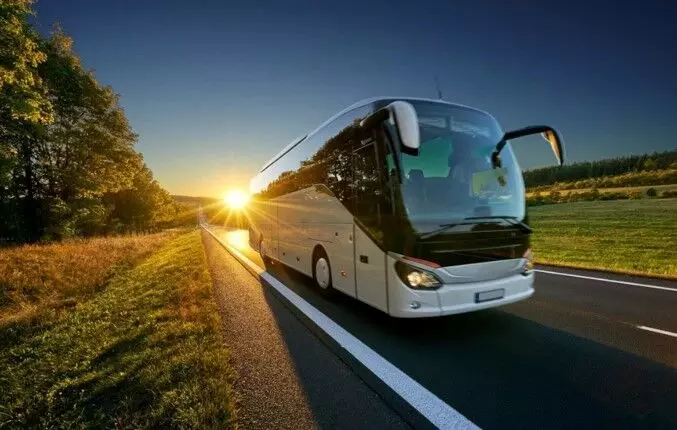
For the majority of Indian tourists buses are the sluggish choice. They are not glamorous, they are rarely featured on travel shows, and yet, they transport millions of people each day across districts, cities and states. If you pay attention, the bus journey in India has changed in ways that are often overlooked by people particularly for long- and medium-distance routes.
In the past, government and state-run transport services have continuously improved their efficiency as well as comfort and reach. Systems such as TSRTC can grow into the backbone of commuters on a daily basis and intercity travellers who prefer predictability over newness.
The Experience of Indian Travel
India is huge. It is a vast country, and not every city is served by railways or airports. Buses can fill in this gap. They connect cities that are smaller, factories zones, temple cities, as well as rural hubs that other modes do not.
For routes that are less than 500 kilometers, buses typically work better than flights. The time is spent in security checkpoints, fewer transfers, and a greater degree of flexibility in the timing of departures. You board, get settled in, and your journey commences.
This is one reason why buses are still in use despite the expansion of rail and air networks.
How Bus Travel has Been Improved
Ten years ago bus travel was accompanied with uncertainties. The delays, the unclear boarding locations and uncomfortable seating were the most frequent complaints. Nowadays, the experience differs on numerous routes.
State transport companies have modernised their fleets by adding semi- and sleeper coaches, improving suspension, more sanitary interiors, and enhanced scheduling of drivers. The ticketing system has also become more transparent, eliminating last-minute confusion.
TSRTC For instance, offers a variety of services catering to various budgets and needs, such as express buses and high-end services for long-distance travel.
Booking is No More a Guessing Game
In the past, purchasing bus tickets involved long lines and relying on local representatives. The situation has drastically changed. Digital platforms now allow travellers to verify availability, times, and seat layouts well before departure.
Selecting the best bus booking app is not about flashy features, but rather about reliability. The passengers want precise timetables, a clear and precise boarding point and fast confirmations. When these basic requirements are managed effectively, the entire journey becomes more enjoyable.
This change has made bus travel more accessible, even for those who would have avoided it due to uncertainty.
Who Benefits from Bus Travel
Bus travel is suitable for a broad spectrum of passengers, not only those on limited budgets.
Students who travel between their college and home rely on buses. Professionals in the field use overnight buses to reduce hotel stays. Families favour buses with direct routes that eliminate multiple transfer times.
Solo travellers often take buses as they allow flexibility. The consequences of missing a bus are usually having to wait for the next bus and not having to rework an entire itinerary.
Cost versus Value on the road
Bus tickets are typically less expensive than flights and are comparable to train tickets for similar distances. But the real benefit is in the lower costs.
There is no requirement to arrive before the scheduled time. Most boarding points are within the city's limits. Luggage rules are less strict, and local connectivity upon arrival is more convenient.
When you consider time, effort, and cost, bus services often deliver greater overall value for both short- and medium-distance travel.
Many common misconceptions about bus journeys
A common misconception of bus travel is uncomfortable. While this may apply to certain routes, most long-distance services offer comfortable seating, reclined seats, and well-maintained rest stops.
Another myth states that buses are not safe at night. In reality, reputable bus operators adhere to strict driving schedules, and many travellers find overnight buses more convenient than daytime services.
Like all modes of transport experience, it all depends on deciding the appropriate time and service.
Plan to have a better Bus Journey
A comfortable bus ride depends on a few simple routines. Checking boarding points before departure will help you avoid stress at the last minute. Arriving a bit early gives you time to settle in without rushing.
A few essentials, such as snacks, water and a lightweight blanket, can make longer trips more comfortable. If you are travelling overnight, using earplugs or eye masks is a great way to make a difference.
These tiny steps can transform an ordinary bus trip into a more manageable experience.
Making the choice between convenience and hype
The choices you make for travel do not always have to be aspire-driven. Sometimes, the most sensible choice is one that allows you to travel in a comfortable, timely manner and without unnecessary hassle.
Buses have earned their spot in the Indian travel industry because of exactly what they do. With better services, easier booking methods, and increased quality of service, they continue to cater to those who prefer functionality over flash.
If you examine the past and look beyond dated assumptions, the bus journey can be seen as an extremely efficient way to travel around India in the present.
(The views, opinions, and claims in this article are solely those of the author’s and do not represent the editorial stance of The Assam Tribune)