
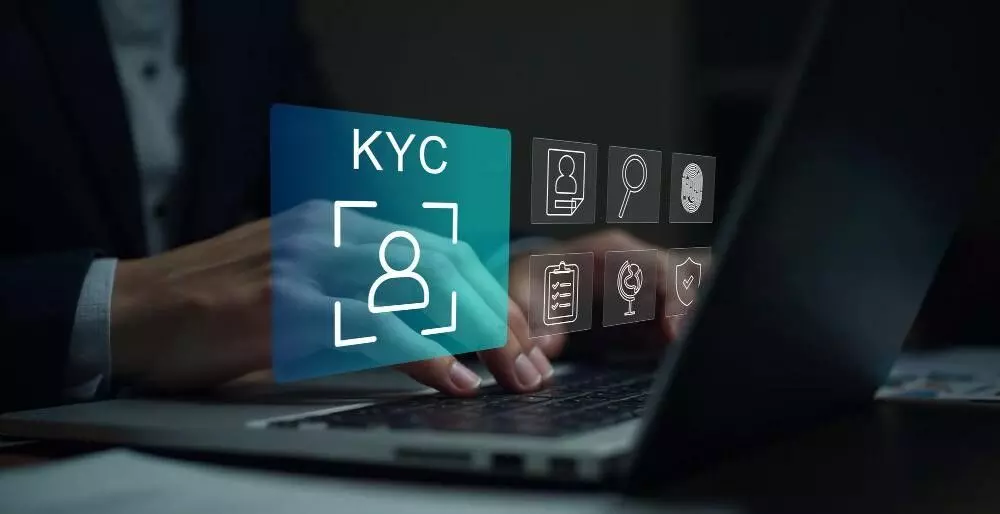
Digital onboarding has become familiar for many Indians, yet the myths around e-KYC keep coming back, usually because people mix up compliant verification with scams that imitate it.
Below are the most common misconceptions, explained in a way that helps you recognise what’s genuine, what’s risky, and what to do next.
Myth 1: There is no Real Difference Between KYC and E-KYC
This myth shows up when people assume e-KYC is a “shortcut” or a weaker version of verification.
Reality check: The difference between KYC and e-KYC is mainly the method, not the purpose. KYC is the requirement to verify identity. e-KYC is one of the digital ways a service provider may meet that requirement, depending on the permitted route and the product’s risk level.
Myth 2: E-KYC Online is Not Safe or Not Recognised
This belief typically comes from fear of “everything digital” and from real stories of fraud.
Reality check: A well-built e-KYC online journey is usually designed with security controls such as encrypted data transfer, system logs, and step-by-step consent prompts. In regulated environments, digital KYC routes are generally structured to be acceptable when performed through permitted channels and maintained with proper records.
Myth 3: Aadhaar Details Get Misused During Aadhaar E-KYC Online
This is one of the most common concerns, especially when people hear about data leaks in general and assume all identity processes work the same way.
Reality check: In compliant Aadhaar e-KYC online designs, the intent is typically to access only the minimum required details for verification and to control how data is handled through permissions, secure transmission, and defined retention practices. Many journeys are also built to avoid storing sensitive elements like biometrics at the service provider’s end, focusing instead on verification outcomes.
Myth 4: Aadhaar e-KYC OTP Means It’s Fine To Share The OTP
People often search Aadhaar e-KYC OTP after receiving a message that says “update KYC urgently” and asks for a code.
Reality check: OTP can be part of legitimate verification, but it is meant to be used only inside a process you started on a trusted platform. If someone contacts you and asks for an OTP “to complete KYC”, that request itself should be treated as suspicious.
Myth 5: E-KYC Biometric Means Your Fingerprint is Stored Or Can Be Easily Stolen
Biometric fear is understandable, especially when people equate a fingerprint scan with “saving my fingerprint somewhere”.
Reality check: In compliant e-KYC biometric journeys, the design is generally aimed at verifying a match rather than storing raw biometric information with the service provider. The bigger risk tends to come from using untrusted devices, unauthorised agents, or unclear consent screens, especially in assisted setups.
Myth 6: E-KYC Aadhaar Works Only For Basic Services
This myth persists because some users see digital onboarding more often in entry-level products and assume it stops there.
Reality check: e-KYC Aadhaar routes are used across many onboarding journeys, but the exact method can vary by service type and risk category. In some cases, digital KYC may be one layer, with additional checks requested later for higher-risk profiles or specific regulatory needs.
Myth 7: Digital KYC is Always Seamless And Error-Free
People expect digital to be instant, and then assume “digital KYC doesn’t work” when something fails.
Reality check: Digital KYC can be efficient, but it can also face real-world friction:
● Poor connectivity or timeouts
● Device compatibility issues
● Fingerprint mismatch due to wear/age/occupation
● Differences in spelling/formatting across records
Myth 8: E-KYC is a One-Time Task You Can Forget
Some users assume that once e-KYC is done, nothing else is ever required, and that any later message must be fraudulent.
Reality check: While the core verification step may remain valid for a service, some providers may request updates when details change or when policies require refresh. Separately, fraud attempts can continue even after successful KYC, because scammers target behaviour, not system permissions.
Conclusion
Most e-KYC myths in India don’t come from the verification process itself; they come from misunderstanding how compliant digital KYC journeys are meant to work and from scams that imitate them.
When you separate a genuine e-KYC online flow from unsolicited links, pressure calls, and OTP requests, the picture becomes clearer: e-KYC is typically designed to verify identity with controlled data handling and traceable system steps, while fraudsters rely on user confusion and urgency.
If you initiate Aadhaar e-KYC online only through trusted entry points, treat aadhaar e-KYC OTP requests with caution, and use assisted e-KYC biometric only through authorised setups, you reduce risk without giving up the convenience of digital onboarding, while still understanding the real difference between KYC and e-KYC in day-to-day use.
Frequently Asked Questions
Q1: Is e-KYC the same as uploading documents online?
Not always. Uploading documents is one digital method, but e-KYC can also include electronic verification steps, depending on the permitted route and the service.
Q2: Is Aadhaar e-KYC online unsafe by default?
It is not automatically unsafe, but safety depends heavily on whether you initiate the process on a trusted platform and avoid scam links, screen-sharing, or unknown agents.
Q3: Should I ever share an Aadhaar e-KYC OTP with support staff?
As a rule, avoid sharing OTPs with anyone. Use the OTP only within the flow you started on the official app/portal.
Q4: Does e-KYC biometric mean my fingerprint is stored by the company?
Biometric-based verification is generally designed as a match step, not a storage step, by the service provider. If you are unsure, ask the provider how data is handled and retained.
Q5: Why do people still get scammed even when digital KYC is in place?
Many scams rely on social engineering, pressure tactics, fake links, and impersonation, rather than breaking verification systems. Vigilance around entry points and OTP sharing makes a major difference.
(The views, opinions, and claims in this article are solely those of the author’s and do not represent the editorial stance of The Assam Tribune)